

Almost every scam that targets Western men in Southeast Asia needs you to be one of four things: in a hurry, alone, drunk, or too embarrassed to make a fuss. Take away any one and the scam collapses, which is why the defenses below are mostly about slowing down rather than about being clever. Nothing here is unique to Asia — the same tricks run in Rome and Cancún — but the versions you meet in Bangkok, Pattaya and Manila have local shapes worth knowing before you land.
None of this means the region is dangerous. The overwhelming majority of taxi drivers, bar staff and shopkeepers are honest and working hard; the scams are a small professional minority who make a living on the fact that most visitors are here for ten days and will be gone before anything can be resolved.
| Scam | Where | What it costs | The defense |
|---|---|---|---|
| Meter refusal / "contract price" | Bangkok, Manila, Saigon | 2–5× the fare | Book it in Grab |
| Tuk-tuk "cheap tour" | Bangkok | An afternoon, or a gem "investment" | Ignore anyone who approaches you |
| Gem and tailor shops | Bangkok, Patong | Hundreds to thousands | Never buy anything a driver suggests |
| "The temple is closed today" | Bangkok | Leads to the above | Walk to the official ticket window |
| Jet-ski damage claim | Pattaya, Patong | Hundreds to thousands | Do not rent a jet ski |
| Padded bar tab | Everywhere | A few dollars to a lot | Count the chits |
| Upstairs "show" touts | Patpong, Nana | A ruinous bill and a blocked door | Never follow a street tout upstairs |
| ATM skimming | Everywhere | Your whole account | Bank-lobby machines only |
| Fake police "search" | Bangkok, Phnom Penh | The cash in your wallet | Ask to go to the station |
| Pre-trip money requests | Online | Whatever you send | Never send money before you meet |
How do taxi and tuk-tuk scams work?
By making the price a negotiation instead of a number.
In Bangkok, the meter is the law and refusing to use it is the scam. A driver at a tourist landing — the Grand Palace, Khao San, a mall exit — quotes a flat fare for a trip the meter would price at a third of that. Say "meter, please", and walk away if he says no; there is another cab in thirty seconds. Easier still, book it in Grab or Bolt, where the fare is fixed in the app and there is nothing to argue about. At Suvarnabhumi, ignore everyone who approaches you in the arrivals hall and go down to the official public taxi queue.
In Manila and Cebu the equivalent is "contract price, sir", and Grab solves it. In Ho Chi Minh City, take Grab or Xanh SM rather than flagging a cab; the long-standing scam there is a copycat livery with a fast meter. In Phnom Penh, PassApp and Grab cost a fraction of a negotiated tuk-tuk. In Bali, book Grab or Gojek, and note that some villages block app pickups — walk a block.
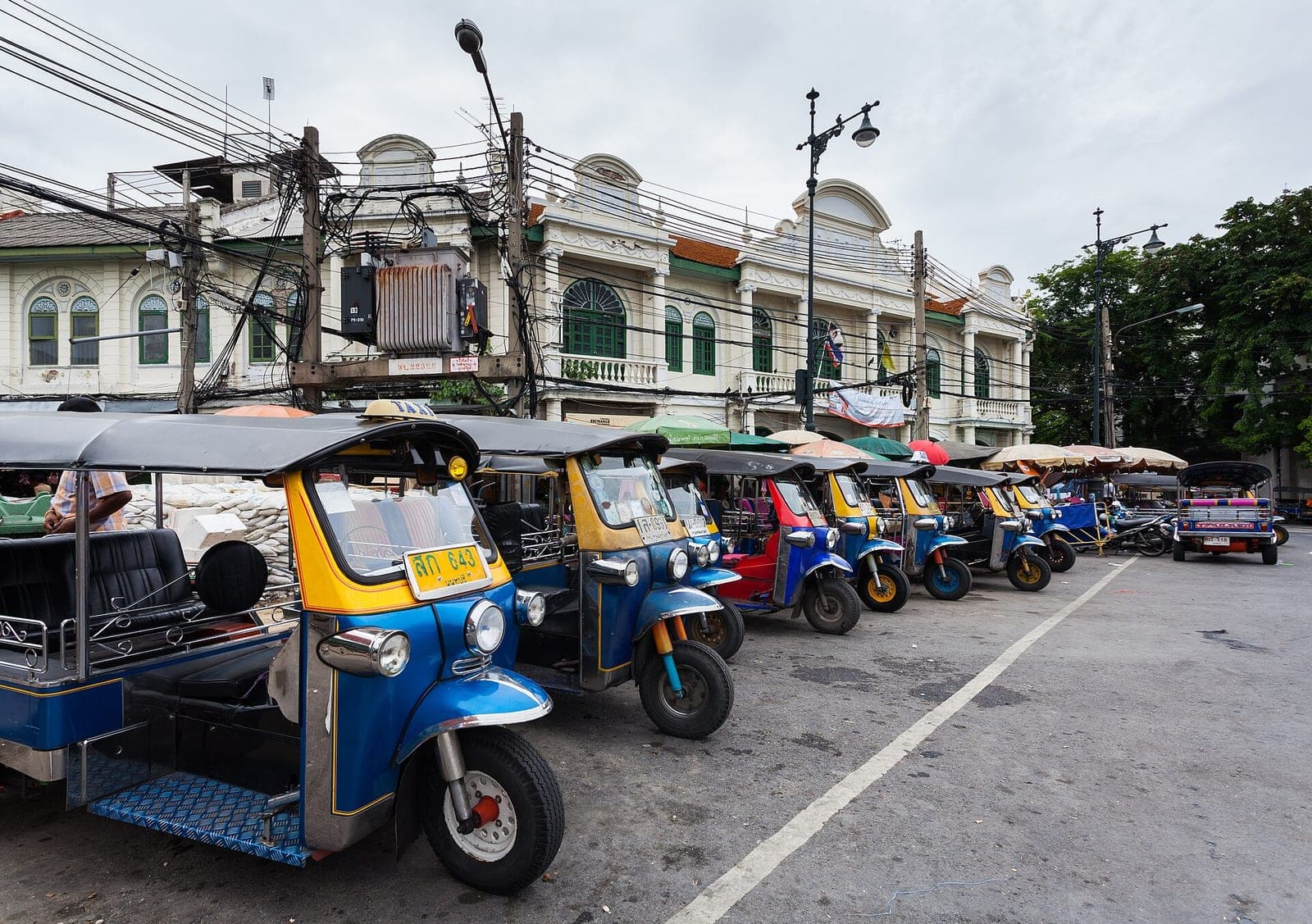
The other Bangkok classic is the tuk-tuk tour: a pleasant driver offers a city tour for a token amount, an hour, four temples. What actually happens is two temples and two shops — a gem dealer and a tailor — where he collects a commission for delivering you. Nobody will hurt you; you will just lose an afternoon and possibly a great deal of money. The rule that kills all of it: never accept an offer from someone who approached you.
The gem scam, the tailor and the "closed temple"
These three are one scam wearing different hats, and it starts the same way every time: a well-dressed, friendly man near a major Bangkok attraction tells you it is closed today — a Buddhist holiday, a royal ceremony, cleaning. It is not closed. The Grand Palace and Wat Pho are open every day.
What follows is a helpful suggestion: since you have a free afternoon, there is a government gem promotion on, duty-free, only this week. A tuk-tuk appears immediately. At the shop you are shown certificates and told that sapphires bought here resell at home at a large profit. They do not. The stones are real and nearly worthless, the "certificate" means nothing, and Thai consumer authorities have been warning about this for over thirty years without ending it.
The tailor version substitutes suits: three suits and five shirts for a headline price, a deposit up front, cheap fabric, a rushed fitting, and a garment that fits nobody. Bangkok and Patong both have genuinely excellent tailors — established shops with real premises that you find by research, not by being driven to them.
The rule for all three: anything a stranger or a driver steers you toward is a commission, and anything sold to a tourist as an investment is not one.
The jet-ski scam in Pattaya and Phuket
This is the one that costs real money, and it has survived every crackdown aimed at it.
You rent a jet ski on the beach at Pattaya or Patong. When you bring it back the operator finds damage — a scrape on the hull, a cracked panel, a "broken" component — that was there before you got on, and names a repair figure in the hundreds or thousands of dollars. If you refuse, several friends appear, often with a helpful man identifying himself as police who offers to mediate at a number that is still enormous. Tourists pay because they have a flight in two days.
Phuket's authorities have run repeated campaigns against it — registration schemes, photographic condition reports, arrests. It keeps coming back.
There is exactly one reliable defense, and it is not renting a jet ski. The beach and the boat trips are the good part of both cities; personal watercraft are the part that generates the complaints. If you insist: rent through your hotel rather than off the sand, video every surface of the craft with the operator in shot, agree damages in writing, and never hand over your passport as a deposit.
What happens when a bar tab is padded?
Usually nothing dramatic. Occasionally, something ugly.
In Thai bars your drinks go into a chit cup as paper slips. The honest version of a problem is a busy waitress dropping someone else's slip in your cup; the dishonest version is a bar adding a couple of ladies' drinks you did not buy, or billing a round you were told was on the house. Either way the defense is identical: glance in the cup during the evening and count the slips before you pay, order one round at a time, and query anything you do not recognize politely and immediately, at the table. A discrepancy raised at the table is a shrug and a correction; the same discrepancy raised at the door is a confrontation.
Philippine bars run a written tab on the same physics. In go-go bars anywhere, the number to watch is drinks bought for other people at the bar — it is easy to lose track when four people have joined you, and that is precisely the point.
The ugly version is the upstairs bar. On Patpong, around Nana and on parts of Bangla Road, men on the street hand out laminated cards for a "show" upstairs with no cover charge. Upstairs there is a bill for a sum that would buy a used car, a large man at the door, and no meaningful recourse. It has been running for decades unchanged. Do not go upstairs with a street tout, anywhere, ever. Every real venue on those streets is at street level with its name over the door.
ATMs, cards and changing money
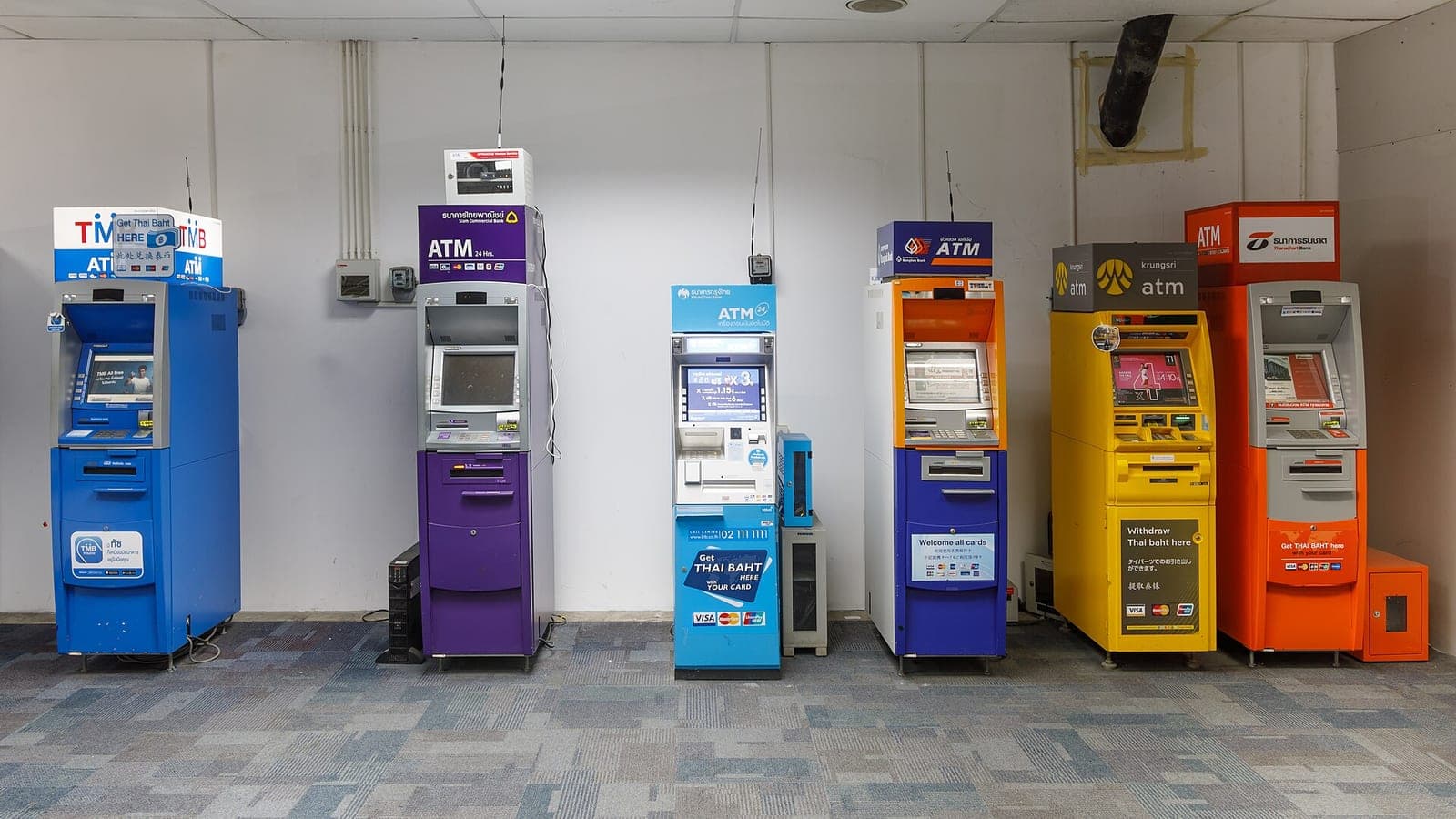
Four habits cover almost all of it. Use ATMs in bank lobbies or inside malls, in business hours, rather than free-standing machines on a bar street at 2am; if a card reader looks bulky or loose, walk away, and cover the keypad. Always decline the machine's offer to convert to US dollars — "dynamic currency conversion" is a legal scam that costs several percent of every withdrawal, and the same applies at restaurant card terminals. Count your change: in Vietnam the ₫20,000 and ₫500,000 notes are similar colors and the confusion is exploited constantly, and in Cambodia torn or marked US bills are refused by everybody, so check what you are handed. And treat exchange booths advertising "no commission" as making their money on the rate; compare two, and never change money on the street.
Cards, fees and how much cash to carry are covered properly in Money, ATMs and cards in Southeast Asia: the practical page.
Fake police, and real ones
The pattern is a plain-clothes man, sometimes with a partner, sometimes with a badge in a wallet, who stops you near a tourist area and says he is conducting a drug check. He asks to see your wallet or your passport, counts your cash "for the record", and some of it does not come back.
- Do not hand over your wallet. Ever, to anyone.
- Carry a photocopy of your passport, not the passport, and offer that.
- Ask to go to the police station. Real officers have no problem with this; a shakedown evaporates.
- In Thailand, ask for the tourist police on 1155. It is an English-speaking service and its existence alone ends most of these encounters.
- Stay calm and polite throughout. Raising your voice with anyone in a uniform in this region ends badly even when you are entirely in the right.
Real police do stop foreigners, particularly on motorbikes and particularly for a missing helmet or license, and a genuine on-the-spot fine with a receipt is a normal part of Thai traffic policing. The tell is the receipt. See Safety in Southeast Asia: what actually goes wrong, and what to do about it for the broader picture on police, drugs and what actually gets people into trouble.
The scams that happen before you fly
These cost more than every scam above combined, because they run for months.
The pattern is always the same. You meet someone online, the conversation is warm and constant, and then — before you have ever met in person — there is a need: a passport fee, a bus fare from the province, a sick mother, a phone she cannot top up, a customs charge on a gift she has sent you. The amounts start small and end large, and the meeting never quite happens.
The rule is absolute and it makes life simple: no money to anyone you have not met in person. Not for load, not for a bus, not for a hospital bill. A woman who genuinely wants to meet you will meet you.
Three related patterns are worth knowing. Sextortion: a video call turns explicit and is recorded, then the demands start — the defense is never sending explicit photographs or video to anybody, ever. Investment "opportunities": a conversation that drifts toward crypto trading, a platform she uses, a friend's returns. That is industrial fraud run out of compounds in the region and it has nothing to do with dating. And the "arrangement" pitch, where money is discussed as a condition before you have met.
Red flags and romance scams: the sick buffalo, the hospital bill and how to say no kindly covers all of it, and the best structural defense is talking to women on a platform that verifies profiles on video and doing your own video call before you commit anything — see Online dating before you fly: how the smart guys land with a date already booked.
What do you do if it happens anyway?
Small money — a padded tab, an overcharged fare — pay it, leave, and put it down to the trip. Arguing over the price of a beer with several people on their home ground at 1am is a bad trade.
Real money — a jet-ski claim, a gem shop, a compromised card — do not pay on the spot, do not sign anything, and get to a tourist police office or your hotel's front desk, which has seen it all before. In Thailand, call 1155. Report card fraud to your bank immediately; that is what two cards from two banks are for.
Anything with a threat in it — leave, in public, immediately, and call the police from somewhere else. Nothing you own is worth standing your ground for in a stairwell. And afterwards, tell someone: every scam on this page persists because most of the men it happens to are too embarrassed to say so.