

Money in Southeast Asia comes down to one rule and a few footnotes: the bar streets, the taxis and the street food run on cash, everything with a front desk takes a card, and the cheapest way to get local cash is an ATM with a US debit card that refunds the fees. The footnotes — Cambodia's dollars, Vietnam's tiny withdrawal limits, the ฿220 Thai ATM fee, the "convert to USD?" trap — are what this page is for. Figures are as of August 2026.
Cash or card: how does each country actually work?
| Country | Currency | Bars and taxis | Hotels, malls, airports | QR / e-wallets for visitors |
|---|---|---|---|---|
| Thailand | Baht ฿ (about ฿32–36 to $1) | Cash | Cards fine | Tourists can link some foreign cards to PromptPay-style apps; most do not bother |
| Philippines | Peso ₱ (about ₱55–58) | Cash | Cards fine, sometimes a surcharge | GCash and Maya accept passport verification with a local SIM; handy beyond a week |
| Cambodia | US dollar $ (riel for change) | Cash, dollars | Cards fine | Bakong / ABA Pay are everywhere; visitors mostly use dollars |
| Vietnam | Dong ₫ (about ₫25,000–26,000) | Cash | Cards in the better places | MoMo and bank QR codes dominate; Grab takes foreign cards |
| Indonesia | Rupiah Rp (about Rp 16,000) | Cash | Cards fine in Bali | QRIS QR codes on every counter; cash still king in Kuta bars |
| Malaysia | Ringgit RM (about RM 4.3–4.7) | Cash in Changkat bars | Cards everywhere | Touch 'n Go eWallet; tap-to-pay cards widely accepted |
Exchange rates move; these are ballpark figures for planning.
The practical version: carry enough local cash for the evening, keep a card for the hotel and flights, and ride-hailing apps (Grab everywhere, PassApp in Cambodia) charge your card so you never haggle with a driver at 2am.
What do ATMs charge, and how do I pay less?
Every country in the region lets the local bank charge foreign cards a flat fee per withdrawal, on top of anything your own bank adds. Because the fee is flat, the arithmetic is simple: withdraw the maximum the machine allows, as rarely as possible.
| Country | Local ATM fee (Aug 2026) | Typical per-withdrawal limit | Notes |
|---|---|---|---|
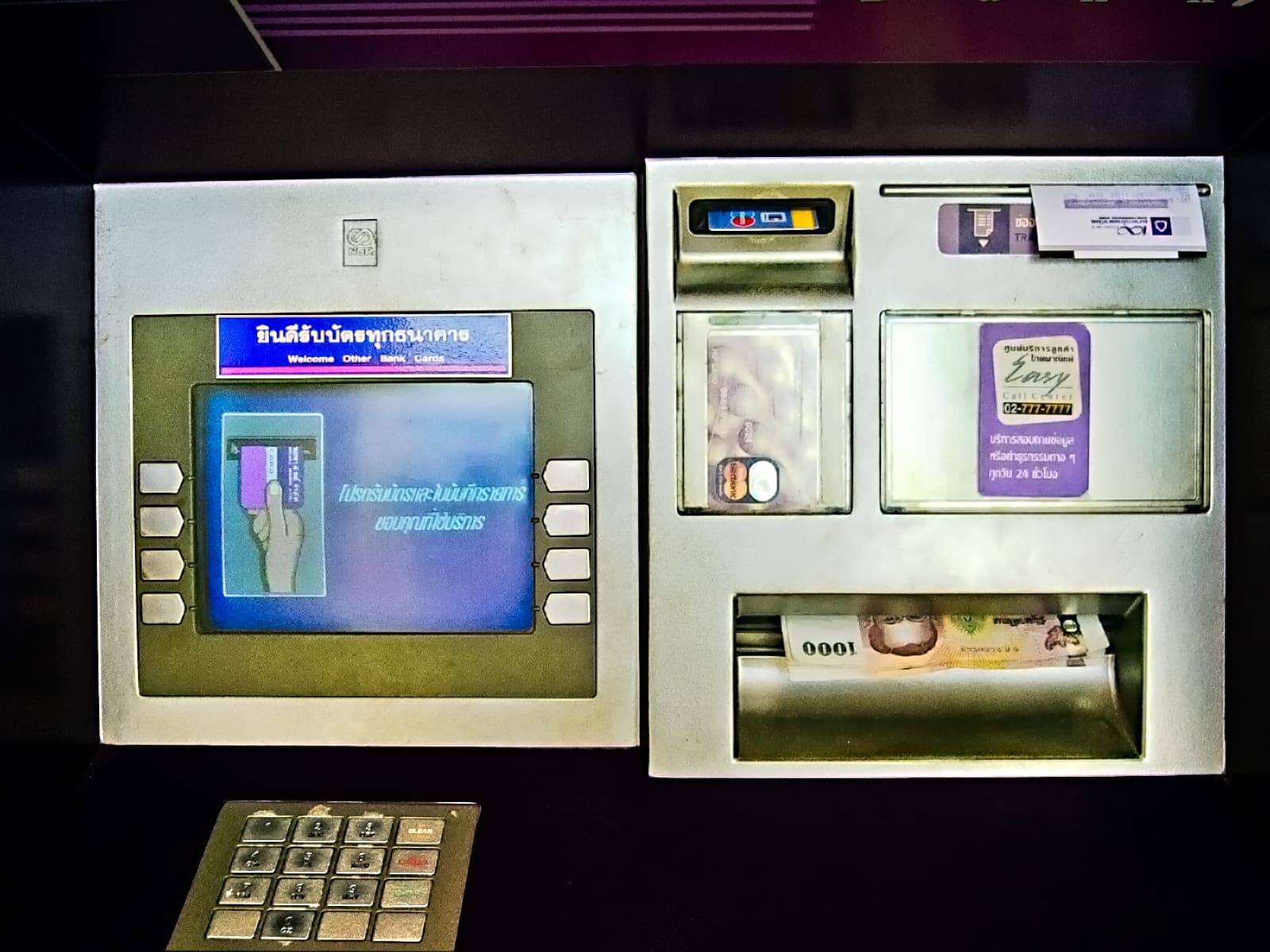
| Thailand | $6.8–7.8 (฿220–250) | ฿20,000–30,000 | AEON machines charge less; bank-branch ATMs are safest |
| Philippines | $3.5–4.5 (₱200–250) | ₱10,000–20,000 | Metrobank and BPI allow bigger pulls; HSBC charges nothing but is rare |
| Cambodia | $4–6 (US$4–6) | $500–2,000 | Dollar machines; ABA and Canadia are the big networks |
| Vietnam | $0.85–2.5 (₫22,000–66,000) | ₫2–5 million (about $80–200) | Low fees, low limits; some banks allow ₫10 million |
| Indonesia | Usually none from the local bank | Rp 1.25–3 million | Limits are the pain; Rp 100,000-note machines give you more |
| Malaysia | RM 10–12 on most networks | RM 1,500–3,000 | Maybank and CIMB everywhere |
Three rules at every machine:
- Decline dynamic currency conversion. The screen will offer to charge you in US dollars "for your convenience" at a rate three to eight percent worse than your bank's. Always choose the local currency.
- Use bank-branch or mall ATMs in daylight rather than a lone machine in a bar doorway. Skimmers exist; the Scams: the ones that are still running, and how to handle each page explains what to look for.
- Tell your bank you are traveling, or set the travel notice in the app, and carry a second card from a different bank in a different pocket.
Which US bank cards should I bring?
Two cards, chosen for fees, will save you more over a two-week trip than any amount of haggling.
A debit card that rebates ATM fees and charges no foreign transaction fee. Several US brokerages and online banks offer checking accounts that refund every ATM fee worldwide at month-end and convert at the interbank rate — the Charles Schwab and Fidelity cash-management accounts are the ones expats talk about most, and a handful of credit unions and online banks do similar. Open one two months before you fly (they take time to fund and post a card), keep a few thousand in it, and the ฿220 and ₱250 fees come back to you.
A credit card with no foreign transaction fee for hotels, flights and the occasional mall. Most travel-branded cards qualify; many standard cards still charge 3%. Visa and Mastercard work everywhere; American Express is patchy outside big hotels.
Wise and Revolut are worth a mention because readers ask. Both give you a multi-currency debit card with good rates and let you hold baht, pesos or dong in the app; Wise in particular is the cheapest way to send money abroad once you have a reason to — and a good many men do, eventually, whether to a landlord or a girlfriend. Neither replaces the fee-rebating debit card at the ATM, and Revolut's weekend rates and fair-use limits have caught people out. Treat them as a second card, not the first.
What not to bring: a card that charges $5 plus 3% on every foreign withdrawal. That is $15 gone on a ฿10,000 pull before the Thai bank's fee.
Why does Cambodia run on US dollars?
Because it has since the UN administration of the early 1990s. Prices in Phnom Penh are quoted in dollars, ATMs dispense dollars, your $1.5–3 (US$1.50–3) beer on Street 136 is priced in dollars, and the riel (about 4,000 to $1) is used as small change for anything under a dollar. You will accumulate a pocketful of 100- and 500-riel notes that you can spend on tuk-tuks or give to the kids who sell bracelets.
The rule is the condition of the bills. Cambodians will not accept torn, taped, heavily creased or ink-marked dollars, because their own banks will not take them back, and a $1 bill with a corner missing is worthless here. Check your change, refuse bad notes politely, and bring new bills from home. ATMs charge $4–6 (US$4–6) per withdrawal, which is why the men who know fly in with cash.
Where should I change money?
Not at the airport, unless it is midnight and you need taxi money. Airport booths in Bangkok and Manila pay four to eight percent below the street rate.
- Thailand: the Super Rich booths in Bangkok (the orange and green ones around Ratchadamri and Pratunam, and now at the BTS stations) and their Pattaya equivalents on Second Road and Soi Buakhao beat the banks by a margin; you need your passport. Bank booths on Walking Street are fine, a little worse.
- Philippines: the money changers along Fields Avenue and in Makati's malls usually beat the banks and murder the airport rate. Compare two boards, count on the counter.
- Vietnam: gold shops in District 1 give the best rates for dollars; a touch of a grey area, entirely routine.
- Cambodia, Indonesia, Malaysia: ATMs or the big mall booths; avoid the street-front changers in Kuta, whose sleight-of-hand counting is a famous Bali scam.
Whatever you change, change $100 bills (best rate), at a booth with a printed rate board, and put the money away before you step back onto the street.
How much cash should I carry at night?
Enough for the evening and not a dollar more. Our working figures for a full night on a bar street, as of August 2026, based on the drink prices on each city page:
| City | A normal night (beers, a few ladies' drinks, food, taxi) | A big night | Carry |
|---|---|---|---|
| Pattaya | $50–90 (฿1,700–3,000) | $150+ | ฿3,000–5,000 |
| Angeles City | $40–80 (₱2,300–4,500) | $120+ | ₱4,000–7,000 |
| Bangkok | $70–120 (go-go bar prices) | $200+ | ฿4,000–6,000 |
| Phnom Penh | $40–70 | $120+ | $80–150 in small bills |
| Ho Chi Minh City | $40–70 (₫1–1.8 million) | $120+ | ₫2–3 million |
That covers beers at $2.5–3.5 (฿80–110) or $1.8–2.8 (₱100–160), ladies' drinks at $4.5–7.5 (฿150–250) or $4.5–11 (₱250–600), a late meal and a ride home. The rest of your cash, your passport and your spare card stay in the hotel safe. Split the night's money between two pockets; keep small notes for taxis and tips on top so you are not flashing a wad of ฿1,000s at a baht-bus driver.
Pay as you go on your first few nights rather than running a tab — it keeps you honest and it keeps the bar honest. The Etiquette: how to behave in the bars, the hotel, the temple and the street page covers the bill, the tipping and the ladies'-drink system; How the bar scenes work, country by country: go-go bars, beer bars, ladies' drinks, mamasans and the bill covers the rest.
What about tipping?
The region is not tipping-mad the way the States is, but nightlife is an exception and the amounts are small to you and real to the people receiving them.
- Bars: round up, and tip the waitress or the dancer who sat with you ฿50–100 / ₱100–200 in cash, directly, without a performance. Many bars pool a tip jar; the direct route is better.
- Restaurants: check for a 10% service charge first (common in Thailand and the Philippines); if none, 5–10% or round up.
- Massage: ฿50–100 / ₱100 on a $9–14 (฿300–450) hour is the norm.
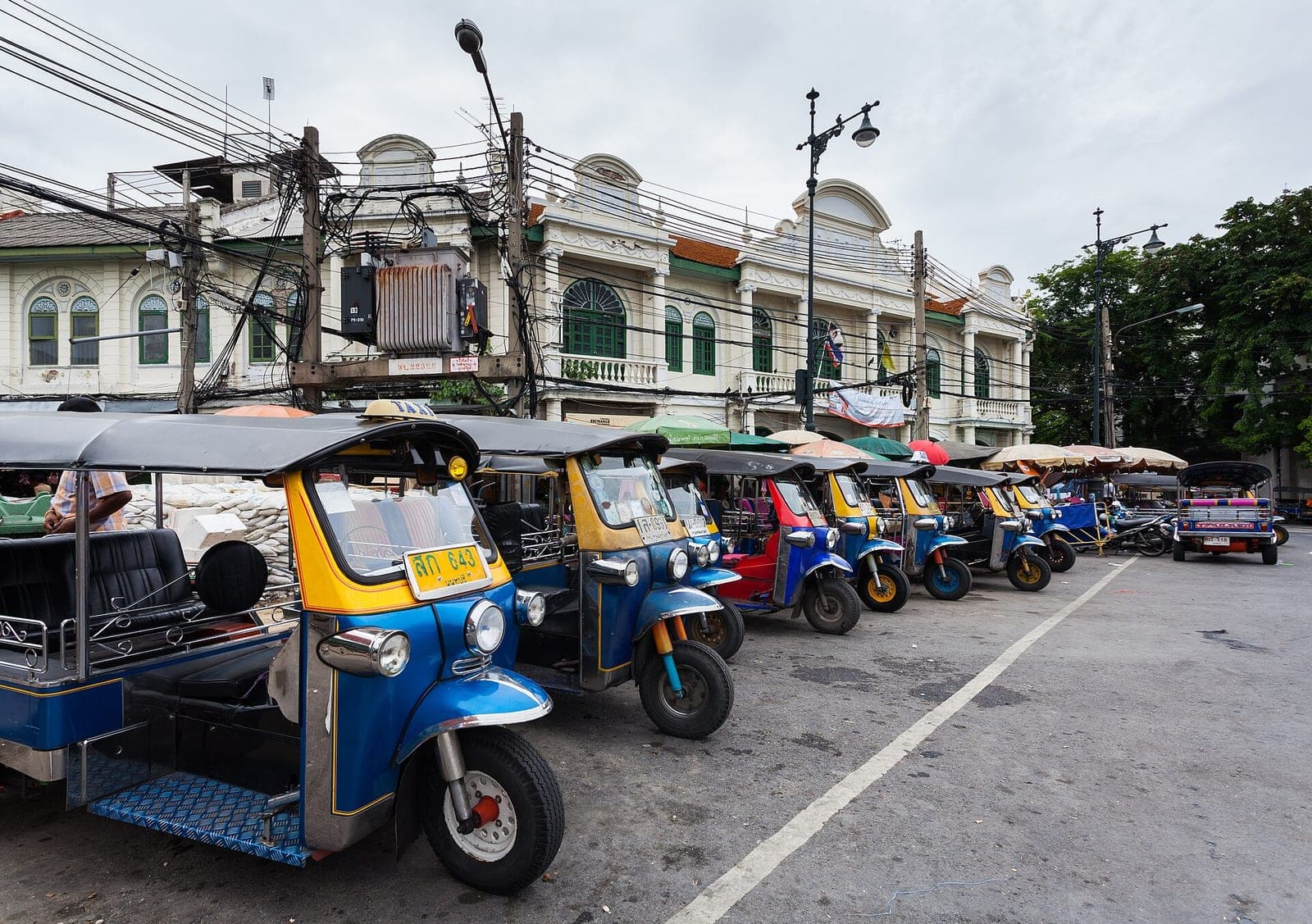
- Taxis and Grab: round up to the nearest ฿10–20 or ₱20–50; tip in the app if you like.
- Hotel housekeeping: ฿20–50 / ₱50–100 a day, left with a note so it is not "found".
- Cambodia: $1 for almost everything small, $2–5 for a good dinner or a long tuk-tuk.
The full cultural picture is in Etiquette: how to behave in the bars, the hotel, the temple and the street; the short version is "small, often, discreet".
How do I budget a two-week trip?
The honest number for a comfortable two weeks in Pattaya or Angeles City — a mid-range hotel, eating well, out most nights, not trying to be cheap — is $2,500–4,000 on the ground plus the flight, as of August 2026. Bangkok costs 20–40% more for the same life; Phnom Penh and Saigon a little less; Bali and KL about the same as Bangkok with a thinner scene. The detailed breakdown by city, with hotel and drink prices that update, is in What a week actually costs: careful, normal and comfortable, city by city.
Budget it honestly. The commonest money mistake is not being ripped off; it is generosity — a round for new friends, one more ladies' drink, a taxi to Jomtien for lunch — and the cure is to bring more than you think you need and go home with some.