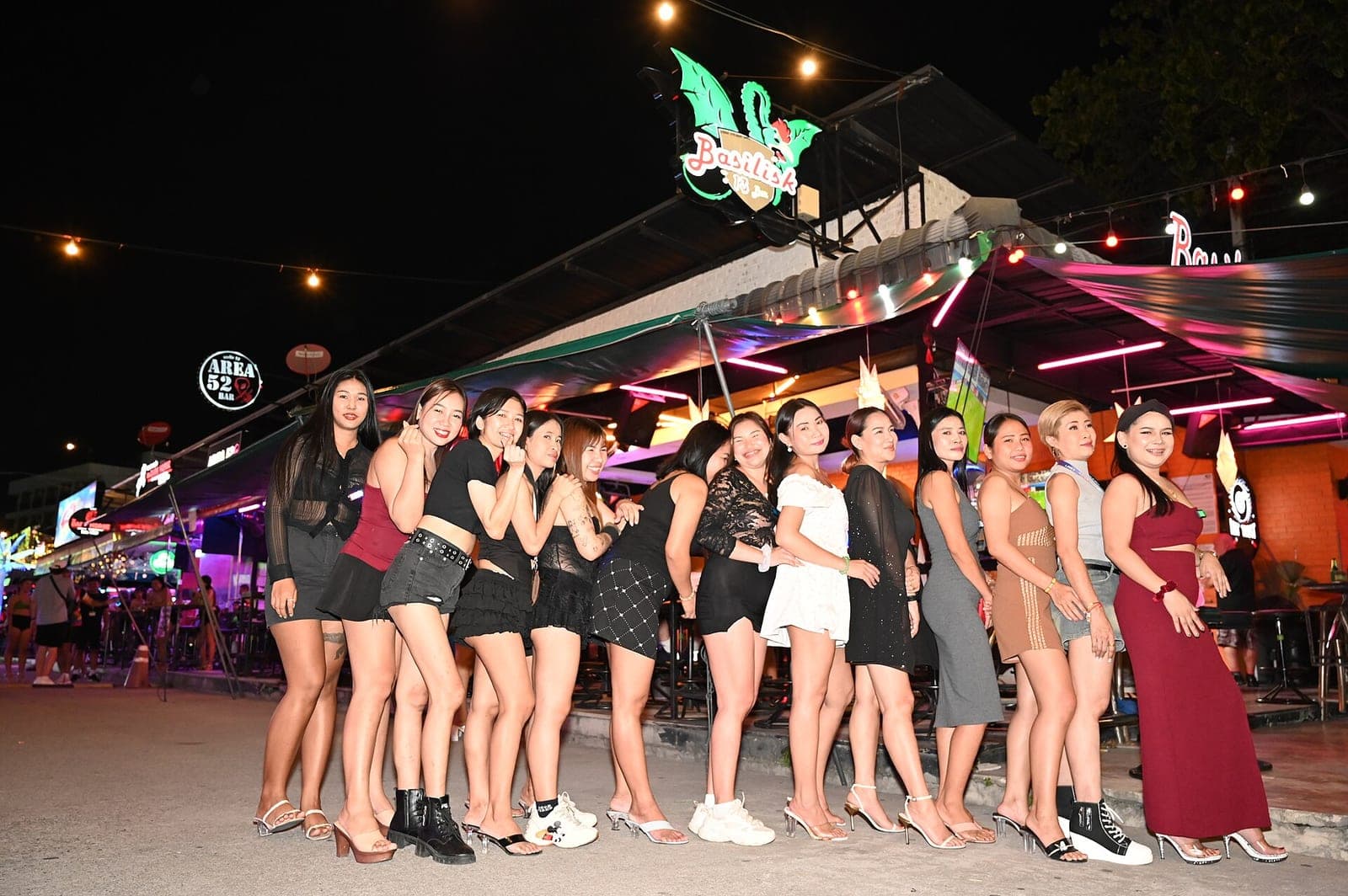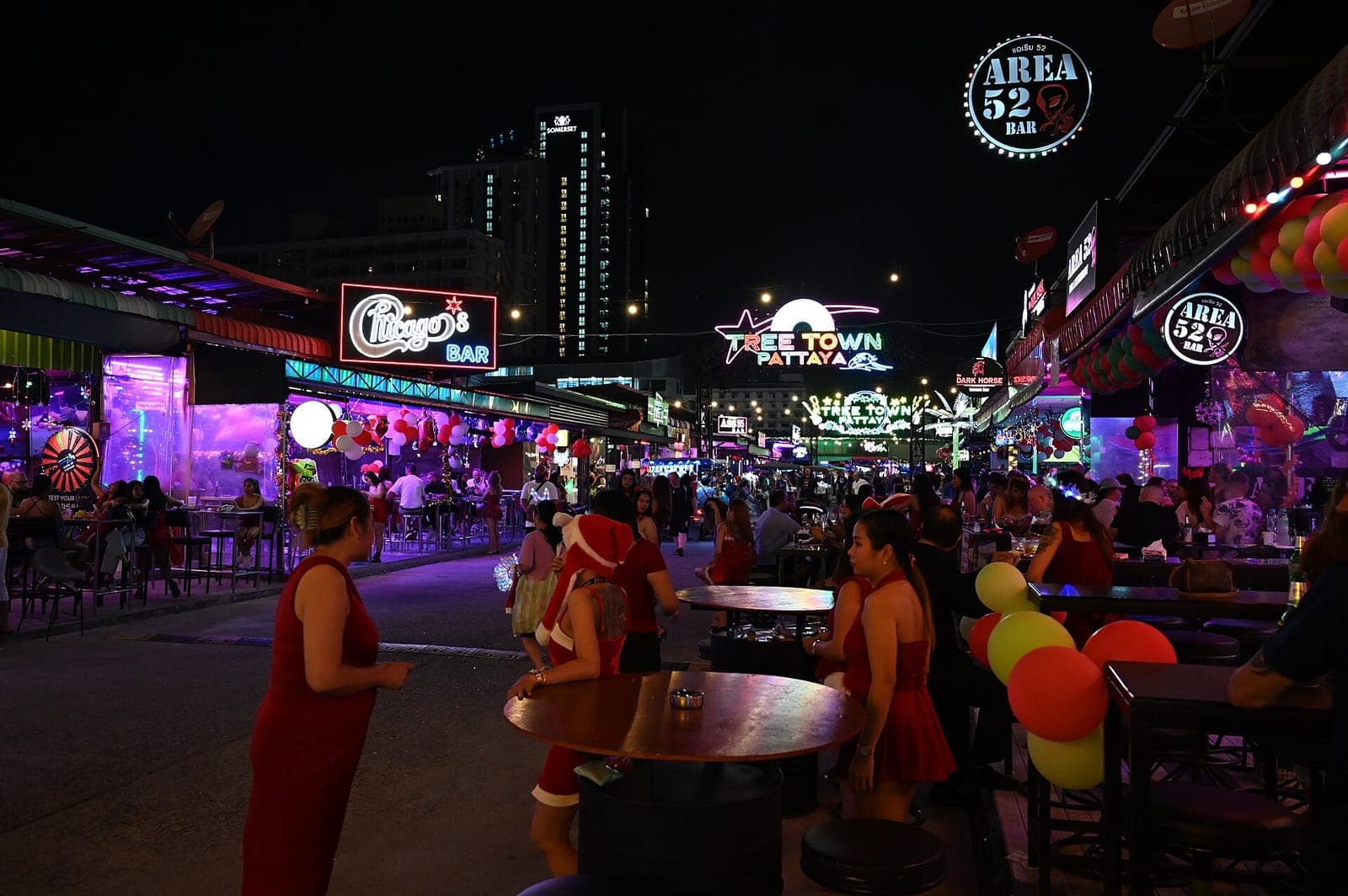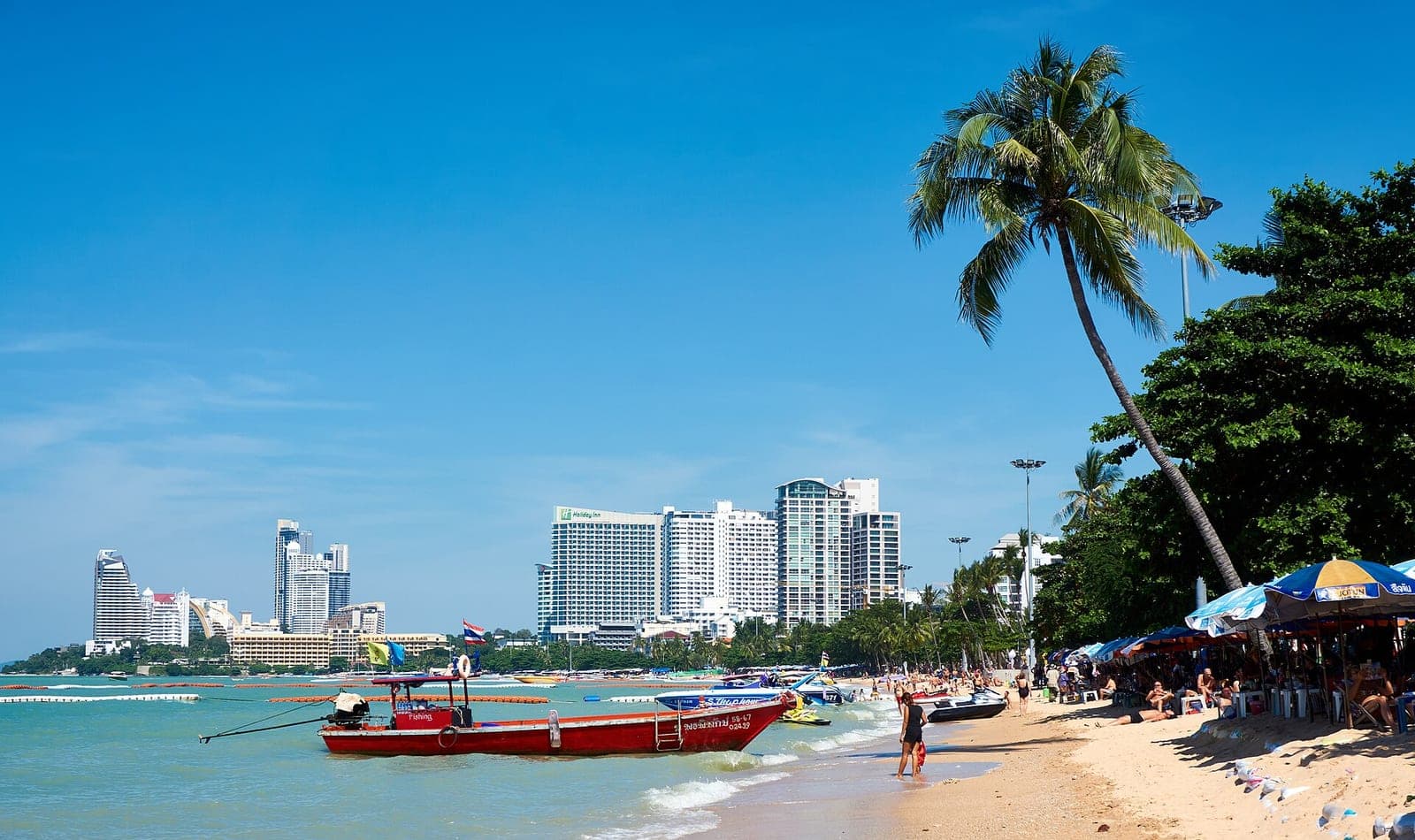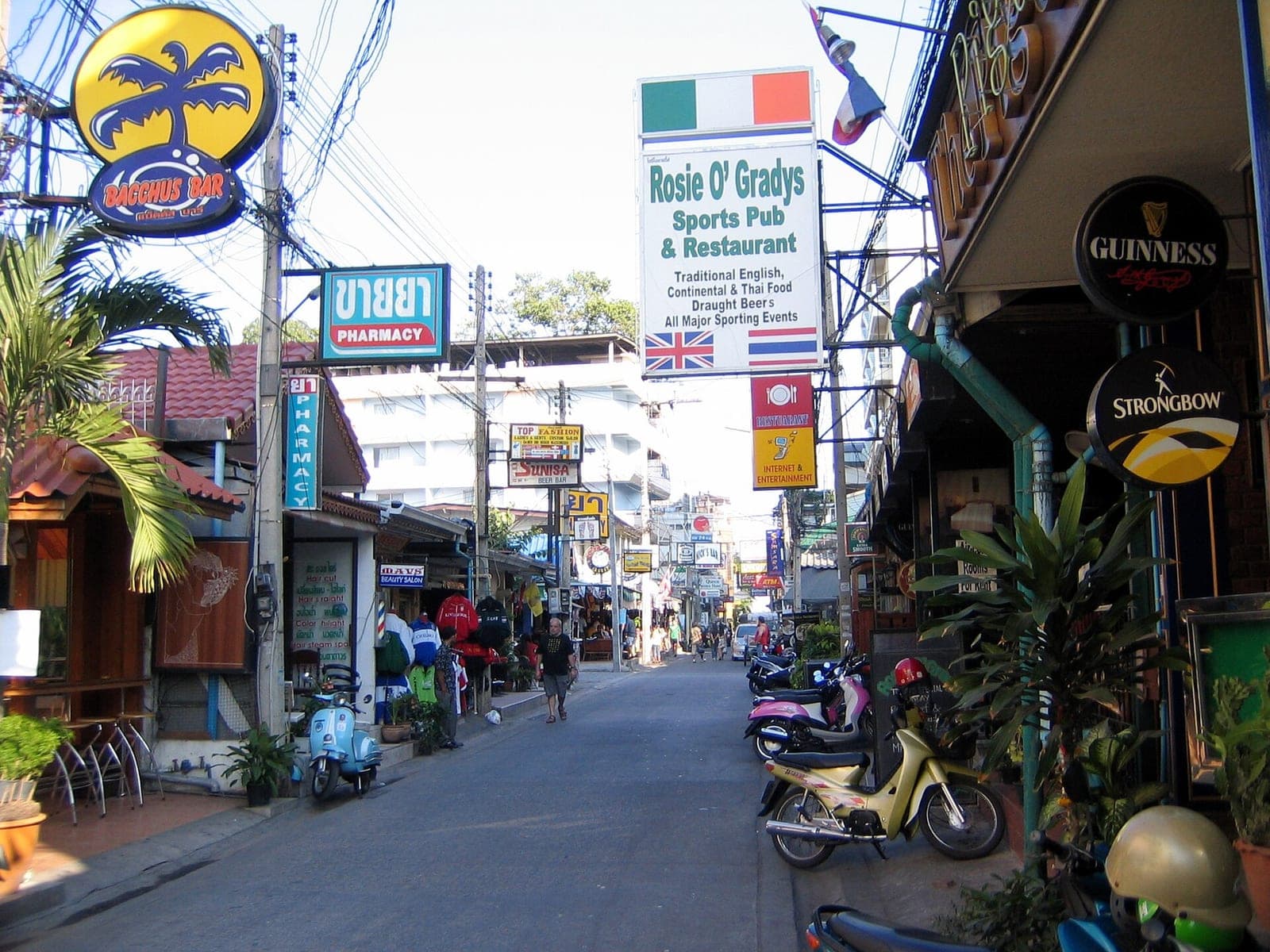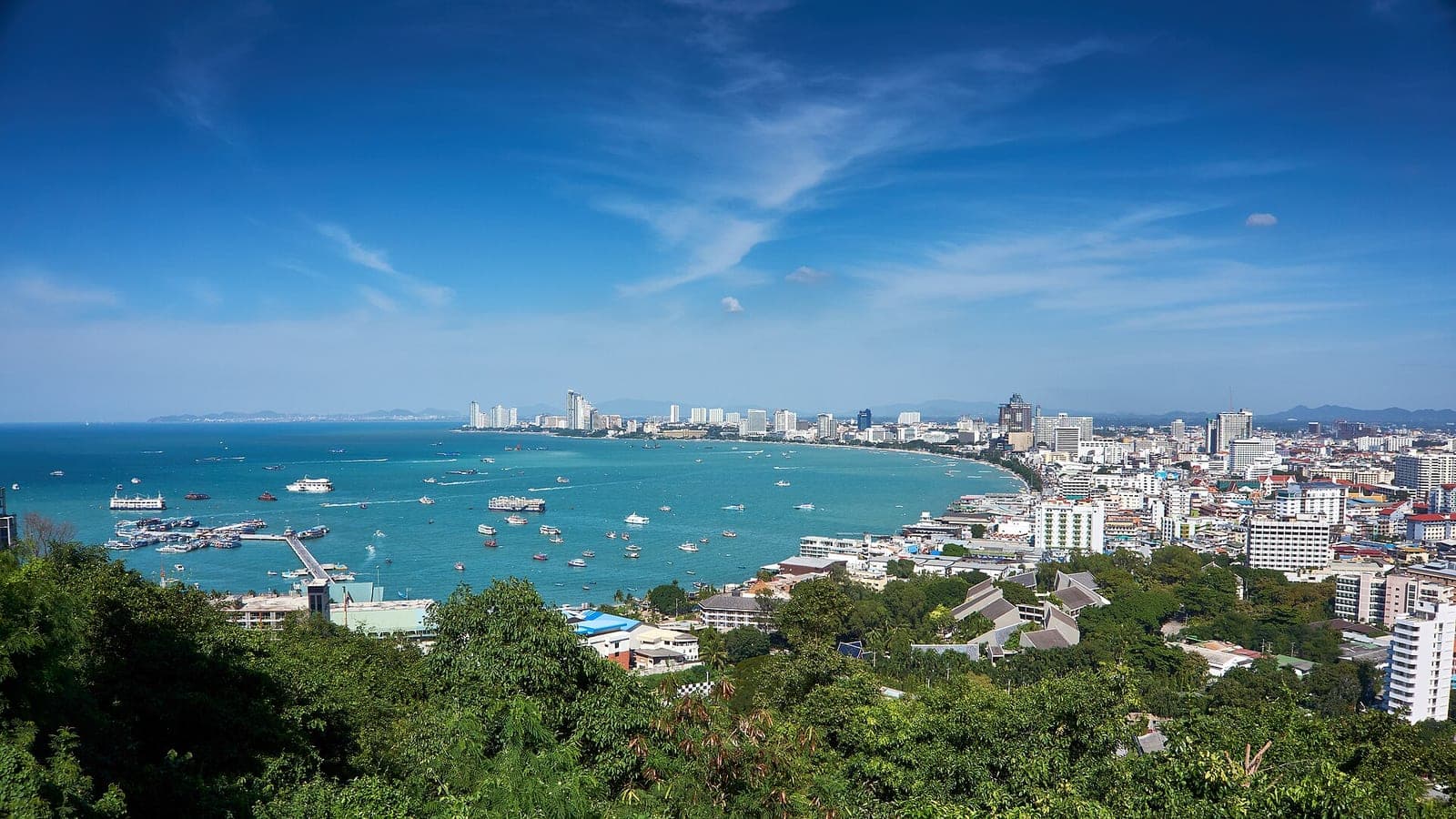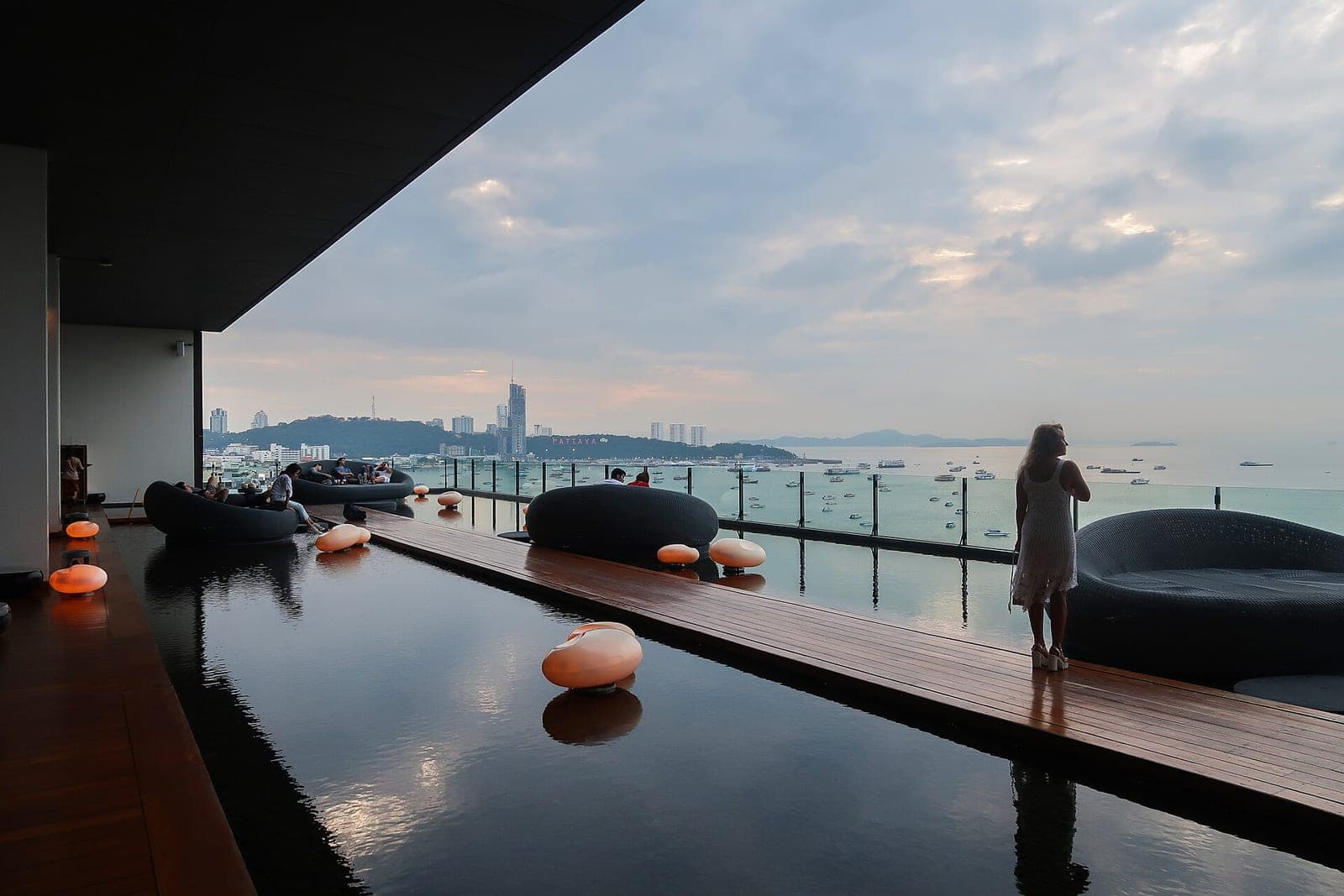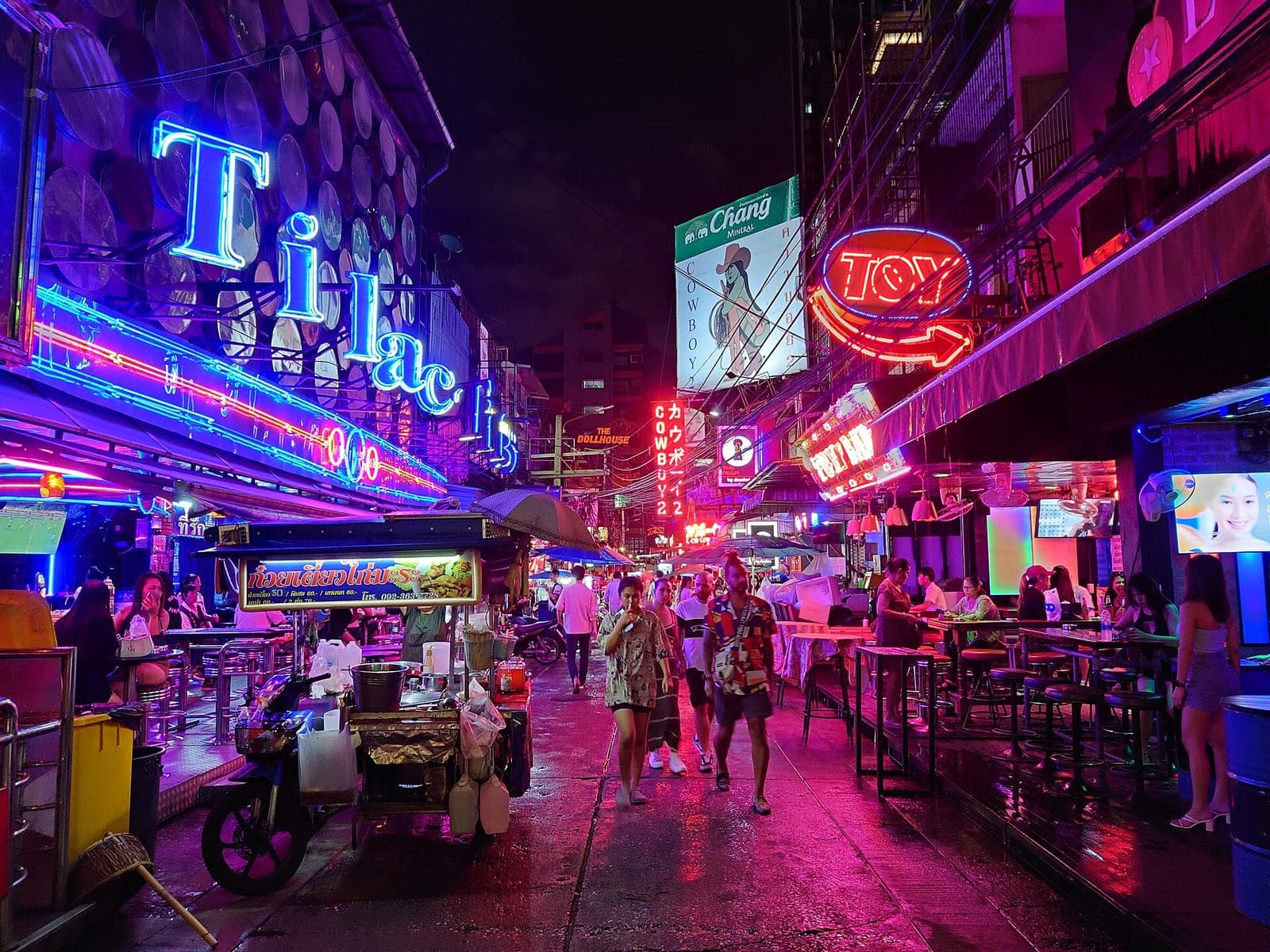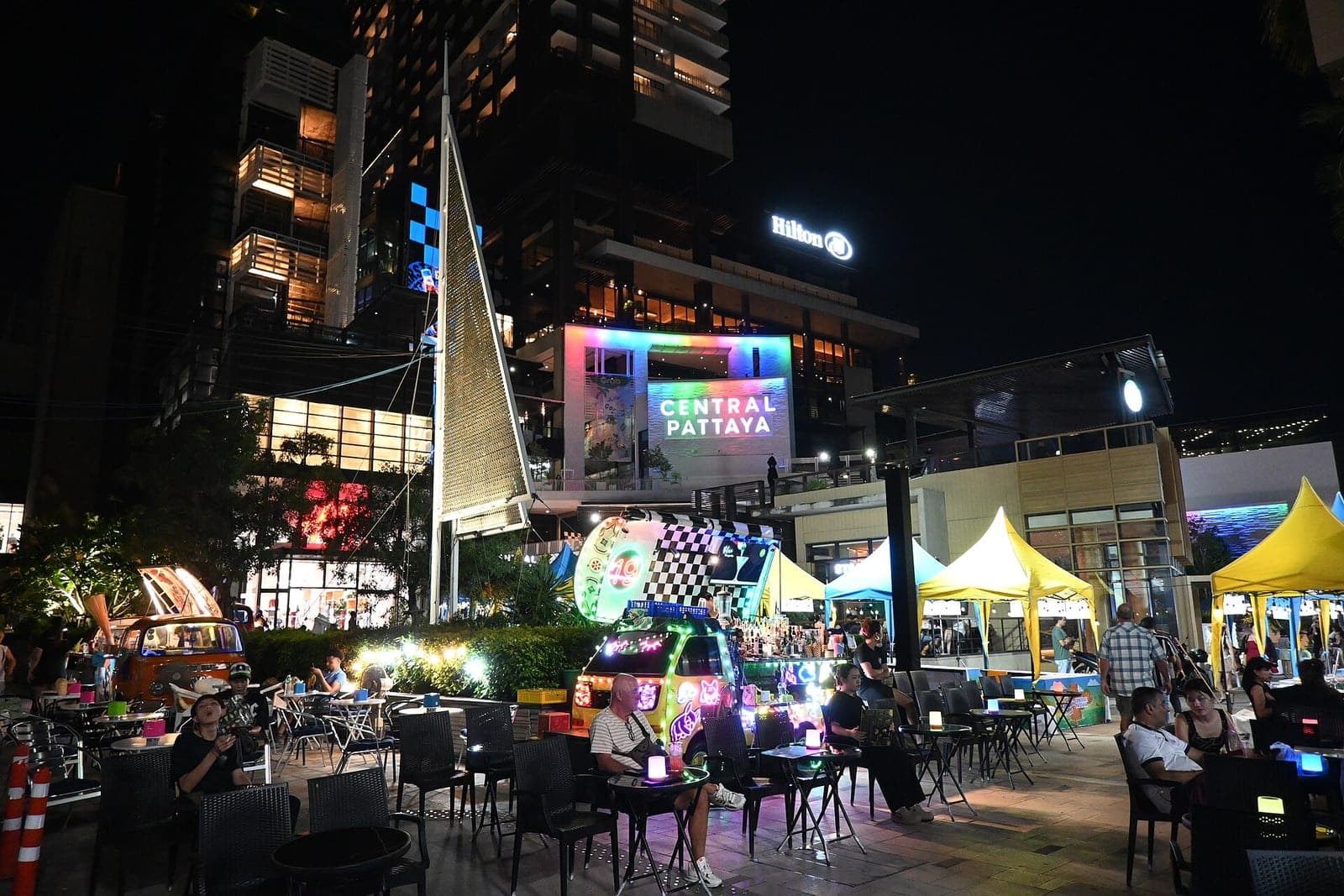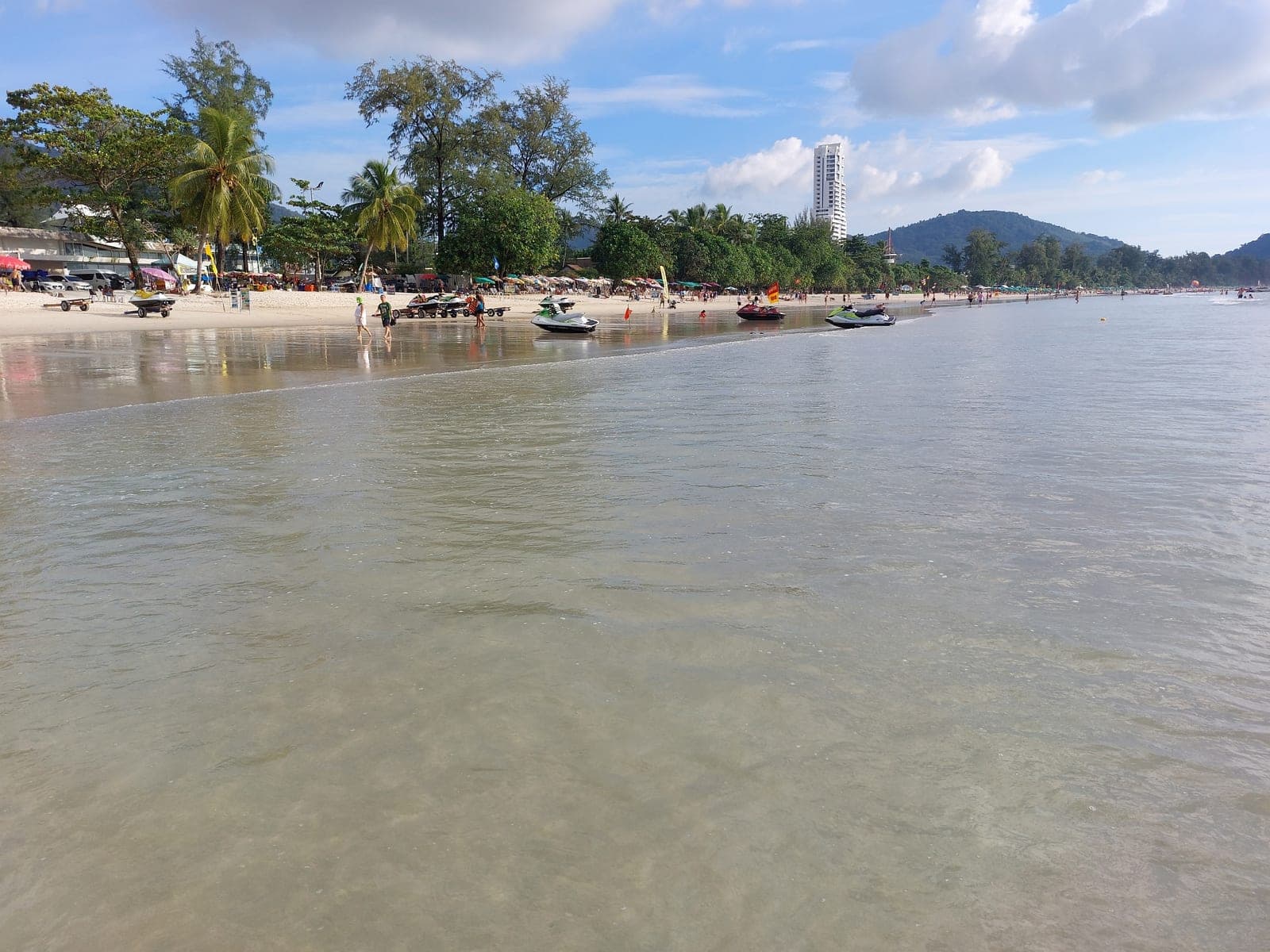


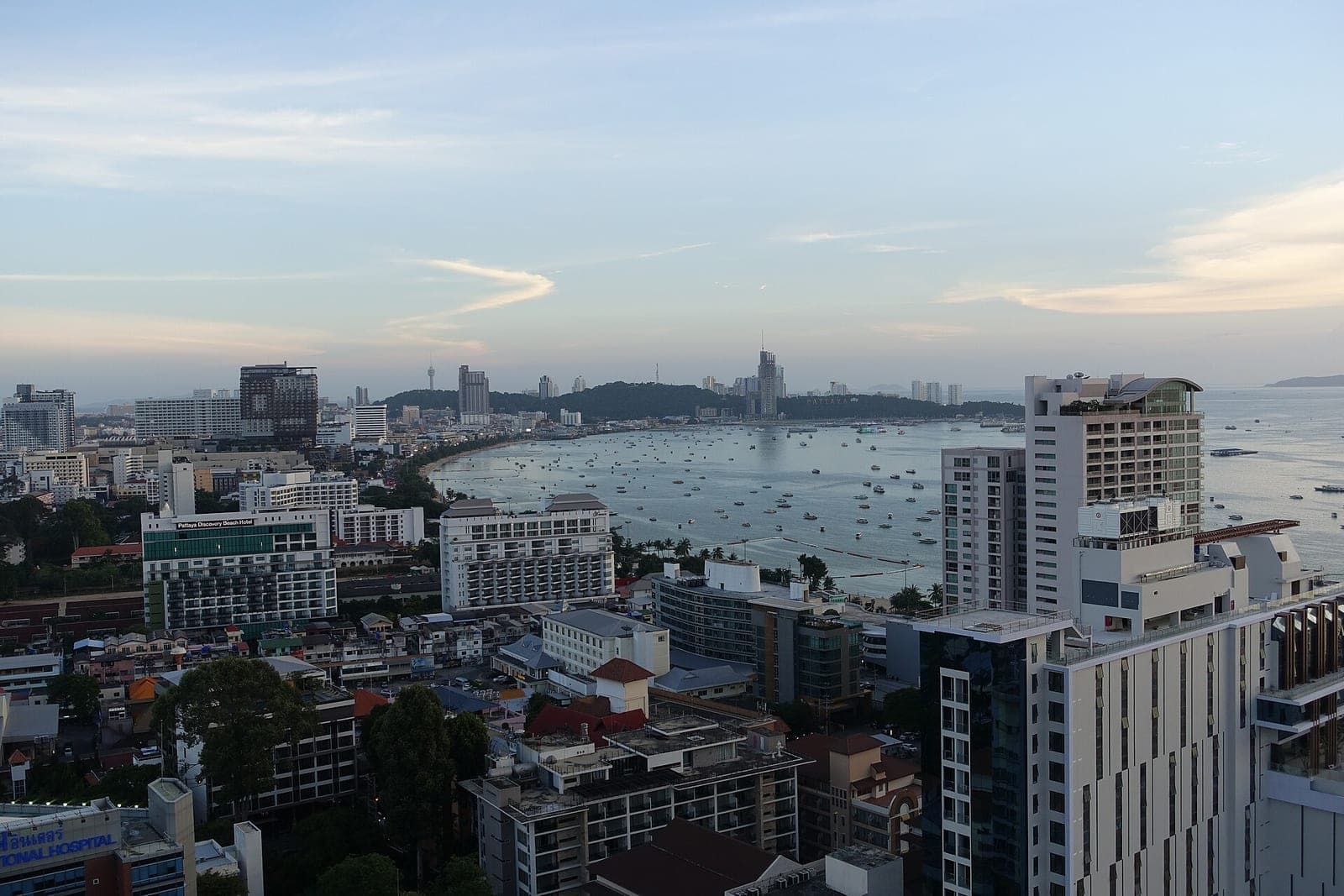


















Pattaya is a beach city of roughly 120,000 registered residents — and several times that in reality — on the Gulf of Thailand in Chonburi province, about 90 miles (150 km) by road south-east of Bangkok, and it holds the largest concentration of bars, go-go bars, beer bars and women working in nightlife anywhere in Asia. Together with Angeles City it is one of the two places we tell a first-timer to go, and it is the one that will show him the most.
Why it sits at the top. Scale, mostly. Angeles is one strip; Pattaya is six or seven separate scenes, each with its own crowd, price level and hour of the night, all inside a couple of square miles. You can drink on an open-fronted street at three in the afternoon, watch a stage show at ten, be in a nightclub at one and have a plate of noodles on the beach at three, and none of it requires a taxi. Underneath the nightlife is a real city: two big malls, a hospital that Westerners actually use, a Tesco and a Makro, an immigration office, hundreds of restaurants in every cuisine you can name, a couple of thousand hotels and condos, and a resident foreign population large enough that nothing you do is remarkable to anybody. It also has a beach, an island ferry, and — unlike Angeles — somewhere to go when you are tired of bars.
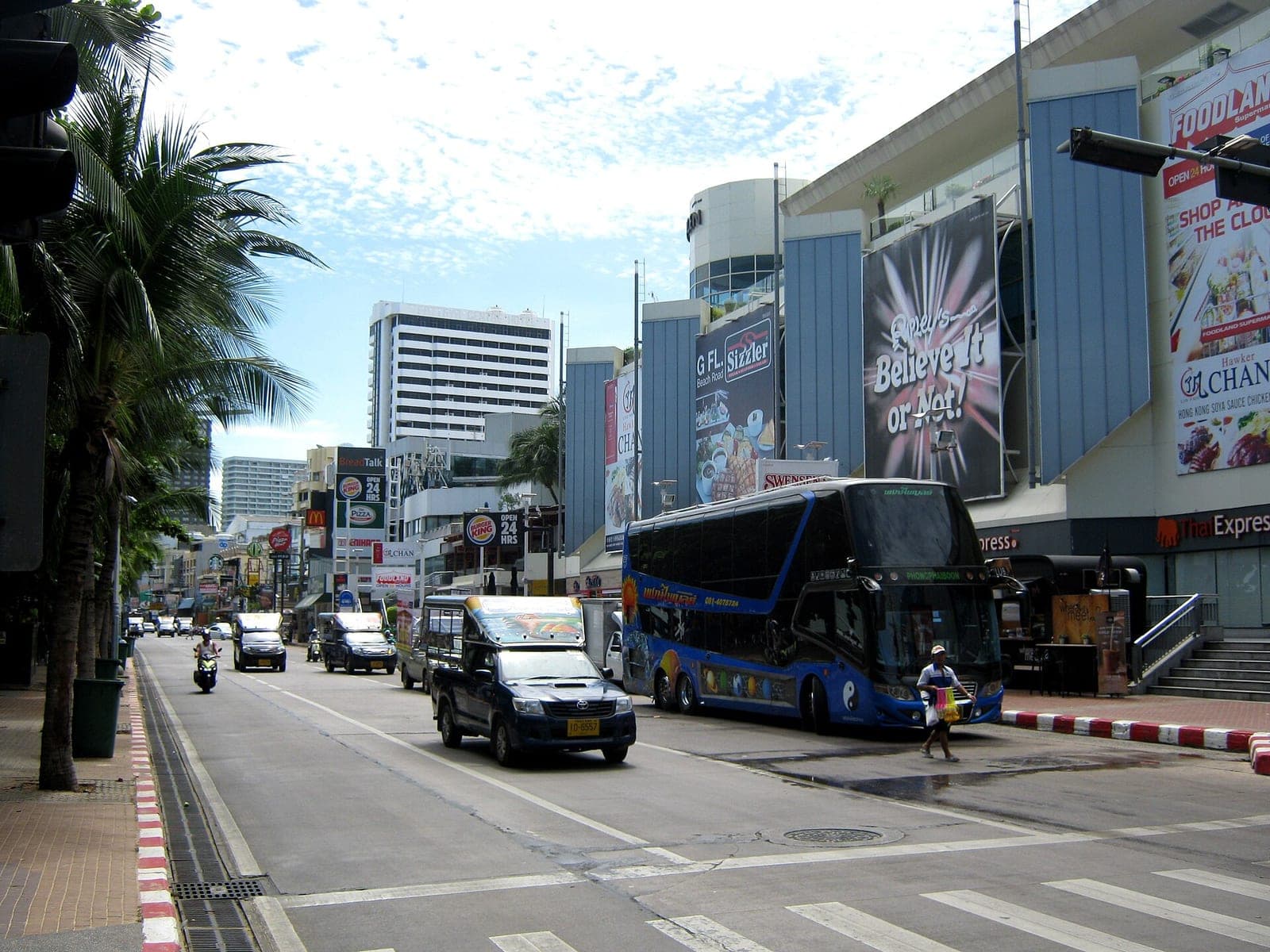
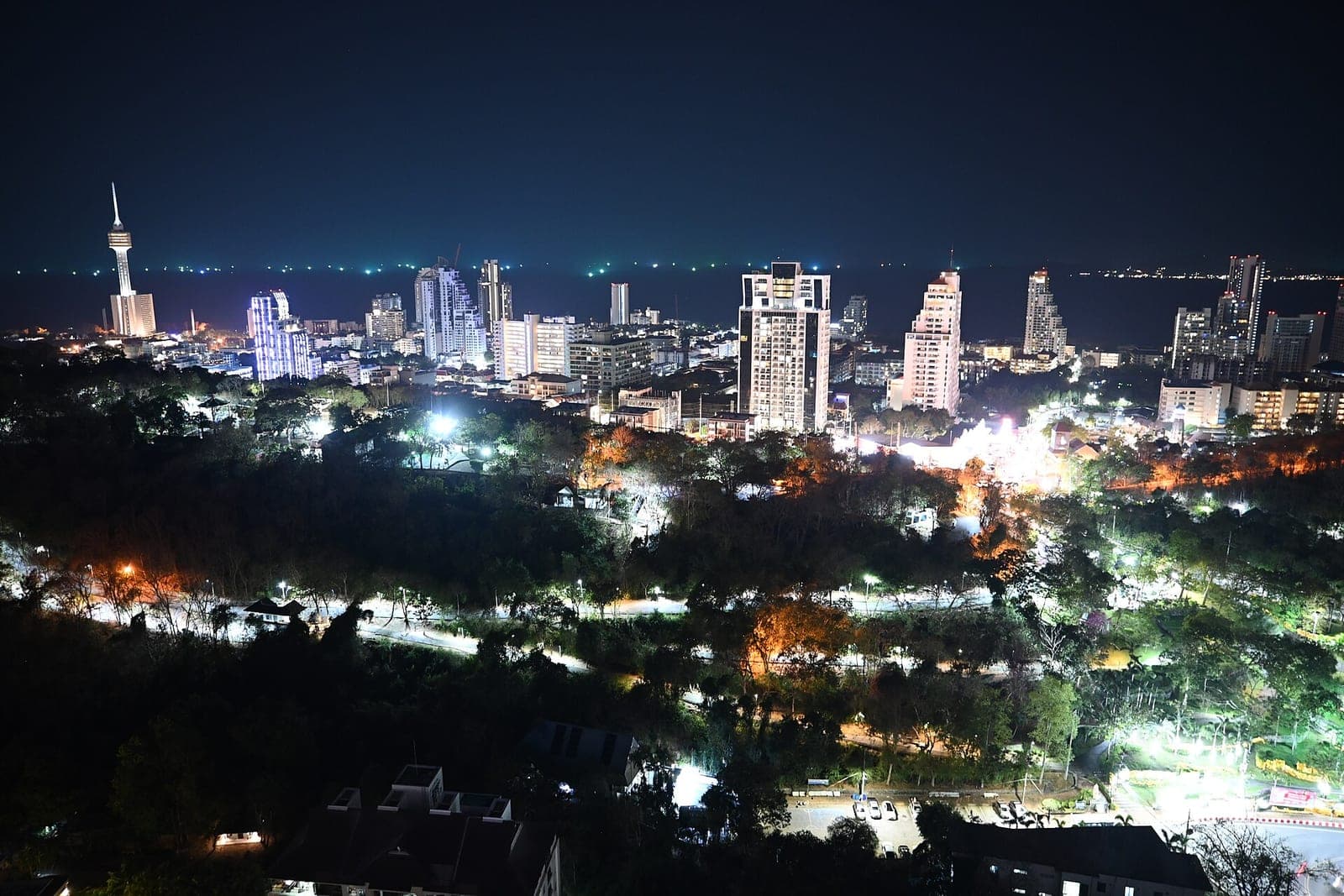
The lay of the land. Everything is arranged around a two-mile crescent of bay. Beach Road (Pattaya Sai 1) runs one-way south along the sand from the Dolphin roundabout to the Walking Street gateway; Second Road runs back north a block inland; Soi Buakhao runs parallel again, a block further in, and is where the value is. The scenes hang off that grid.
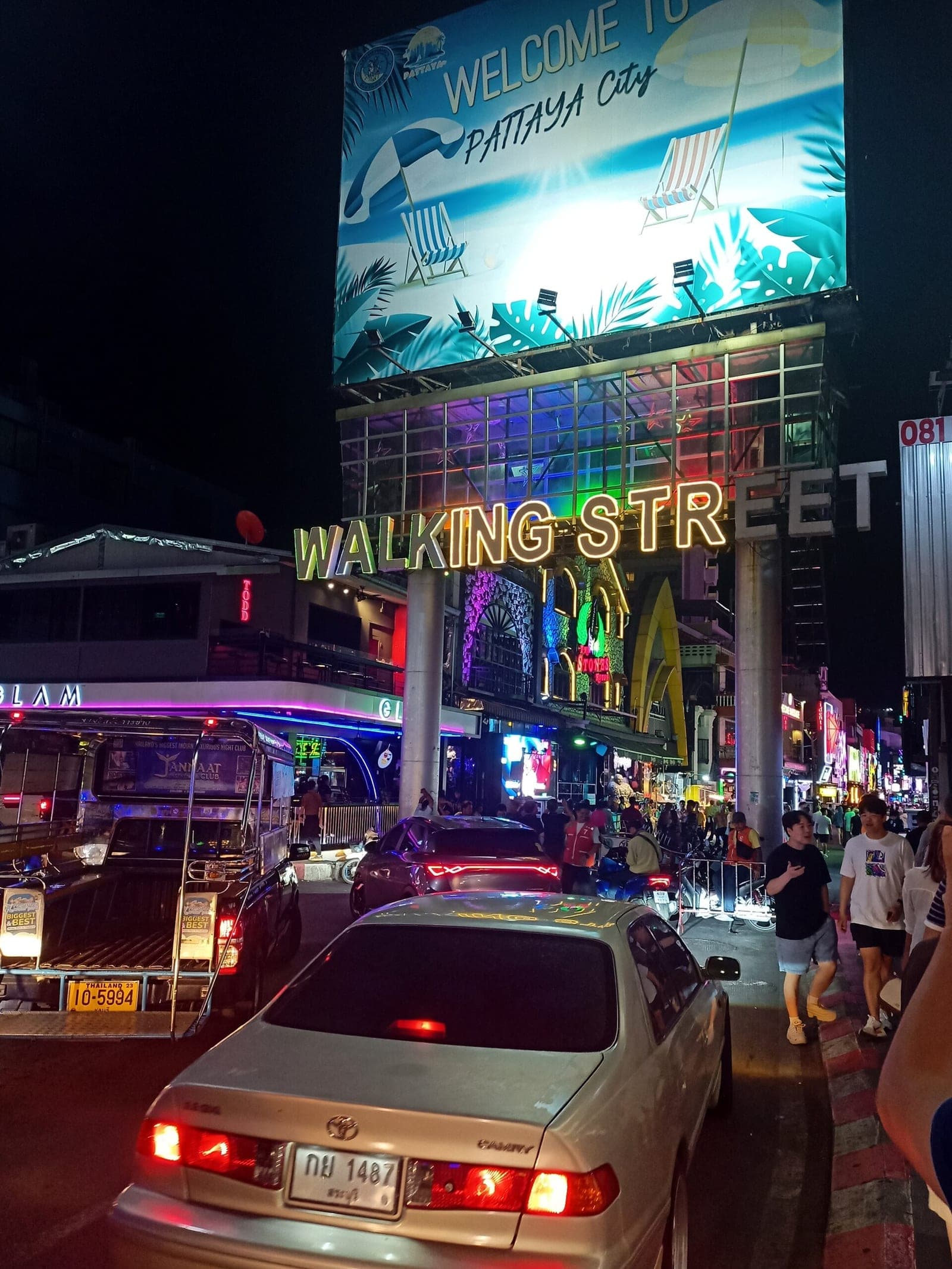
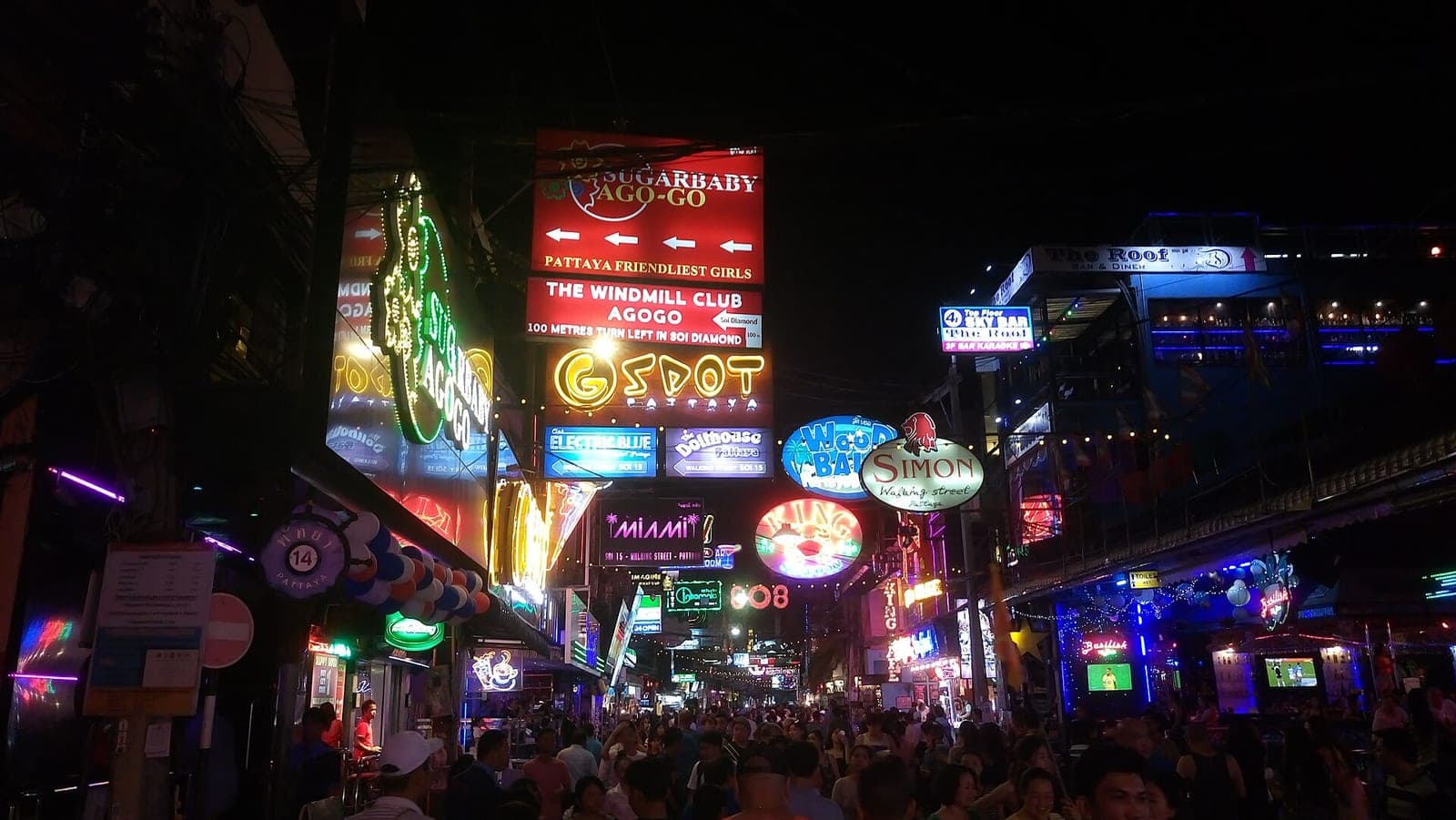
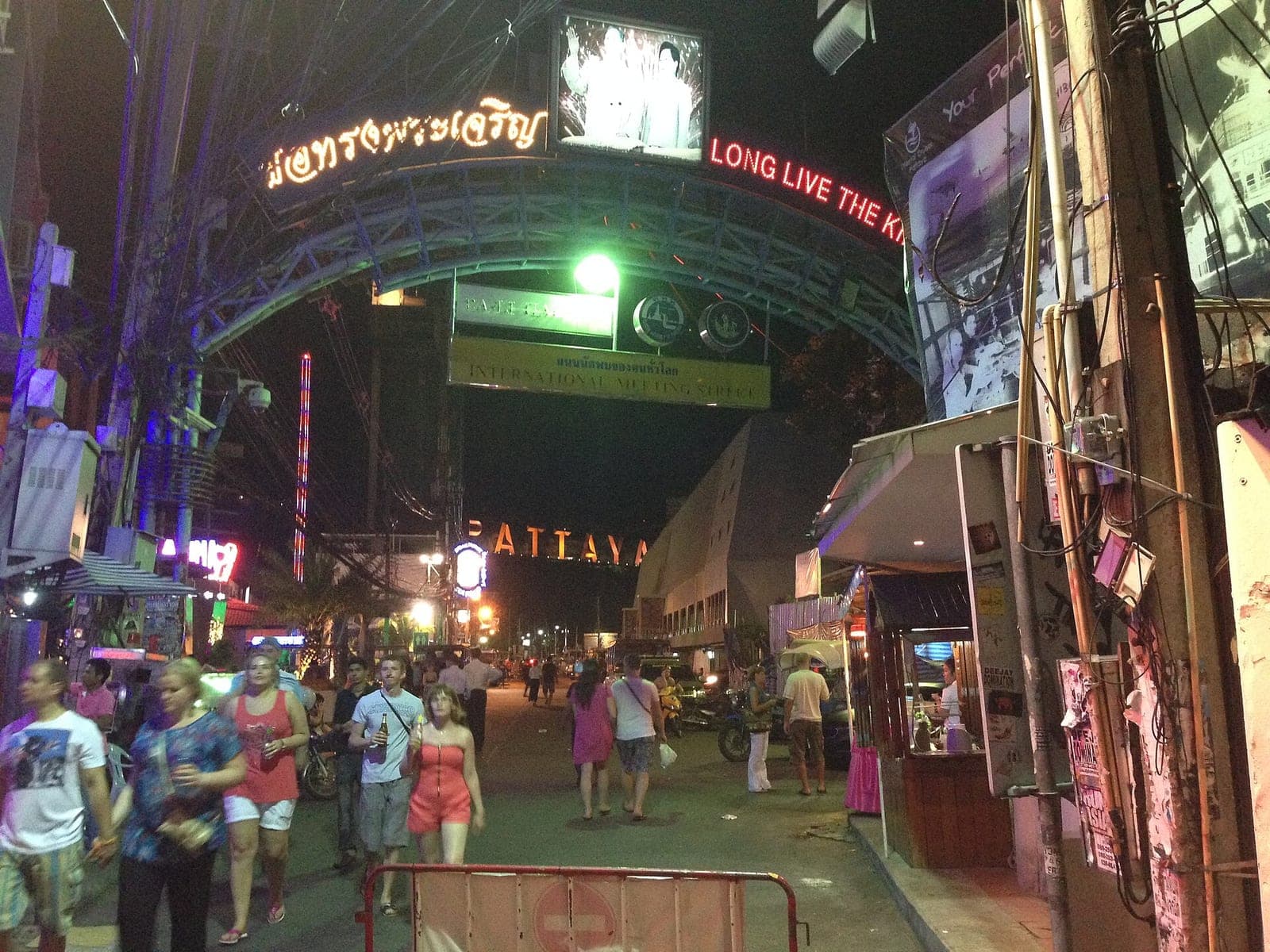
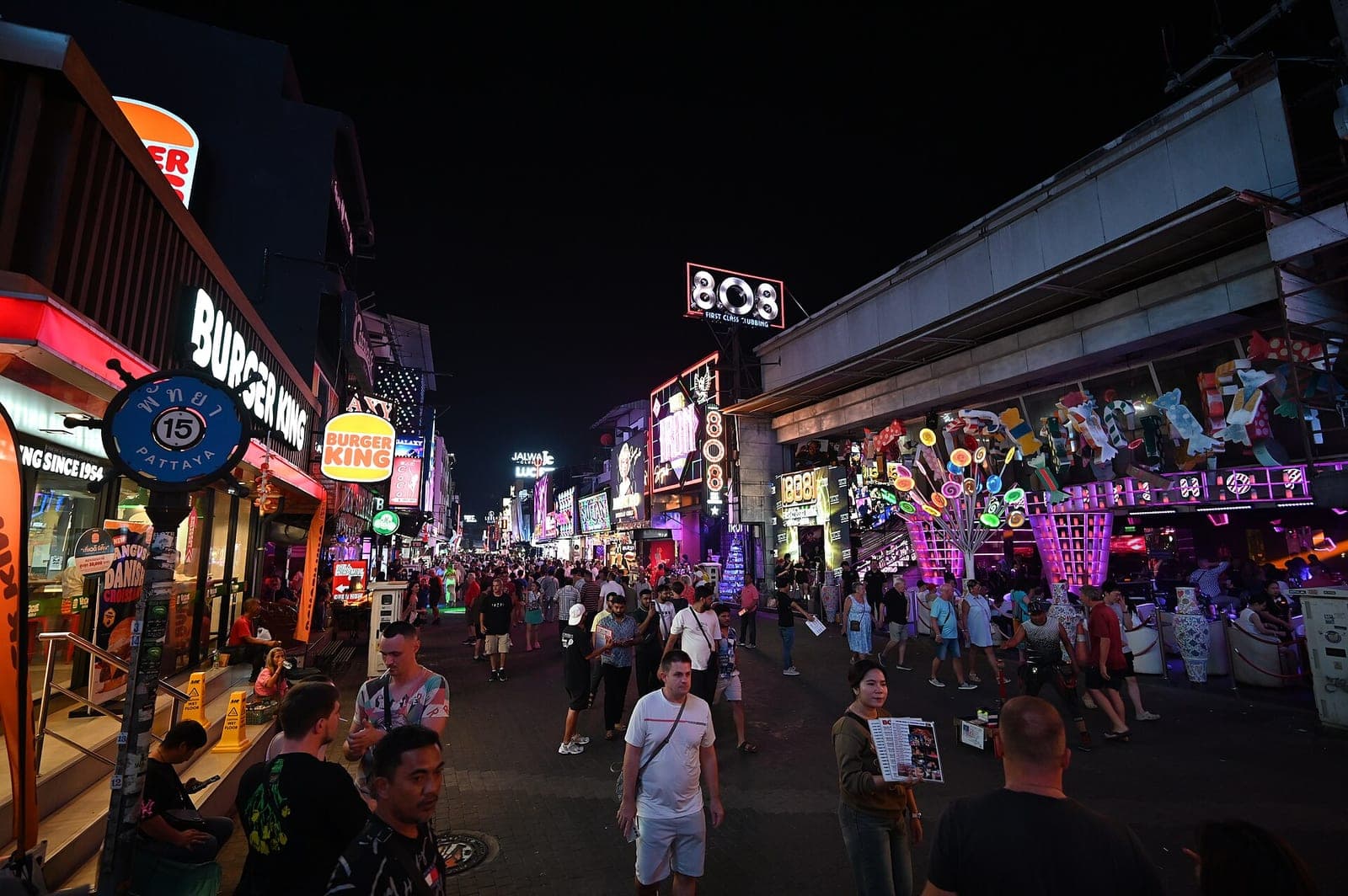
- Walking Street — the pedestrianized half-mile at the south end of Beach Road, the go-go rooms, the big nightclubs and the show. Loudest, priciest, unmissable once.
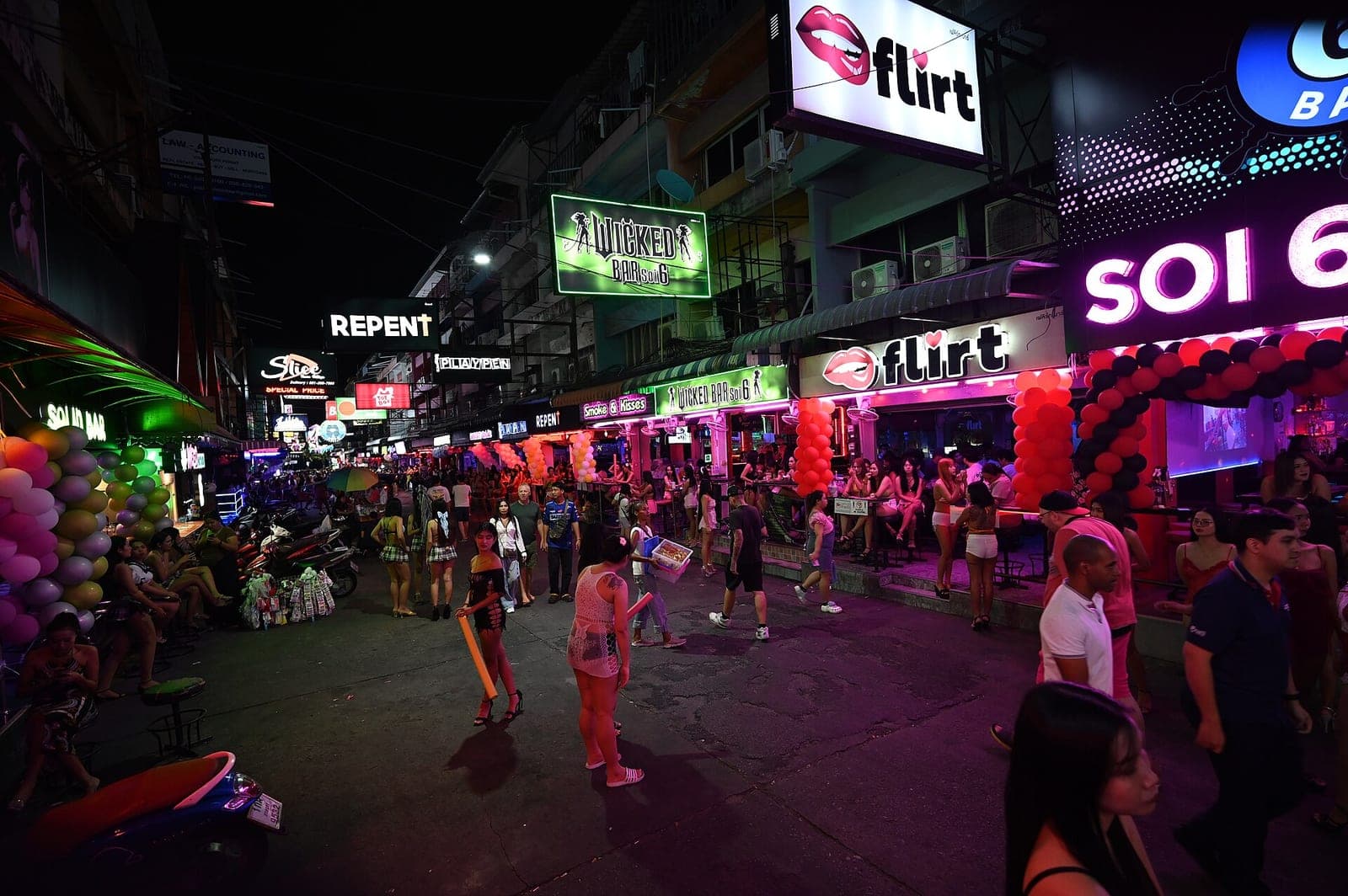
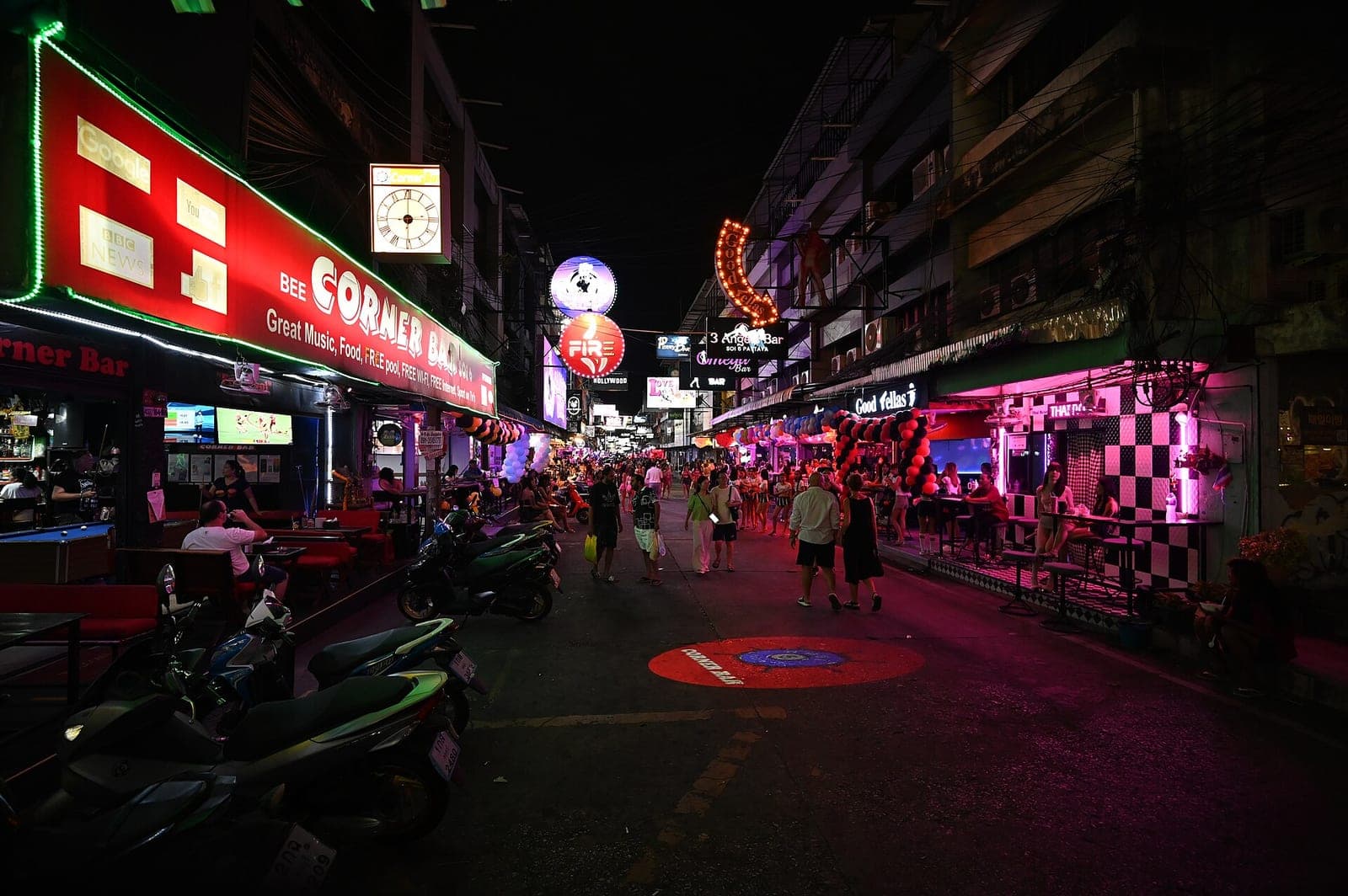
- Soi 6 — a 400-metre street of open-fronted bars at the north end, running from early afternoon. The most direct scene in the city and the fastest way to understand how all of this works.
- LK Metro — an L-shaped lane off Soi Buakhao with a dozen-plus go-go bars at 15–20% under Walking Street prices, plus sports bars and restaurants. Where the men who live here drink.
- Soi Buakhao — the mile-long inland spine: beer-bar complexes such as Tree Town, cheap guest-friendly hotels, laundries, pharmacies and the biggest expat scene in the city. The cheapest drinks in town.
- Soi 7 and Soi 8 — two parallel sois of old-school open-air beer bars near the beach, with pool tables and cover bands. Early-evening Pattaya, smaller than it was but still trading.
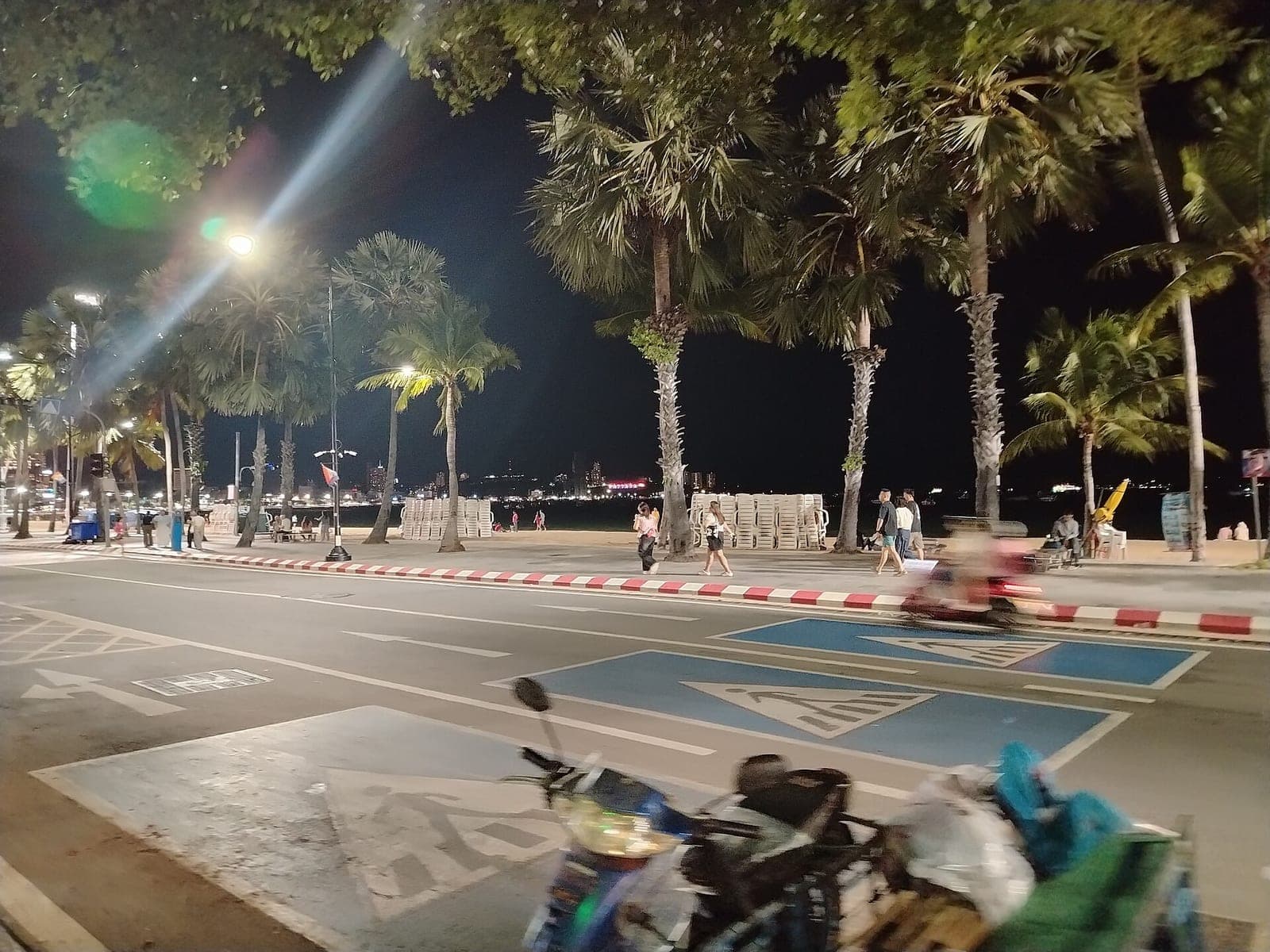
- Beach Road — the seafront itself: deckchairs, baht buses, sunset, the big hotels, and after dark a promenade that is a scene of its own.
- Jomtien — over Pratumnak hill to the south, a better beach, cheaper drinks, a large retiree population and a gentler night out. Ten to fifteen minutes by baht bus.
How a night works. Beer bars open from mid-afternoon; go-go rooms from about 19:00–20:00. Almost nothing charges a cover — the drink price is the door price. You sit down, a beer arrives ($2.50–3.50 / ฿80–110 in a beer bar, $4.60–6.20 / ฿150–200 in a go-go room as of August 2026), and if a woman sits with you, you buy her a ladies' drink at $4.50–7.50 (฿150–250) and that is her commission for the company. Nobody makes you buy a second. The bars charge bar fines and the etiquette around them matters; the whole system is taken apart in how the bar scenes work. Since late 2024 Pattaya has been one of the designated zones allowed to trade until 04:00, and Walking Street, LK Metro, Soi Buakhao and the beachfront all sit inside it — in practice most rooms are dark by 02:00–03:00 and only the clubs run to the limit. Thursday to Saturday are the big nights; the quiet early evening is far better for actually talking to somebody.
What a week costs. Excluding flights, a comfortable week for one man runs roughly $1,300–2,200 as of August 2026. It is a little dearer than Angeles City and a lot cheaper than anywhere in the West.
| Item | Typical (Aug 2026) | Notes |
|---|---|---|
| Mid-range hotel with pool | $45–85 (฿1,500–2,800) / night | Budget rooms $20–35; upscale beachfront $120–250 |
| Beer in a beer bar | $2.50–3.50 (฿80–110) | $4.60–6.20 (฿150–200) in a go-go room |
| Ladies' drink | $4.50–7.50 (฿150–250) | Beer bars low, Walking Street high |
| A full night out | $70–140 | Drinks, a few ladies' drinks, tips, transport, late food |
| Western main course | $8–15 (฿250–500) | A street-food plate is $1.50–3 |
| Baht bus hop | $0.45–0.60 (฿15–20) | Fixed route only; never state a destination |
| Suvarnabhumi to Pattaya | $40–55 (฿1,300–1,800) by car | The Roong Reuang bus is $4.50–6 (฿148–192) |
| Nightclub cover | $0–9 (฿0–300) | Usually free; holidays and events at the top |
| Month in a condo | $300–600 (฿10,000–20,000) | Six-month lease, Jomtien or central, utilities extra |
Who it suits, and who it does not. Pattaya is for the man who wants choice — a different street every night, a beach in the afternoon, an island on Wednesday, a hundred rooms he has not seen yet. It suits repeat visitors, men who like a city to disappear into, anyone travelling on a budget, and anyone who wants both a holiday and a scene. It does not suit the man who needs to be understood in fluent English (go to Angeles City); the man who wants to be a regular by Tuesday (Pattaya is too big for that in a week); the man who hates noise, hustle and traffic; or the man whose real goal is a wife rather than a fortnight — the Philippines is a shorter road to that, and we say so in Pattaya vs Angeles City and Thailand vs the Philippines.
Safety. Pattaya is safe for a sensible adult and has been for decades: lit, busy, camera-covered and heavily policed, with violent crime against visitors rare. The things that actually go wrong are mundane. Bar tabs grow faster than you counted — pay as you go until you trust a room. Jet-ski damage claims on the beach have been a fixture for twenty years; photograph the machine from every angle in front of the operator, or skip it. Rented scooters put more Westerners in Bangkok Hospital Pattaya than everything else combined, and drinking before you ride is how it happens. Freestanding ATMs charge $6.75–7.75 (฿220–250) a withdrawal and are the ones that get skimmed; use a bank machine and decline its currency conversion. Drugs mean a Thai prison, not a fine. The safety page and the scams page cover the rest, and the money guide covers the cards.
How it has changed. Pattaya grew out of a fishing village that American servicemen on leave first discovered in 1959 and the Vietnam War years made famous, and the bar trade never left; it became a city in its own right in 1978. It has been written off after every crisis since — the US withdrawal, the 1997 crash, 2020 — and has come back bigger every time. What is genuinely different in 2026: the crowd. Russians came in numbers from 2022 and stayed; Indian visitors are now Pattaya's largest and fastest-growing market, and the southern end of Walking Street has become a run of Indian clubs and restaurants that City Hall is openly marketing as a quarter of its own. Chinese group tourism is back but spends differently. The old Western bar crowd is a smaller share of a bigger city, drinks have crept up 20–30% since 2019, and the city has been tidying itself up — a rebuilt beach, a new LED gateway at Walking Street in 2025, a baht bus fare rise in April 2026. The scene itself is intact and, on a Friday in January, unchanged in every way that matters.
Pick Pattaya over Angeles City if you want variety over familiarity, a beach, a real city, and the biggest single night out in Southeast Asia. Pick Angeles if you want to be understood and remembered. Whichever you pick, the men who get the most out of Pattaya are almost never the ones who land cold — they have been talking to two or three women in Chonburi for a few weeks first, and the bars are the sideshow. Start with the first-timer's guide and online dating before you fly, then look at where to sleep and the rest of Thailand.
Scorecard
How Pattaya rates
Our 1–5 scores, the same ones that drive the rankings page. Opinion, consistently applied.
- Scene
- 5out of 5
- Ease of meeting
- 5out of 5
- Value
- 4out of 5
- English
- 3out of 5
- Safety
- 4out of 5
- Hotels
- 5out of 5
- Daytime
- 4out of 5
- Access from US
- 4out of 5
- Relationship odds
- 3out of 5
The vibe
Neon, sea air, two-stroke exhaust and grilled squid. Loud and unapologetic on the strips, ordinary and domestic two streets back, and completely indifferent to what you are doing there.
Best for
- variety and scale
- repeat visitors
- budget travelers
- go-go bars
- a beach and a scene in one trip
- long stays
Not for
- men who need fluent English
- men who want to be a regular in a week
- anyone who hates crowds and traffic
- a first trip aimed squarely at marriage
When to go & how to get around
November to February is high season: dry, breezy, low 80s°F by day, and the city at its busiest and priciest — December and January are elbow to elbow. March to May is hot and humid, with April topping 95°F (35°C) and Songkran (13–19 April in Pattaya, which runs its Wan Lai water festival last) taking over the streets for a week. June to October is the rainy season: short violent downpours, half-price rooms, quieter bars, and weather that most long-stayers actually prefer. The single best value is late May to early July; the single best atmosphere is mid-January.
Baht buses (songthaews) are the bus system: flag one on Beach Road southbound or Second Road northbound, ride in the back, buzz to stop, pay $0.45–0.60 (฿15–20) at the window — and never tell the driver where you want to go, which turns it into a charter at ten times the price. Motorbike taxis are $2–3 for anything central. Grab and Bolt work well and are $3–6 across town. Walking is fine along Beach Road and the numbered sois; the sidewalks inland are an obstacle course. Rent a scooter only if you ride at home, and never after a drink.
Safe for a sensible adult: lit, busy, policed and camera-covered, with violent crime against visitors rare. The real risks are bar tabs, jet-ski damage claims, rented scooters, freestanding ATMs and your own drinking. Drugs mean a Thai prison. Swim at flagged spots only and never after a drink.
The point of the trip
Meeting women in Pattaya
The honest headline: there are more women to meet in Pattaya than in any other city in this guide, and it is harder to have a real conversation with them than it is in Angeles City. Both halves of that sentence matter.
The women in the bars. Perhaps ten thousand women work in Pattaya nightlife on any given night, across go-go bars, beer bars, hostess bars and the complexes on Soi Buakhao. The great majority are from Isaan, the poor rural northeast, where a factory or farm job pays a small fraction of what a good month in a Pattaya bar pays, and most are supporting parents, siblings and often a child back home. They are adult women doing a job they chose from a short list of options, and the ones who last are shrewd, funny and very good at reading men. The system is the same everywhere: you buy her a drink to have her company, the bar takes most of the mark-up, and bar fines exist and are the bar's business. Manners are the whole game — greet the mamasan, do not treat a line-up as a menu, tip in cash, and be as polite leaving as arriving. How the bar scenes work is the manual.
Freelancers. Pattaya has the largest freelancer scene in Asia — women working for themselves rather than through a bar, on the Beach Road promenade after about 21:00 and in a handful of clubs. There is no bar and no accountability on either side, which is why the thefts and disputed-bill stories cluster there. Not where we would point a first-timer, and nothing further on it here.
The women who are not in the bars at all. Pattaya is a city of a few hundred thousand people, and the overwhelming majority of the women in it have never worked in a bar: shop and mall staff at Terminal 21 and Central, hotel and restaurant workers, nurses at the two big hospitals, office staff, hairdressers, gym instructors, teachers, a large population of single mothers, and the whole ordinary working city of Chonburi and Sattahip behind them. You will not meet them on Walking Street. You meet them the way anyone meets anyone — through friends, at the gym, in a coffee shop, at a Muay Thai gym if you train — and, realistically, online. Meeting women outside the bars covers the ground rules, and the honest ones are: learn twenty words of Thai, be patient with a slow conversation, and understand that "normal" Thai women date on a family timetable, not a holiday one.
English, and why it is the difference. Thailand ranks low for English in Asia and Pattaya is only a little better than the national average because so much of the trade is now Russian, Indian and Chinese. Bar staff have working bar English; hotel desks and hospitals are fine; a woman with a regular job outside tourism often has very little. Translation apps have quietly changed this — half the conversations on a Pattaya street now happen through a phone screen — but if you want to talk properly on night one, that is why we send some men to Angeles City instead.
The age gap and the economics, stated plainly. Most of our readers are 40 to 70; most of the women they will meet in Pattaya are 22 to 40. Thai culture is far more relaxed about that than American culture is, and a decent, straightforward man in his sixties does perfectly well here provided he is honest about who he is. The economics are real and pretending otherwise helps nobody: a modest US pension is a large income in Isaan, and if a relationship goes anywhere you will be asked, sooner or later, to help — with a phone bill, a bus fare, a hospital bill, a parent's roof. Decide before you go what you can comfortably give, give it rather than lend it, and never send money to a woman you have not met in person. If it becomes serious, Thai custom expects a payment to her family at marriage; the sums are negotiated and can be substantial, and you should read red flags and romance scams and long-distance relationships long before you get near that conversation.
What the relationship prospects honestly are. Middling, and worse than the Philippines. Plenty of long, happy marriages started in a Pattaya bar and plenty of expensive disasters did too. The language gap is real, Thai family obligation is heavier and less familiar than the Filipino kind, the visa road home is longer, and the size of the scene means a woman here has options and little reason to settle on the first foreigner who asks. If a relationship is the actual point of the trip, come anyway — but plan on more than one visit, get out of the bars, and start the conversation months before you land.
Start before you fly. The men who enjoy Pattaya most are the ones who had two or three conversations already running when the plane touched down: someone to text about what he had just seen, and lunch on day two with a woman who was never going to be on Walking Street. It costs nothing and it changes the shape of the whole trip. Online dating before you fly is where to start — a month out, not the night before.
Where to stay
Stay central and inland unless the beach matters more to you than the walk home. Soi Buakhao, Soi Diana and Soi Honey are where most first-timers should book: a clean room with a pool for $45–85 (฿1,500–2,800), ten minutes on foot to LK Metro and the beach, twenty to Walking Street, and the largest stock of reported guest-friendly hotels in the city. Beach Road and Second Road buy you a sea view and a shorter stagger, at 30–60% more. North Pattaya (Soi 1–5, Naklua) is quieter and near Soi 6; South Pattaya puts you on top of the noise; Pratumnak is calm, green and needs a baht bus for everything; Jomtien is a beach base with a ride home at 2am. Most mid-range Pattaya hotels are relaxed about a registered visitor with ID and the international-brand properties are the strict ones — see how guest-friendly works and our picks on the Pattaya hotels page.
Getting there from the US
From the States, plan on one stop. From the West Coast the fast routings are LAX or SFO to Tokyo, Seoul, Taipei, Hong Kong or Singapore and on to Bangkok Suvarnabhumi (BKK), around 18–22 hours door to gate; from the East Coast, JFK or EWR via Doha, Dubai, Istanbul or Tokyo, 20–24 hours. Nonstop US–Bangkok service comes and goes — check current schedules rather than assuming. Suvarnabhumi is the airport you want: it is on the east side of Bangkok and Pattaya is 2 hours (75 miles / 120 km) south on Highway 7, which is why the transfer is painless. A pre-booked car or airport taxi is $40–55 (฿1,300–1,800) with tolls; the Roong Reuang coach from the airport bus terminal runs through the day for $4.50–6 (฿148–192) and takes about 2.5 hours; minivans are cheaper and less comfortable. If you land at Don Mueang (DMK) — most budget carriers within Asia do — you are on the wrong side of Bangkok: about 150 km, two hours by car and three and a half by bus. U-Tapao (UTP) at Ban Chang is Pattaya's own airport, 40–50 km and about 45 minutes south, but as of August 2026 its network is thin and largely domestic, with only seasonal international charters in the northern winter — check the current schedule rather than planning around it. There is one slow conventional train a day from Bangkok, about three and a half hours, and no high-speed line: the 2019 three-airport rail contract went into termination proceedings in July 2026, so do not expect one this decade. Every arriving traveler must file the free Thailand Digital Arrival Card (TDAC) online within 72 hours of landing — do it before you leave home. US passport holders have had 60 days visa-exempt since 2024, but the Cabinet approved a return to 30 days in May 2026 and the change takes effect shortly after publication in the Royal Gazette; check the current rule before you book, and see visas and flights from the US.