



















Ho Chi Minh City — Saigon to almost everyone who lives here, including the airport code — is Vietnam’s commercial capital and the country’s biggest, richest, loudest city, and for a visiting Western man the part that matters is District 1: about four square kilometres of colonial boulevards, glass towers and alleys between the Saigon River and the Ben Thanh Market.
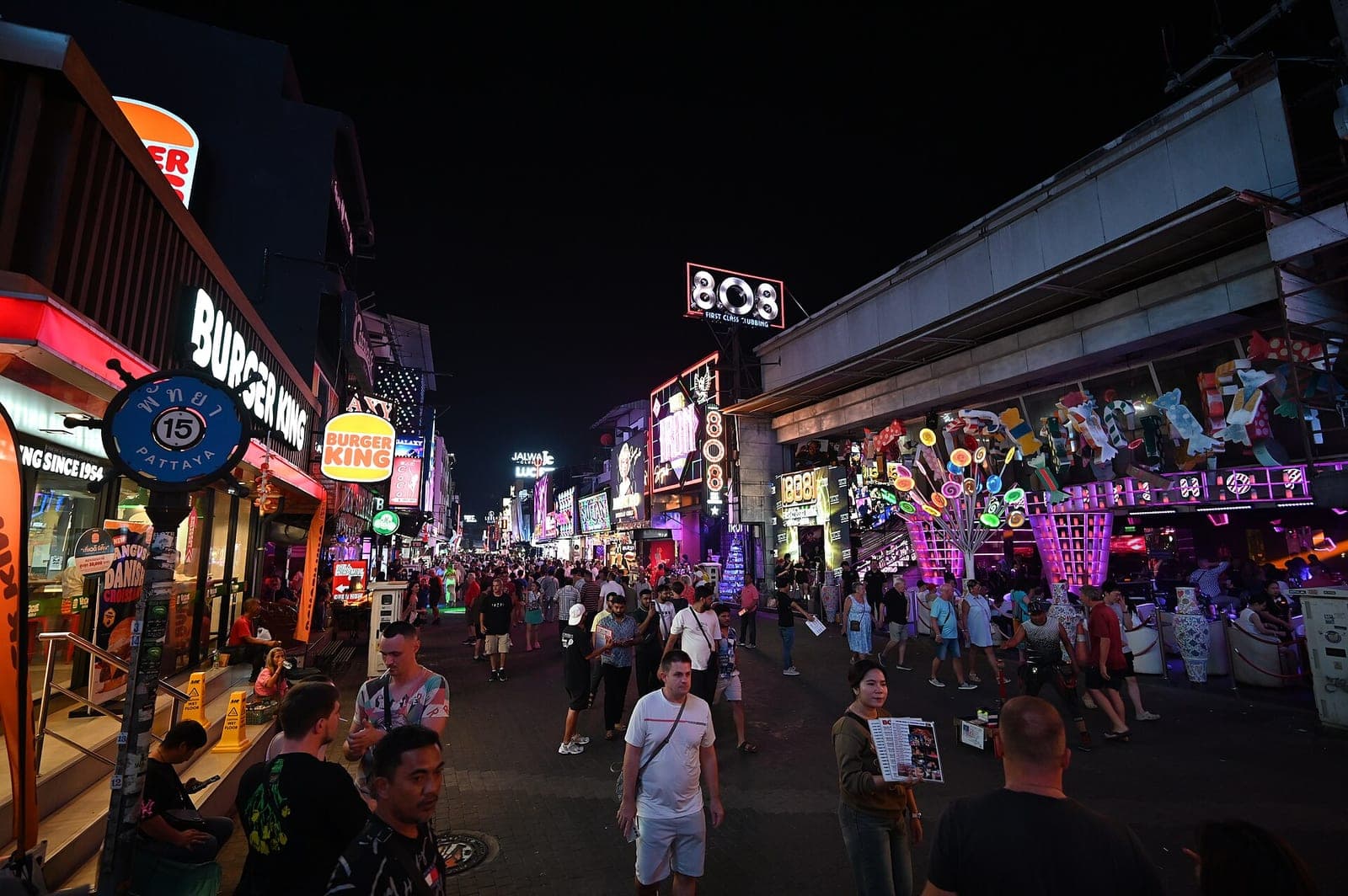
Start with the honest framing, because it saves you a week. Saigon is not Pattaya and it is not Angeles City. There is no strip of go-go bars, no walking street of open-fronted beer bars, no system where you sit down and someone joins you. Vietnam’s laws on all of this are stricter than Thailand’s and are enforced in waves, so the scene that exists is smaller, more discreet and mostly indoors. What Saigon has instead is an extraordinary amount of ordinary life: a young, working, urban population, more coffee shops and rooftop bars than you could visit in a month, food that beats anything in the region, and prices that undercut Bangkok by a third. Men who enjoy it are the ones who came for a city, not for a bar street.
The lay of the land. Three places cover the nightlife.
Bui Vien Street, in the Pham Ngu Lao backpacker quarter, is the loud one: a few hundred metres of open-fronted bars, hostels, neon, shot girls and pavement seating, pedestrianized on Friday, Saturday and Sunday evenings from about 7pm to 2am. It is the closest thing Saigon has to Bangla Road, and it is much more a young backpacker street than a scene for a man in his fifties.
Little Tokyo, around Le Thanh Ton, is the opposite: an unmarked warren of alleys — 15A and 15B Le Thanh Ton, Thai Van Lung, Ngo Van Nam, Thi Sach — full of izakayas, karaoke rooms, spas and hostess clubs serving a resident Japanese community. It is where the city’s hostess-bar culture actually lives. Some rooms welcome any customer; some are Japanese-clientele-only in practice; almost all of them are expensive, and prices are not posted.
District 1’s rooftops and clubs are the third leg and the best of them: the Saigon Saigon Bar on the ninth floor of the Caravelle, which has been pouring since 1959, the Rex’s Rooftop Garden Bar, the sky bars along Nguyen Hue and Le Thi Hong Gam, and a late club scene off Thi Sach and Ly Tu Trong that fills after midnight. This is where Saigon is genuinely world-class, and where you meet Vietnamese women who are simply out for the evening.
How a typical night works. Sunset on a rooftop from about six with a $6–9 cocktail. Dinner for $5–15 — do it on a plastic stool at least once, because the street food here is the best reason to visit Vietnam. Then either the noise of Bui Vien or the quiet of a Le Thanh Ton alley, and after midnight, a club. Nobody will approach you the way they do in Thailand; you have to start the conversation, and that is the single biggest adjustment a man arriving from Pattaya has to make.
What a week costs. The dong runs at roughly ₫26,000 to the dollar as of August 2026, and the mental arithmetic never gets easier — the notes have a lot of zeros and ₫500,000 is about $19.
| Item | Typical (Aug 2026) |
|---|---|
| Mid-range 3–4 star hotel, District 1 | $40–80 a night |
| Local beer in a bar | $1.20–2.50 (₫30,000–60,000) |
| Cocktail on a rooftop | $6–12 |
| Bowl of pho | $1.75–3 (₫45,000–80,000) |
| Grab motorbike across District 1 | $1–2 |
| Airport to District 1 by Grab car | $6–9, 20–40 min |
| Club entry | Usually free; $8–20 on event nights |
| One-bedroom apartment, monthly | $450–900 |
| Vietnam e-visa, 90 days | $25 single entry, $50 multiple |
| A comfortable week, all in, excluding flights | $700–1,300 |
Who it suits. A man who has already done Thailand or the Philippines and wants a city rather than a scene. Anyone who cares about food. Anyone who wants to spend the daytime doing something — the War Remnants Museum, the Cu Chi tunnels, the Mekong Delta, the coffee, the tailors — because Saigon’s daytime is far better than Pattaya’s. Long-stayers on a budget: District 1 apartments start around $450 a month and the coworking scene is real. And men who prefer to meet women online and then have a coffee date, because that is how Vietnam works.
Who it does not suit. A first-timer. We mean that plainly: a man who has never done this before will land in Saigon, find no bar street that behaves the way the internet promised, spend four nights on Bui Vien among twenty-three-year-olds, and go home thinking Asia is overrated. Send him to Pattaya or Angeles City and let him come here on trip three. It also does not suit anyone who needs English — outside hotels and the tourist core it is thin, and thinner than in Cambodia — anyone who dislikes traffic, or anyone who assumes his hotel will be relaxed about visitors.
The legal and hotel realities. Two things catch men out. First, prostitution is illegal in Vietnam and enforcement comes in periodic, well-publicised sweeps of karaoke bars and clubs; foreigners are not a protected class and a police raid is a genuinely bad evening. Second, Vietnamese hotels are required to register everyone who sleeps in a room with the local authorities, which is why a front desk asks for your visitor’s ID card. Backpacker-area and mid-range hotels are generally used to this and handle it without comment; some family-run mini-hotels and some international chains simply will not. This is why we score Saigon lower than Phnom Penh on hotels, and it is the single most common complaint we hear from men who came here expecting Thai norms. Ask when you book, not at midnight.
Safety. Saigon is a safe city for violent crime by any standard and a bad one for theft. Bag and phone snatching from moving motorbikes is the defining street crime here — phone out of your hand while you walk, bag on the shoulder away from the road, nothing on an outdoor café table. Traffic is the other real hazard: the motorbike swarm looks lethal and is mostly not, but you cross by walking slowly and predictably and letting it flow around you, never by running. Watch your drink in the clubs. Since January 2025 Vietnam has banned nitrous oxide, shisha and e-cigarettes outright and has been arresting sellers on Bui Vien; the balloons you may read about in older guides are now a police matter. Drug offences carry sentences up to and including death. None of this makes Saigon dangerous. It makes it a city with rules, and the rules are not the Thai ones.
How it has changed. Fast, and mostly for the better. Metro Line 1 opened on 22 December 2024 and now runs from Ben Thanh under the centre and out east — fourteen stations, fares of ₫7,000–20,000, and District 1 stops at Ben Thanh, the Opera House and Ba Son. Tan Son Nhat’s new domestic terminal T3 opened in April 2025, easing a genuinely miserable airport, and the long-delayed Long Thanh airport 40 km east had a technical opening in December 2025 with commercial flights targeted for late 2026. The July 2025 administrative reorganisation merged neighbouring provinces into the city and renamed the wards, so hotel addresses now read “Sai Gon Ward” where they used to read “District 1” — everyone still says District 1, and so do we. On the nightlife side, the direction of travel is more rooftops and craft beer, fewer of the old expat dives. Compare it with the alternative next door on the Phnom Penh page, which is smaller, cheaper and much more open — and see the Vietnam country page for visas, money and the rest.
Scorecard
How Ho Chi Minh City rates
Our 1–5 scores, the same ones that drive the rankings page. Opinion, consistently applied.
- Scene
- 3out of 5
- Ease of meeting
- 3out of 5
- Value
- 4out of 5
- English
- 2out of 5
- Safety
- 3out of 5
- Hotels
- 3out of 5
- Daytime
- 3out of 5
- Access from US
- 3out of 5
- Relationship odds
- 3out of 5
The vibe
Ten million motorbikes, an iced coffee on a plastic stool, a rooftop with a $9 cocktail and a war-era hotel bar. Energetic, chaotic, cheap and considerably more discreet than anywhere else in this guide.
Best for
- men who have already done Thailand or the Philippines
- food, coffee and daytime sightseeing
- rooftop bars and a proper city
- long stays on a budget
- meeting women online and taking them for coffee
Not for
- first-timers expecting a bar street
- anyone who needs English
- men who want an open, Thai-style scene
- anyone who assumes hotels are relaxed about visitors
When to go & how to get around
December to April is the dry season and the best time to come: warm, bright and largely rainless, with December to February the most comfortable. May to November is the wet season — mornings are usually fine, and the rain arrives as a spectacular hour-long afternoon downpour rather than a washout — and hotels are cheaper. Avoid Tet, the lunar new year, unless you specifically want to see it: it fell on 17 February in 2026, half the city goes home to the provinces, and bars, restaurants and shops close for the best part of a week. September and October are quiet, wet and good value.
Grab is the city — a motorbike across District 1 is $1–2 and a car $2–4, and Xanh SM’s electric cars and bikes are the main alternative. Metro Line 1 opened in December 2024 and runs from Ben Thanh east through the Opera House and Ba Son for ₫7,000–20,000; it is clean, fast and does not go anywhere you need at night. District 1 is walkable if you accept that crossing the road is a skill: step out slowly, keep a constant pace, do not stop, and the motorbikes will part around you. Do not rent a bike yourself unless you have a Vietnamese-valid licence — an international permit alone is not enough and your insurance will not pay.
Violent crime against foreigners is rare; theft is not. Snatch-and-ride motorbike thieves take phones and bags — keep your phone pocketed while walking, your bag on the side away from the road, and nothing on an outdoor table. Cross the traffic slowly and predictably. Watch your drink in clubs, check bar bills before you pay, and remember that nitrous oxide, shisha and e-cigarettes have been illegal since January 2025 and that drug offences carry the death penalty.
The point of the trip
Meeting women in Ho Chi Minh City
Saigon rewards a completely different approach from Pattaya, and men who cannot make that switch have a poor week here.
The bar women. They exist, but you have to know where. The hostess clubs of Little Tokyo are the real thing — a woman sits with you, pours your drink and talks, and you pay handsomely for the privilege — but the culture is Japanese, the pricing is not posted, and some venues quietly prefer Japanese customers. On Bui Vien the equivalent is the shot girls and the women working the pavement bars, which is a younger and more transactional scene than most of our readers want. There are also karaoke rooms and “massage” shops all over the city that are not what they advertise, are periodically raided, and are not somewhere we would send you. If an open bar scene is what you came for, you are in the wrong country, and Phnom Penh is a 45-minute flight away.
Freelancers. After midnight the clubs off Thi Sach and Ly Tu Trong fill with women who are not attached to anything. Same rules as any club in Asia: buy your own drinks and watch them poured, never hand over your phone, be clear and decent about what you are offering, and remember that your hotel will want her ID at the desk. In Vietnam that last point is not optional and it is not the hotel being difficult — it is the law.
Women who are not working. This is the real Saigon opportunity and the reason we rank the city as high as we do. It is a young, ambitious, English-learning city of office workers, students, baristas and salespeople, and a great many Vietnamese women in their late twenties and thirties are genuinely interested in meeting a Western man. The venues are ordinary: rooftop bars, craft-beer places, coffee shops, gyms, language exchanges, salsa nights. The approach is Western-normal and slow — you start the conversation, you keep it light, you ask for a coffee rather than a drink, and you accept that a first meeting is a first meeting. Meeting women outside the bars is the practical guide.
The culture, which matters here. Vietnamese dating is more conservative than Thai and much more family-centred. Public affection is minimal. A woman may live with her parents into her thirties and will not be casual about being seen with you. Face matters: never correct or tease someone in front of others. And the war is history to her generation but not to her grandparents — be gracious about it and say nothing clever. The culture and respect guide and dating culture by country go through it properly.
The age gap and the economics, plainly. A District 1 office salary is commonly $400–700 a month; a factory or service wage is less. Your pension goes a long way. Vietnamese women are, as a rule, less direct about money than their neighbours and more likely to insist on paying their share early on — and there is still a real romance-scam industry operating out of this country, both online and in person, and a smaller but genuine trade in bar bills that triple between the first drink and the last. Neither is a reason to be suspicious of everyone. Read red flags and romance scams, never send money to someone you have not met, and ask the price of everything before it is poured.
Relationship prospects. Honestly good, and better than the scene suggests. Vietnamese-Western marriages are common, the women tend to be hard-working and family-oriented, and the K-1 and CR-1 route from Vietnam is well trodden. The obstacles are language — English here is weaker than in the Philippines and often weaker than in Cambodia — and the family, who will want to meet you and will have opinions. Long-distance relationships covers the middle bit.
Before you fly. Vietnam is the most online-dating-dependent city in this guide, simply because there is no bar street to walk down. Almost every man we know who had a good time in Saigon had been messaging two or three women for a few weeks before he landed and had coffee dates in the diary for his first weekend. AsianDating’s video verification is worth more here than anywhere, because the fake-profile problem in Vietnam is real. Read online dating before you fly before you book anything.
Where to stay
Stay in District 1 and nowhere else on a first visit. Within it, three choices. Around Lam Son Square, Dong Khoi and Nguyen Hue is the smart, central option — the Caravelle, the Rex and Liberty Central Citypoint are all here, you are walking distance from the rooftops and ten minutes from everything else, and it is quiet at night. Pham Ngu Lao / Bui Vien is cheaper, younger and louder; the Elios is the sensible mid-range pick if you want to be able to walk home. The Le Thanh Ton and Thai Van Lung blocks put you in Little Tokyo, with a row of small three-stars that are used to the way visitors behave. Ask about the visitor policy when you book — see the Saigon hotels page and the guest-friendly explainer.
Getting there from the US
There has been a nonstop from the US West Coast — Vietnam Airlines has flown San Francisco to Saigon since 2021, around 16 hours, and US–Vietnam nonstops have a history of coming and going, so check the schedule when you book — plus one-stop routings on Korean Air via Seoul, EVA via Taipei, Japan Airlines and ANA via Tokyo, Singapore Airlines via Singapore and Cathay via Hong Kong, typically 20–24 hours door to door from the West Coast and 24–30 from the East. It also pairs naturally with the rest of the region: Bangkok to Saigon is 90 minutes, Phnom Penh is 45 minutes in the air or six hours on a bus, and Hanoi is a two-hour domestic hop with a dozen flights a day.
The airport. Tan Son Nhat (SGN) sits about 7 km (4 miles) north of District 1 — one of the closest big-city airports in Asia — but the traffic is what it is, so allow 20 minutes at 6am and 40 or more at 6pm. International arrivals use Terminal 2; the new domestic Terminal 3 opened in April 2025 and is a considerable improvement. A Grab or Xanh SM car to District 1 runs about $6–9, a metered Vinasun or Mai Linh taxi ₫150,000–200,000, and the 109 bus goes to Ben Thanh for about sixty cents. Book the car in the app from inside the terminal; the men who approach you at the door are not the deal they say they are. US passports need a visa: the e-visa is $25 single entry or $50 multiple, valid up to 90 days, applied for at the official portal evisa.gov.vn — allow a week, and ignore the reseller sites that charge four times as much. A second airport, Long Thanh, 40 km east, had a technical opening in December 2025 with commercial flights targeted for late 2026; check which one your ticket says.