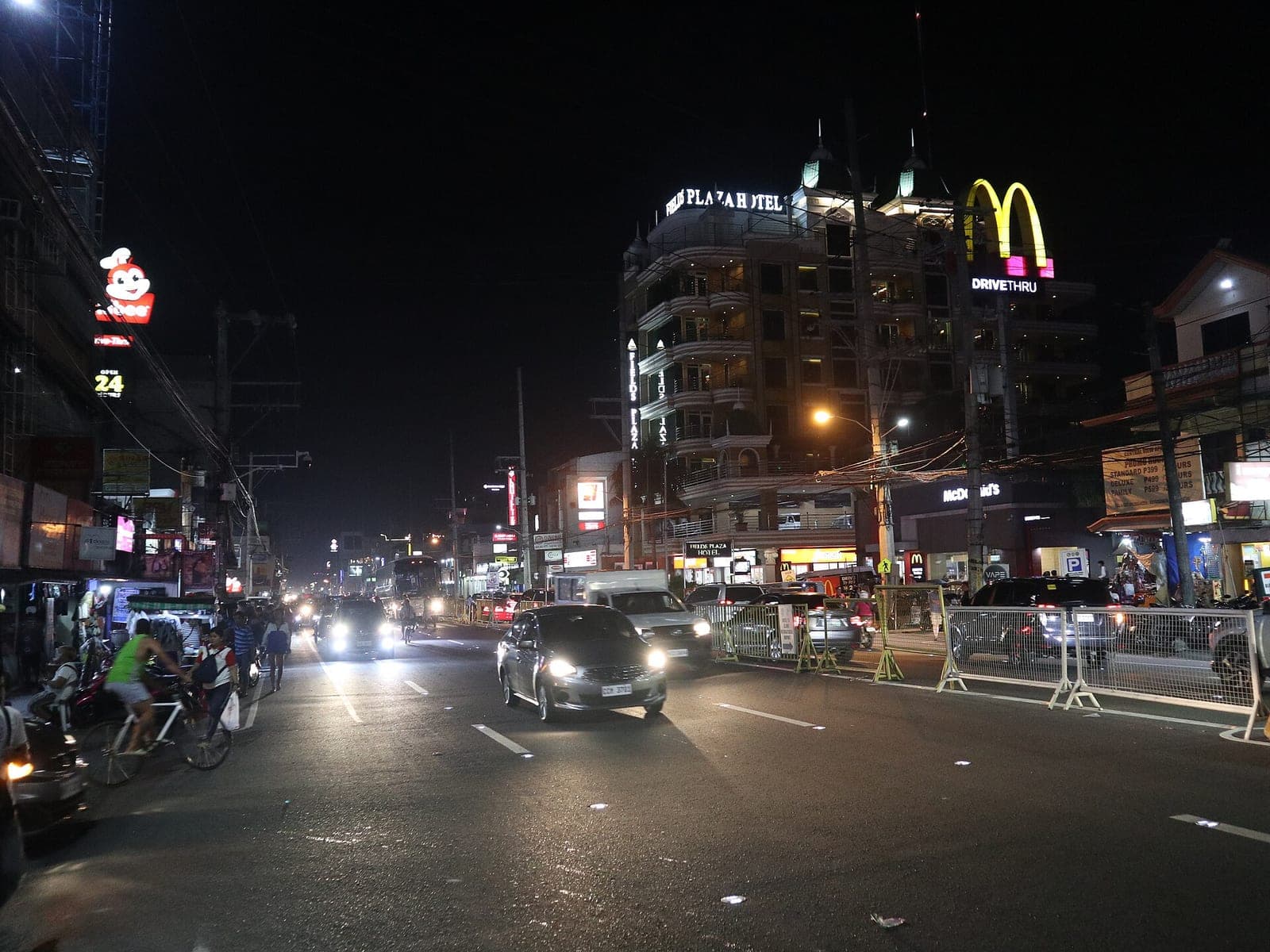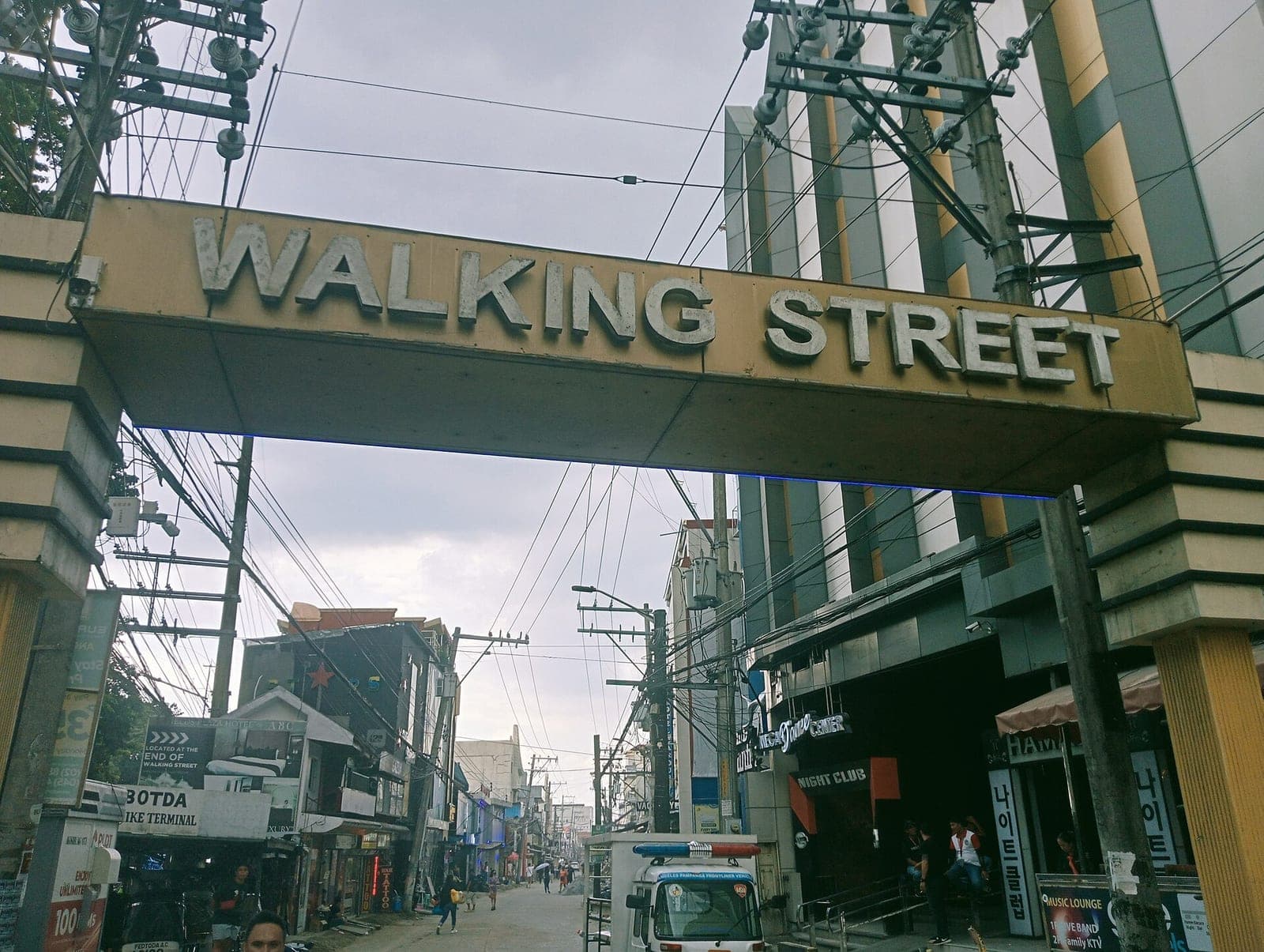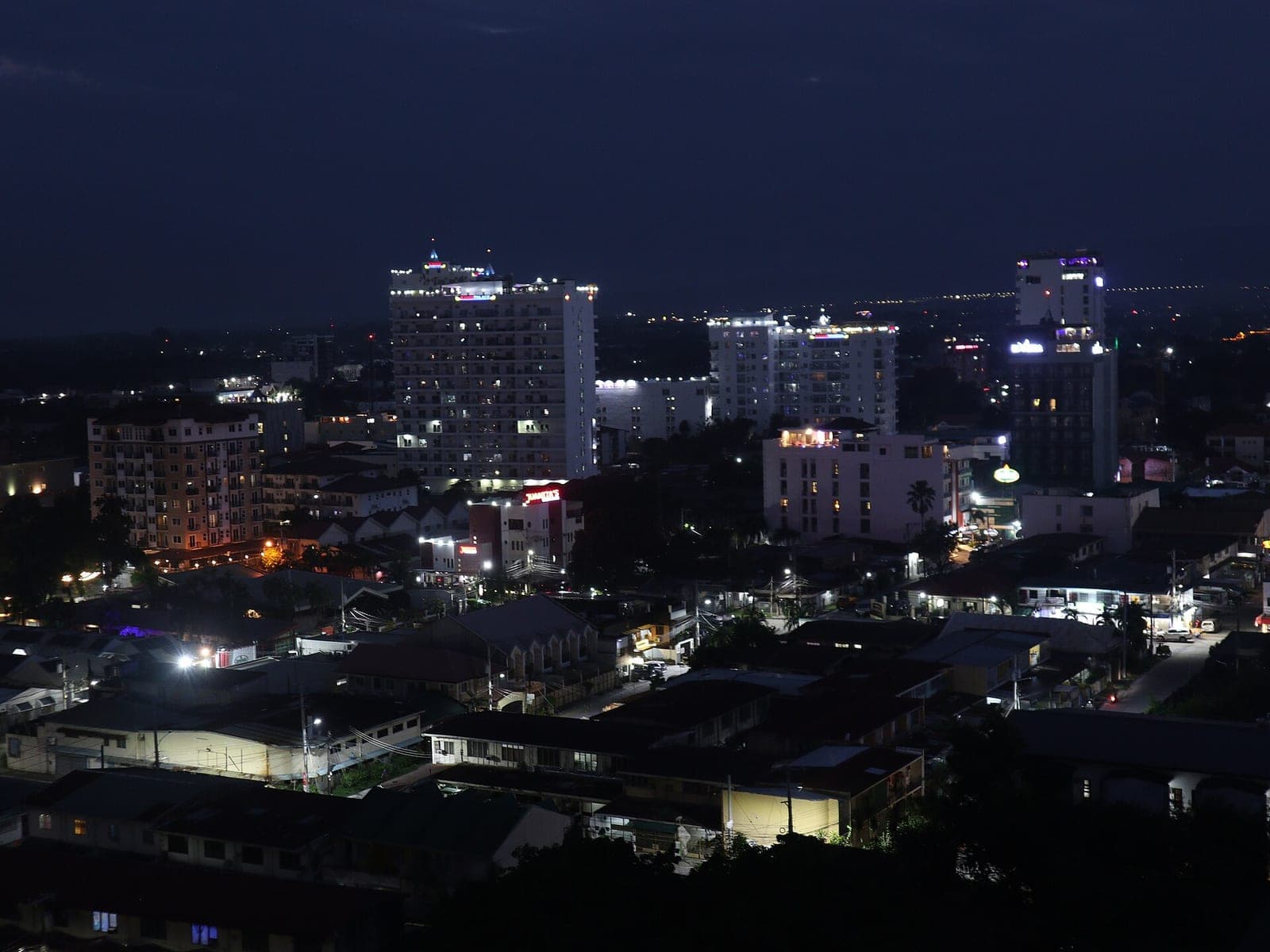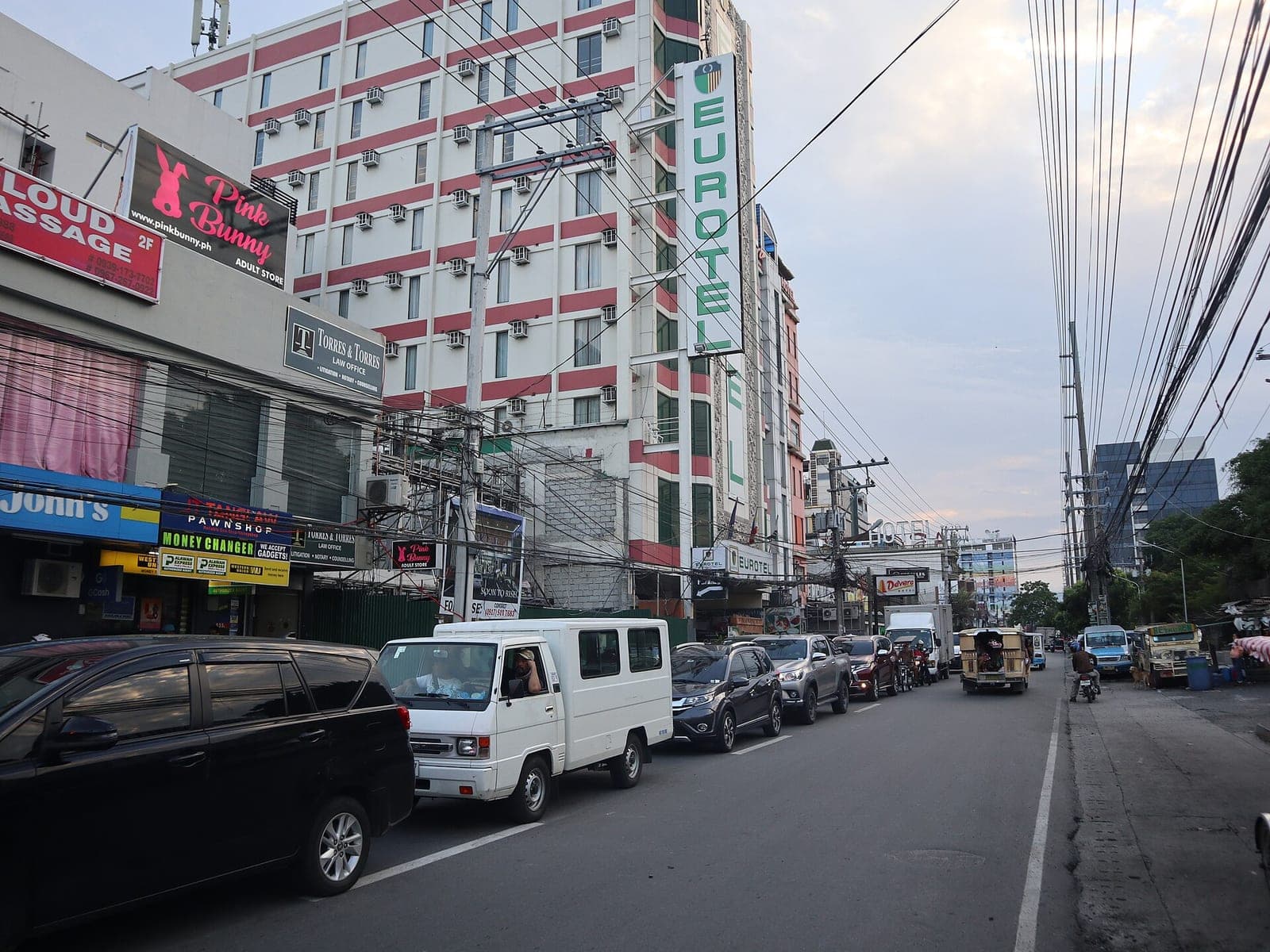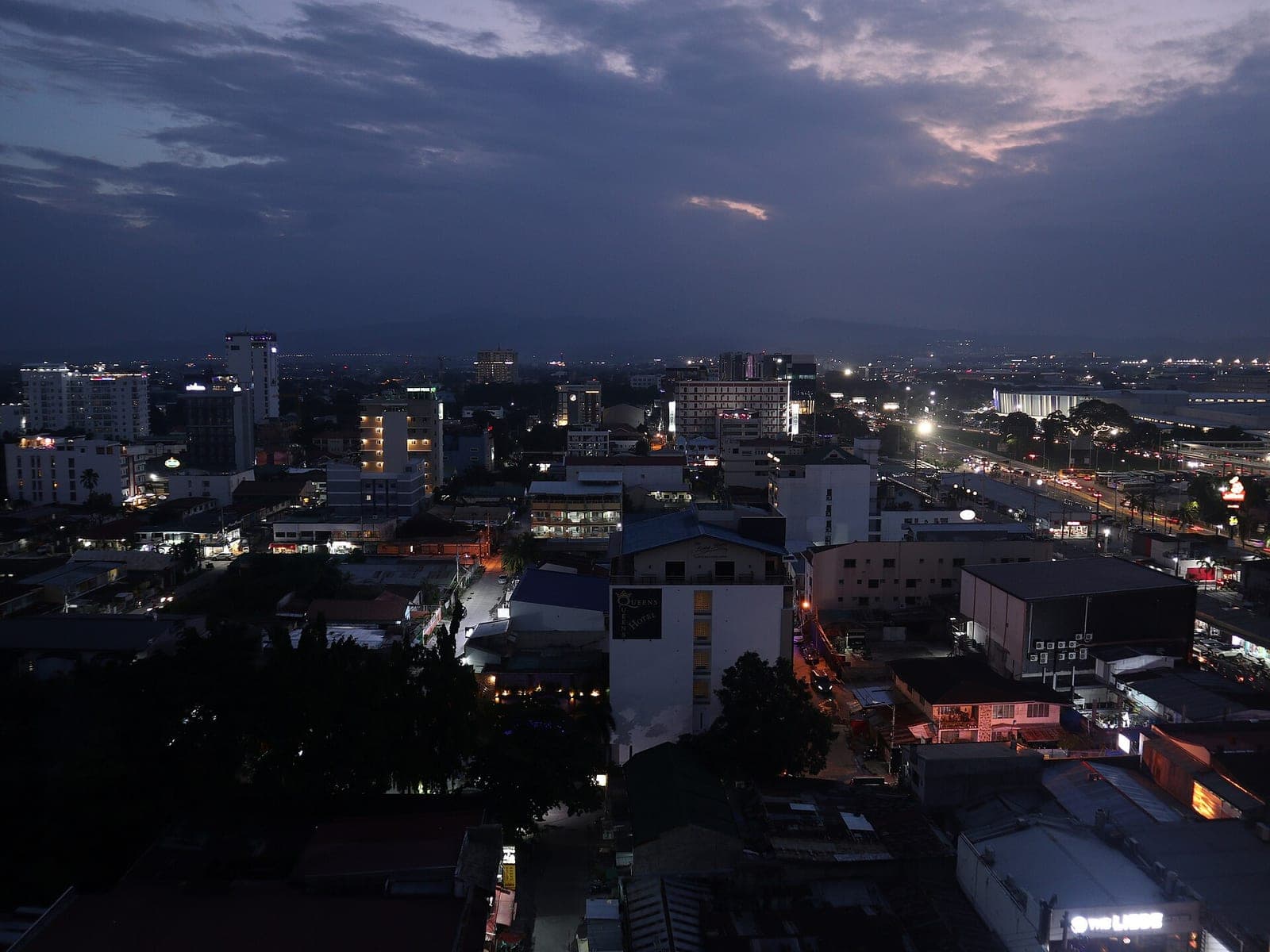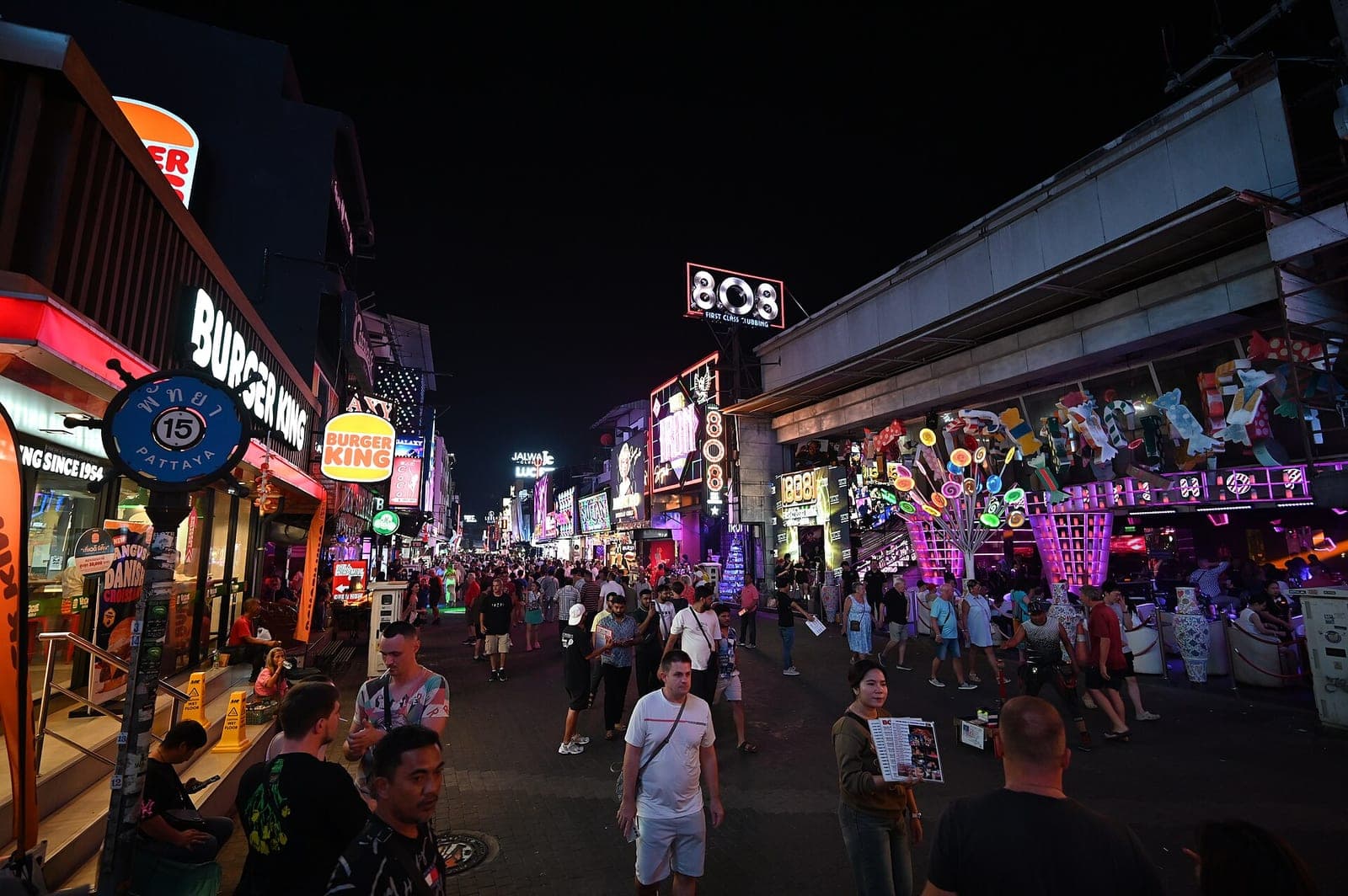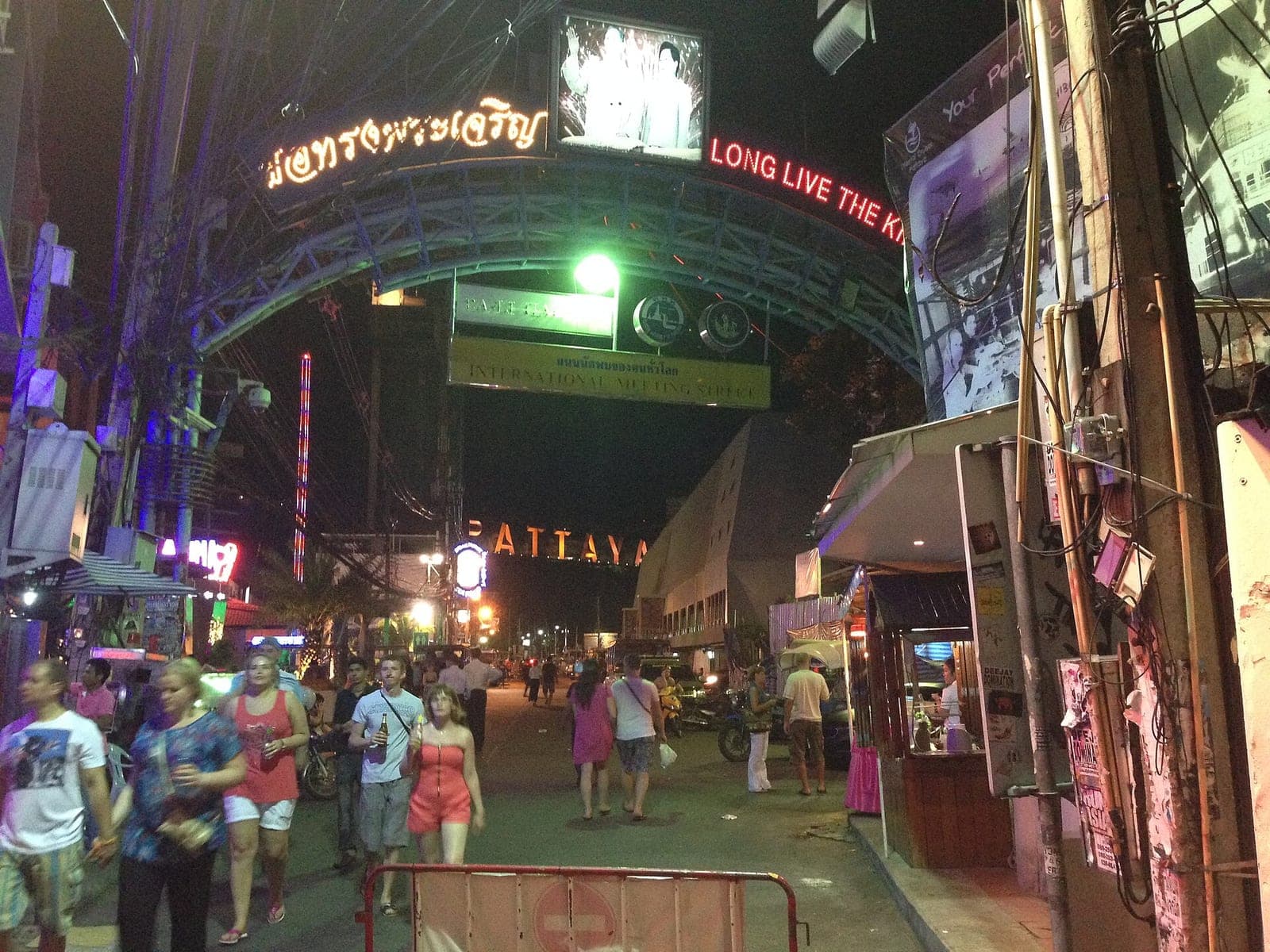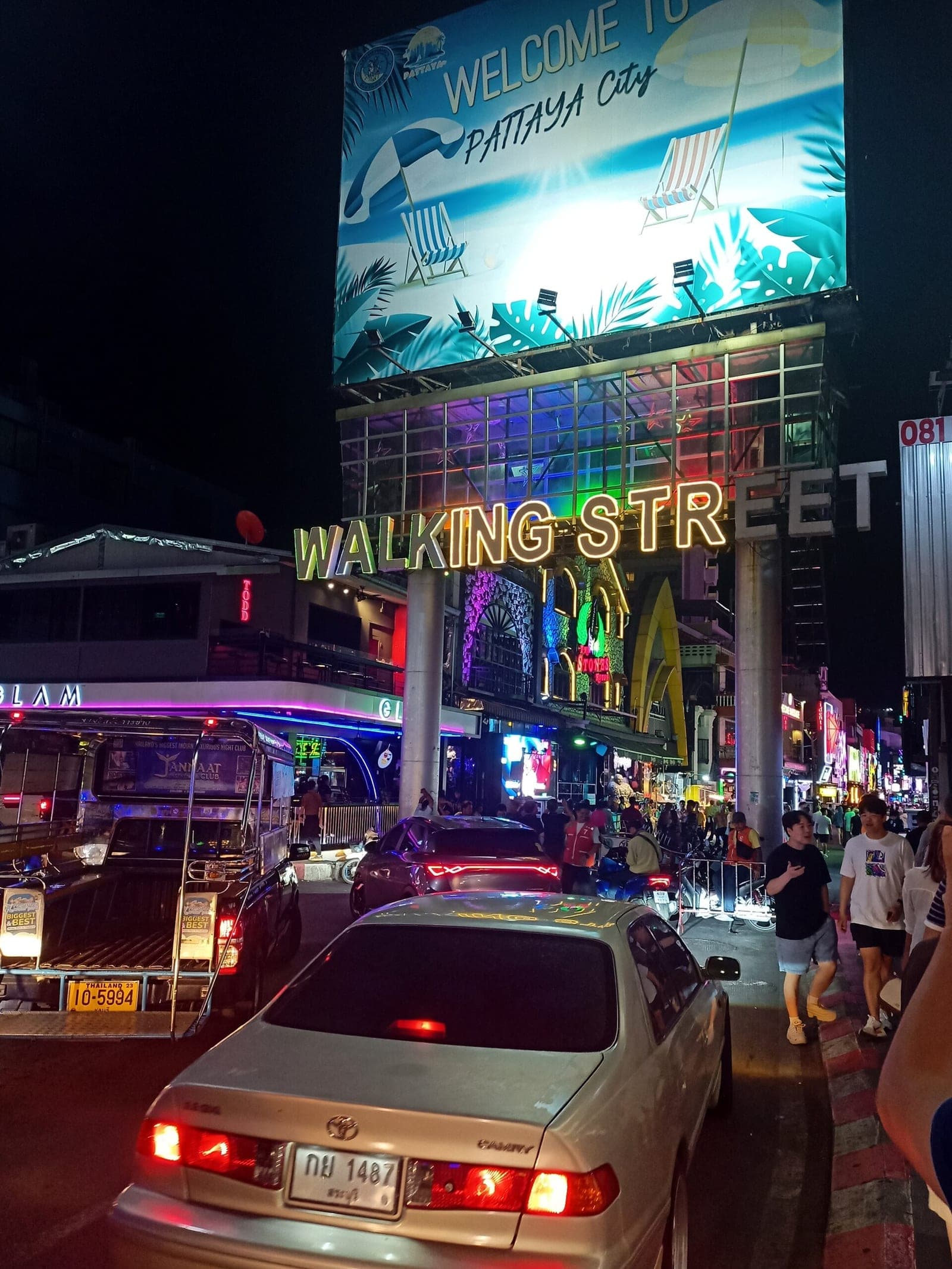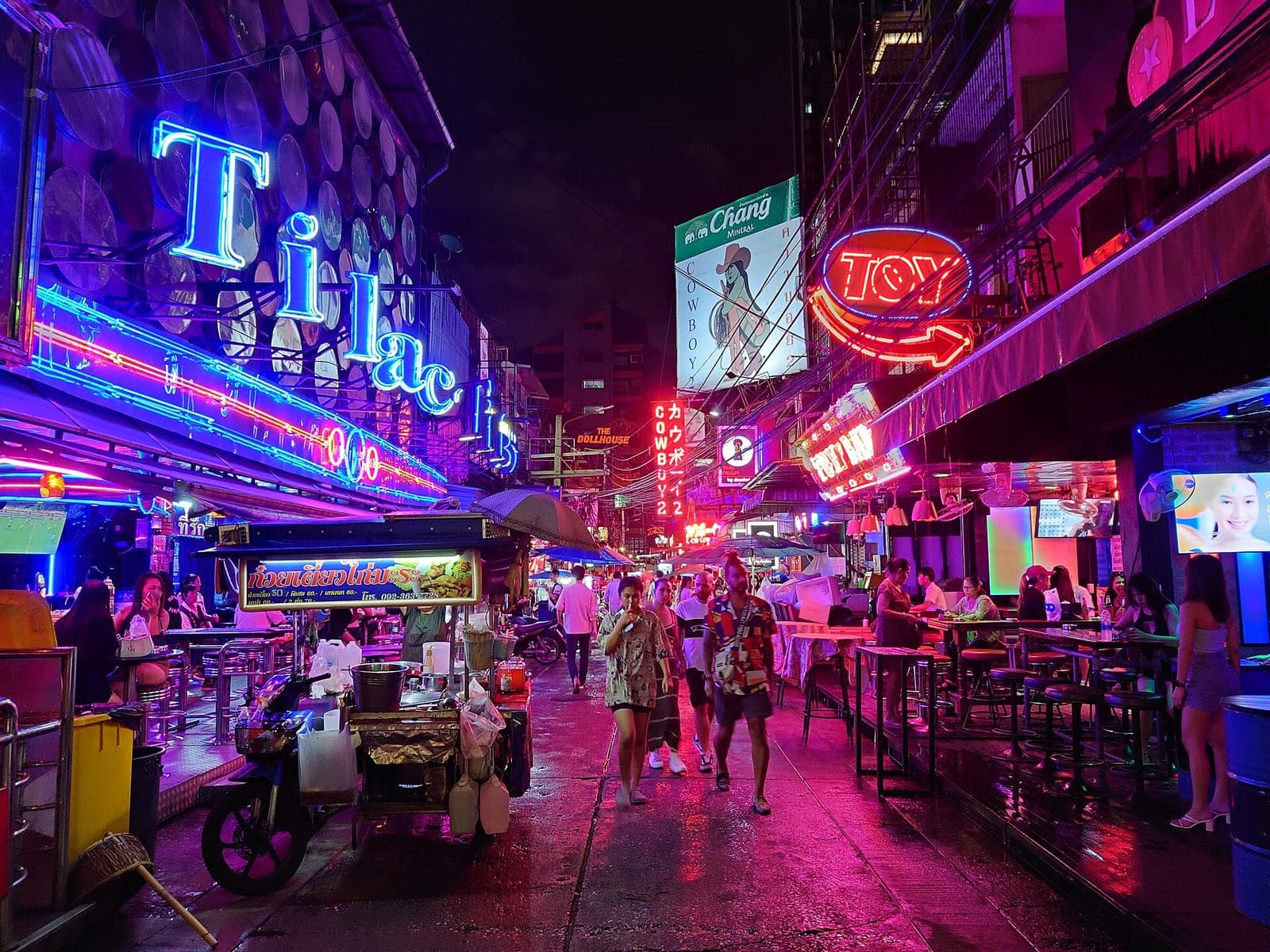


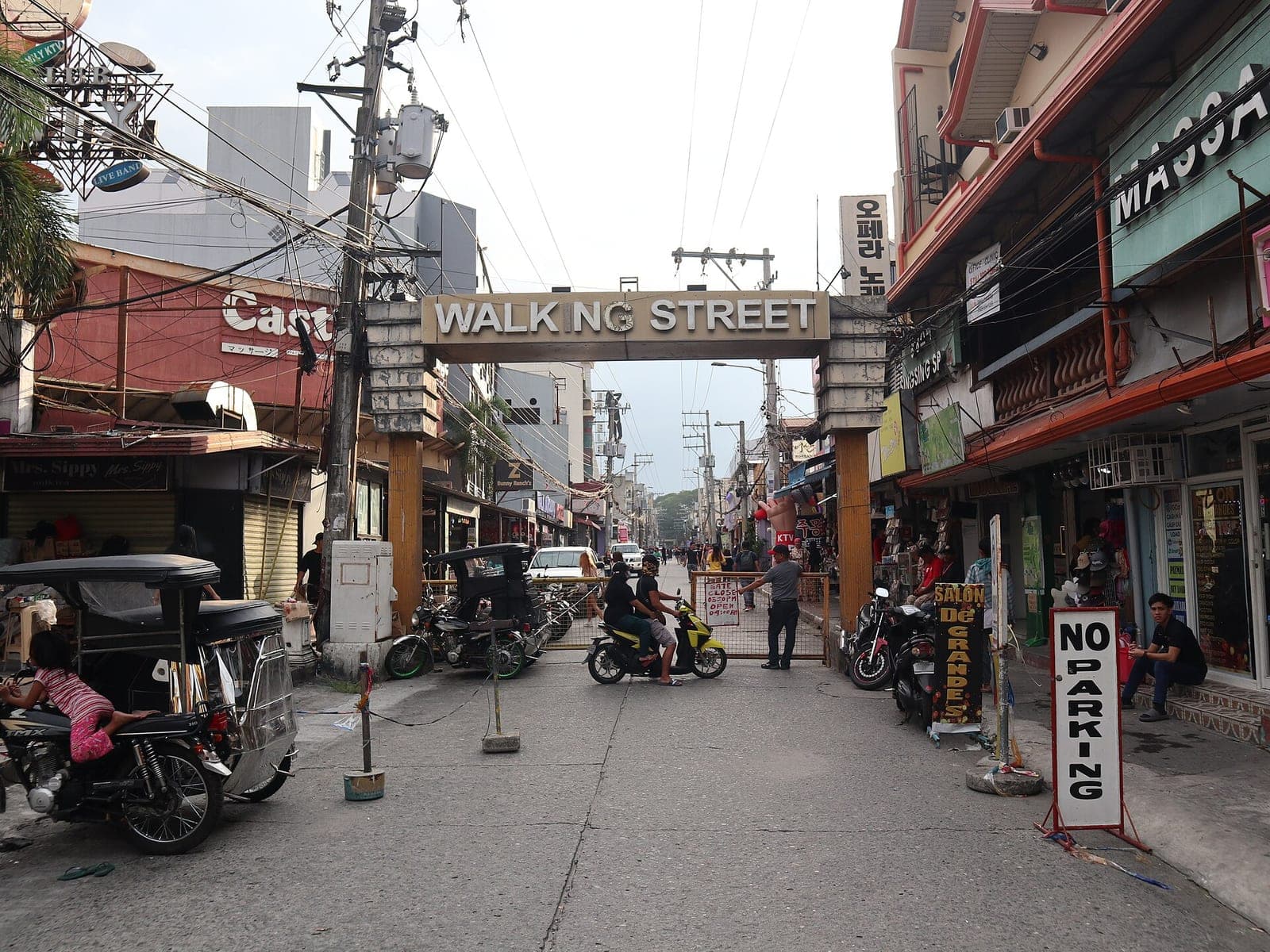


















Angeles City is an inland city of about 460,000 people in Pampanga province, 50 miles (80 km) north of Manila on the Central Luzon plain, and its Balibago district — Fields Avenue and the few hundred yards of it that close to traffic each night as Walking Street — holds the largest concentration of go-go bars, beer bars and women working in nightlife anywhere in the Philippines. Together with Pattaya it is one of the two places we tell a first-timer to go, and for a certain kind of man it is the better of the two.
Why it sits at the top with Pattaya. Five reasons, in the order they matter. English is an official language here and nearly everyone you deal with — the woman on the next stool, the front desk, the trike driver, the pharmacist, the immigration officer — speaks it well, which turns a holiday of pointing and smiling into one of actual conversation. The people are warm in a way that surprises men who have done Thailand first; Filipinas are chatty, funny and direct, and the town is small enough that you are a regular by your third night. It is cheap: a beer in a beer bar is $2–3 (₱100–150) and a clean mid-range room with a pool a few minutes from the arch is $50–70 (₱2,800–4,000) a night as of August 2026. The hotels are the most relaxed about visitors of any city we cover — the great majority register a guest with photo ID and charge nothing, which is not true of Bangkok or Kuala Lumpur and only mostly true of Pattaya (see our guest-friendly hotels explainer). And Clark International Airport (CRK) is 20–30 minutes from Fields Avenue, so there is no two-hour transfer from a capital city at the end of a long flight.
What it lacks. Be clear-eyed. There is no beach — the nearest sand is Subic Bay, an hour west. The town is small: one strip, two side streets, one long road along the old air-base fence, and you will have seen all of it in three nights. Daytime is thin — hotel pools, a couple of malls, the casinos inside Clark, a Pinatubo trek if you are fit, the old town's church and a plate of sisig downtown. The food is fine rather than memorable. If variety, sea air and a different bar street every night are what you want, Pattaya wins, and we say so in Pattaya vs Angeles City and Thailand vs the Philippines.
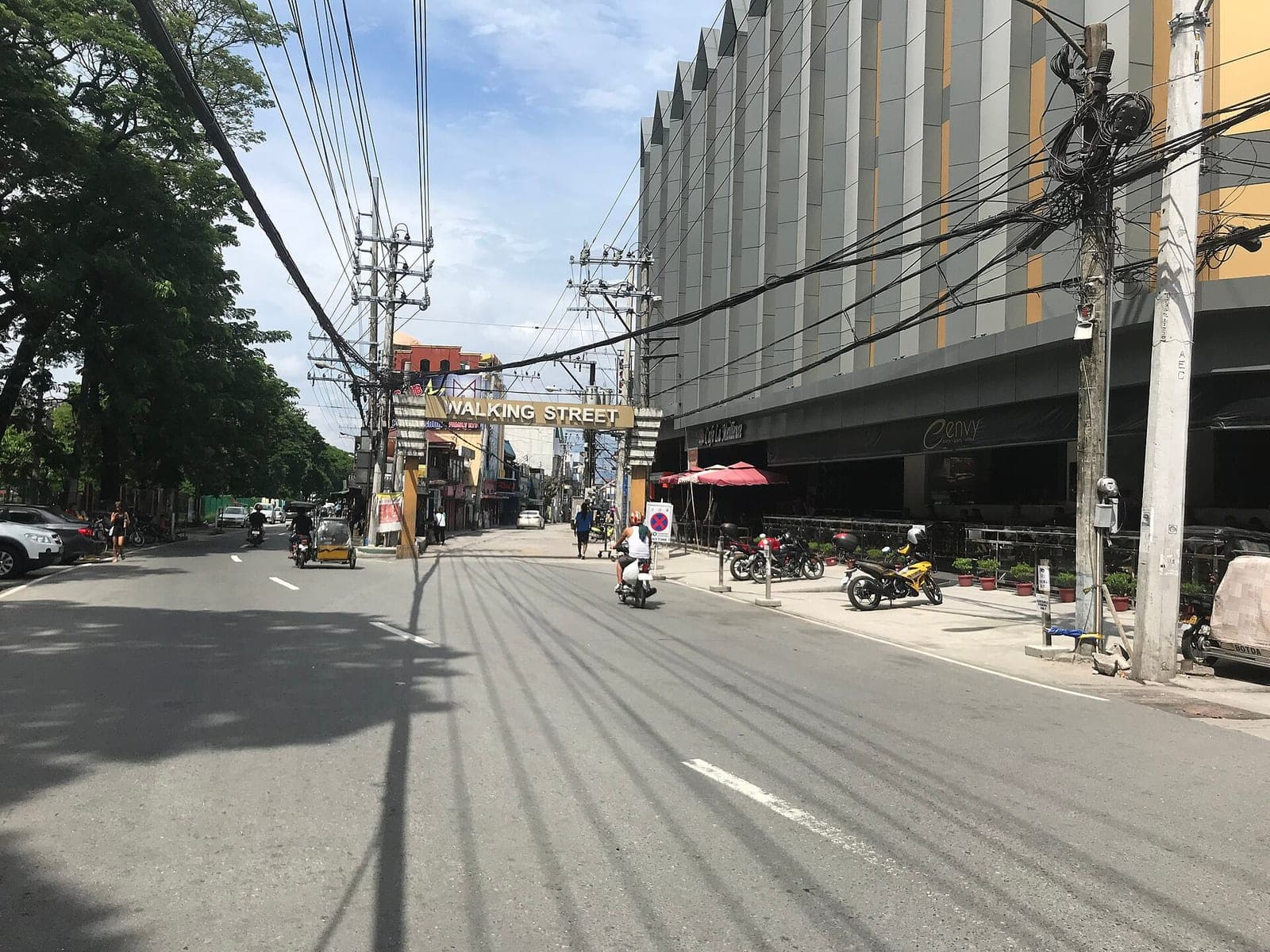
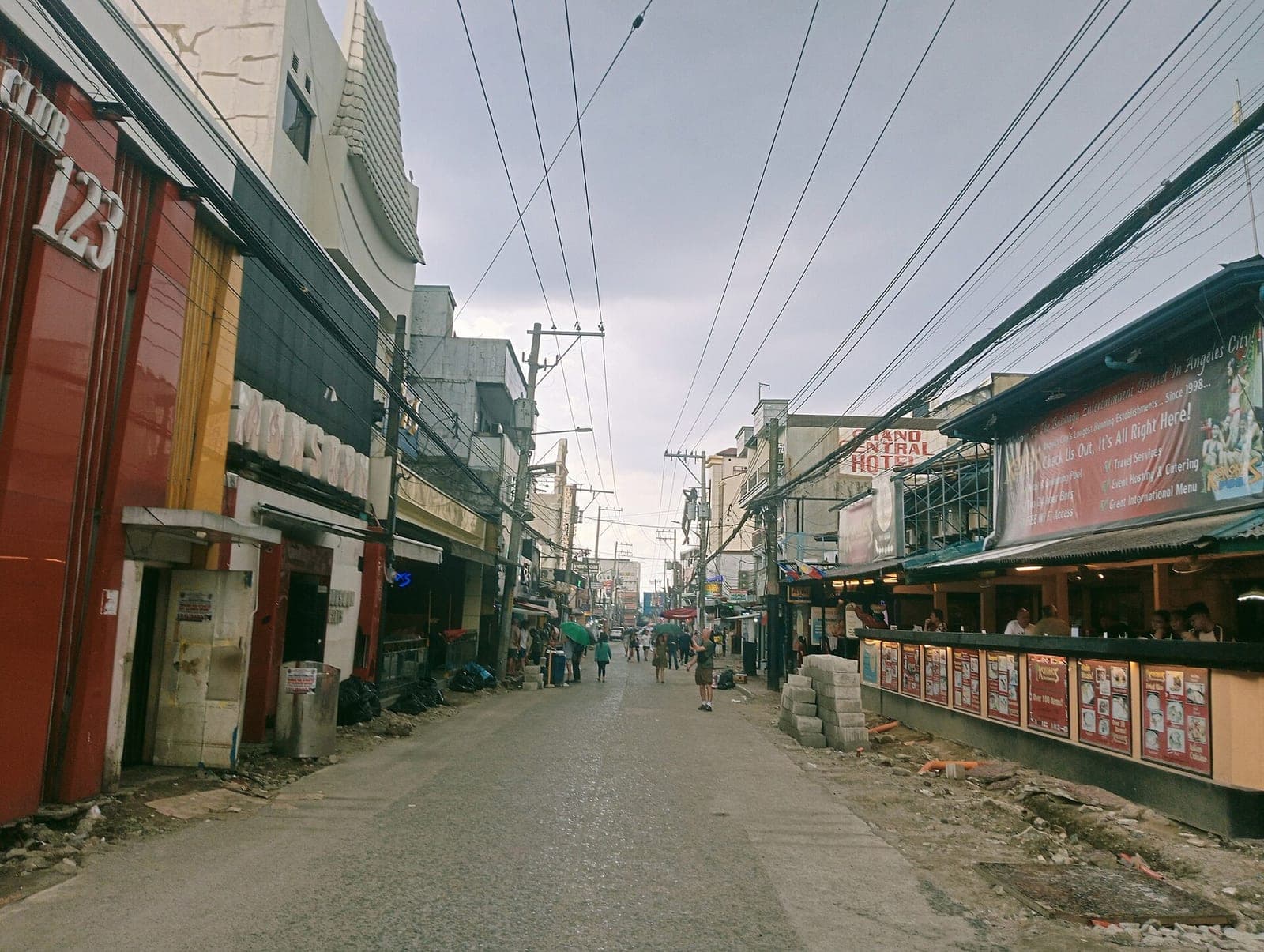
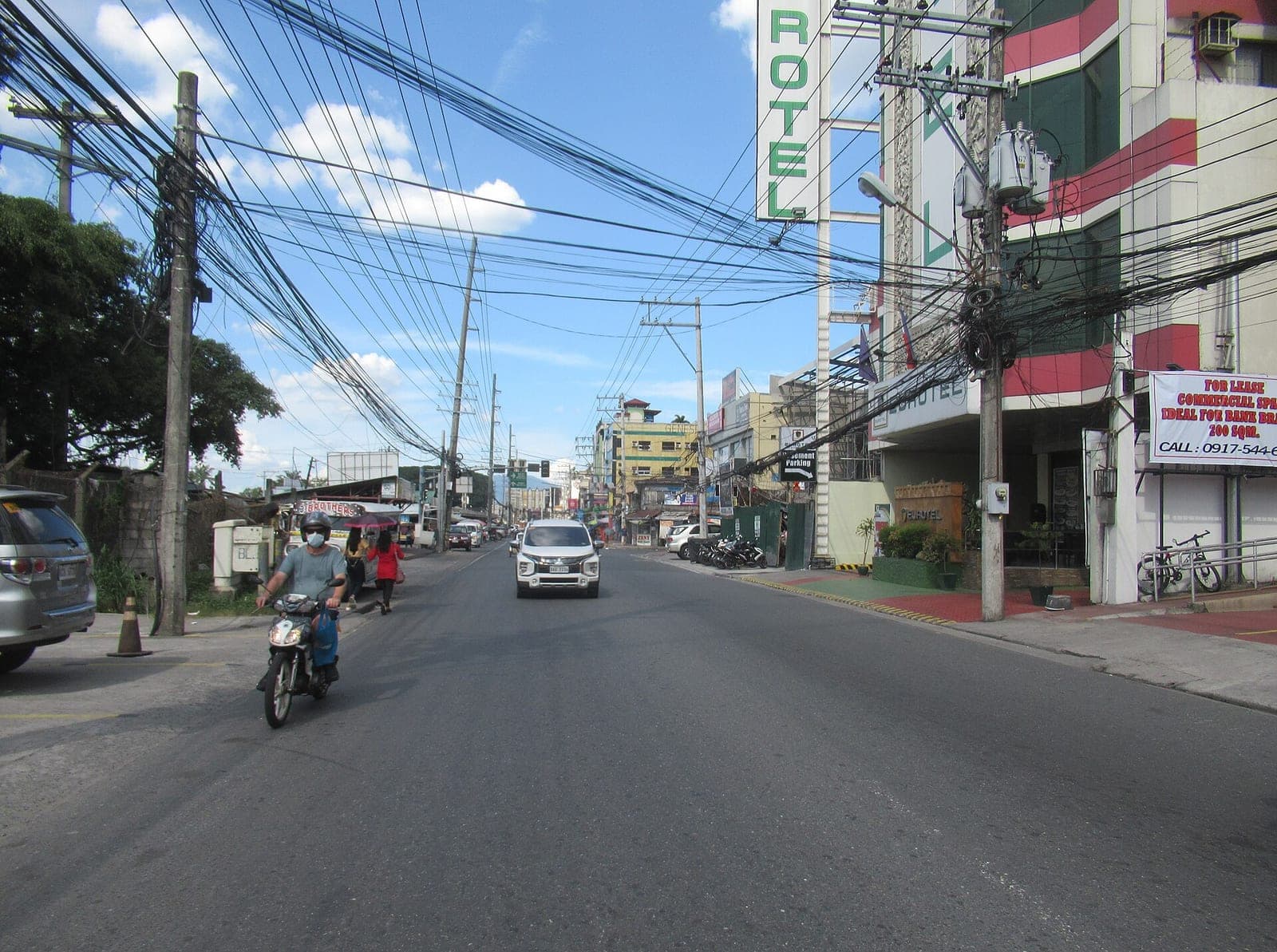
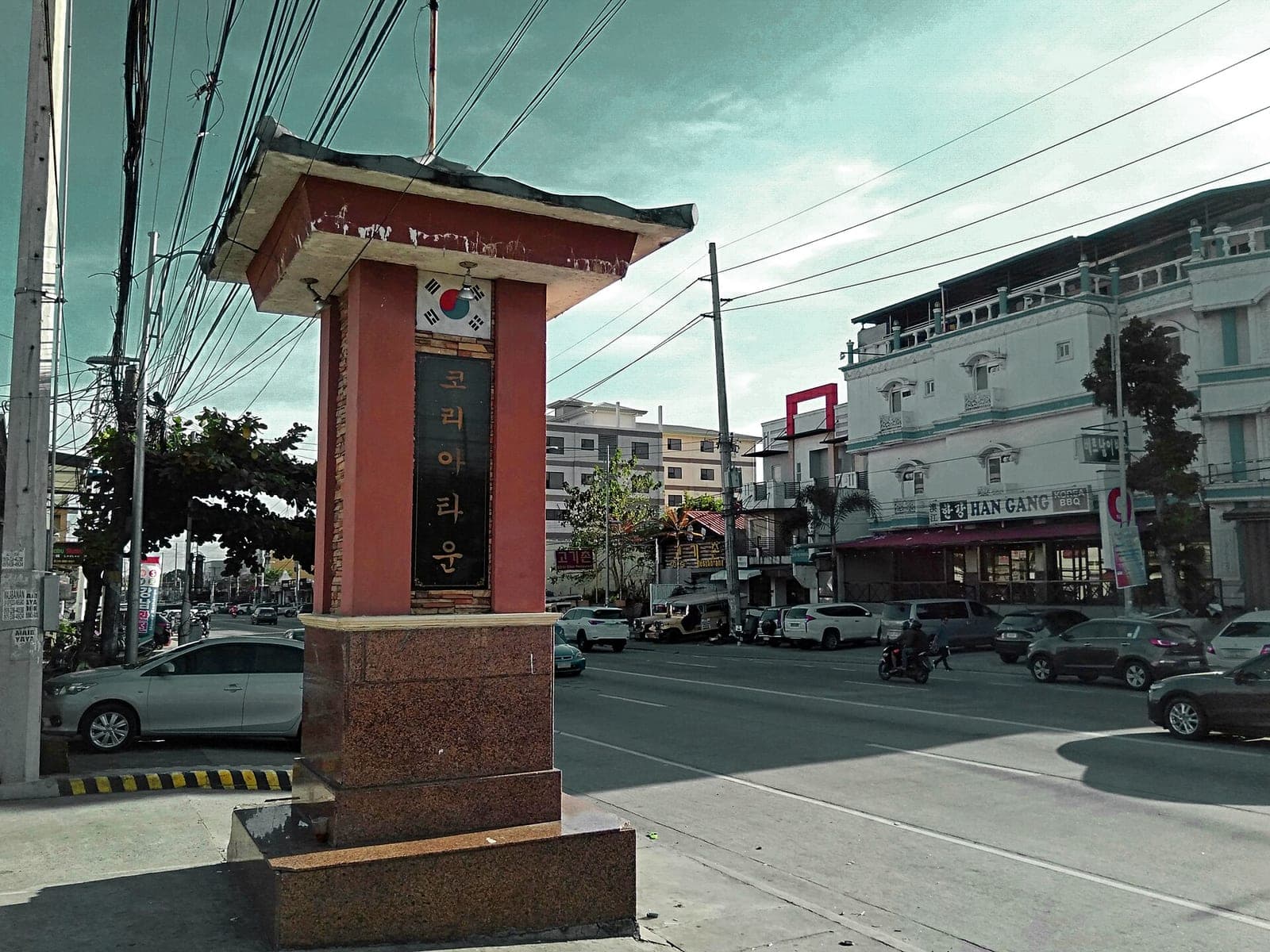
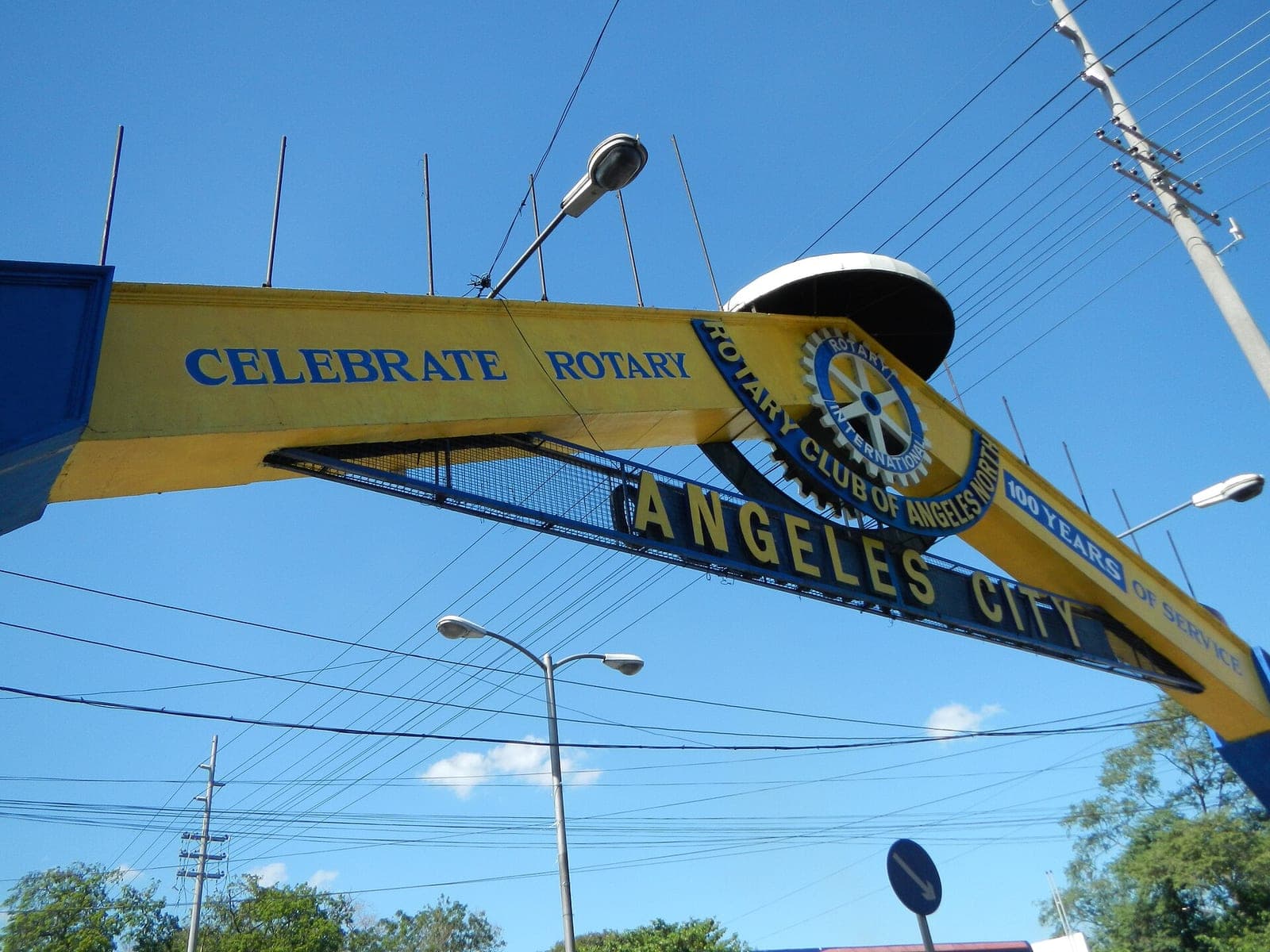
The lay of the land. Everything that matters sits in one corner of Balibago and you can walk most of it. Walking Street is the pedestrianized eastern end of Fields Avenue, from the welcome arch near the MacArthur Highway to the Kokomo's corner where A. Santos Street peels off, with the big go-go rooms — Dollhouse, Viking, Rhapsody, Gecko's and the rest — shoulder to shoulder along it. Fields Avenue proper runs on west, open to traffic, through a second, cheaper cluster of go-go and beer bars (After Dark, Passion, Brown Sugar, Midnight Cruiser) and the densest run of hotels in the country toward the Clark fence. Perimeter Road — Don Juico Avenue on the map — runs along that fence for a couple of kilometers of cheaper, older-crowd beer bars, a few go-go rooms, expat diners and budget hotels, many of them open from lunchtime. Friendship Highway and Korea Town, ten minutes by trike, is where the town eats after midnight and where the KTV and hostess-bar trade lives, Korean-style. Clark Freeport itself is the old American air base next door: casinos, resort hotels, golf and the airport, on wide quiet roads where tricycles are not allowed.
How a night works. Bars open in the late afternoon or early evening, the street fills from about ten, peaks between eleven and one, and the city ordinance has last call around three. There is usually no cover charge anywhere. You walk in, sit down, and a waitress brings you a San Miguel — $3–4.50 (₱150–250) in a Walking Street go-go bar, $2–3 (₱100–150) in a beer bar on Fields or Perimeter. If a dancer or waitress sits with you, you buy her a ladies' drink, roughly $4.50–6 (₱250–350) in the smaller rooms and $7–11 (₱400–600) in the flagships, and that is her commission for her company. The mamasan runs the floor and is the person to be polite to. Bar fines exist here as they do in Thailand; the bar sets the rules and the etiquette is the same. The whole system, with the manners that get you remembered, is in how the bar scenes work. Thursday to Saturday are the big nights. Early evening is quiet, cheaper and far better for talking.
What a week costs. Excluding flights, a comfortable week for one man runs roughly $1,200–2,000 as of August 2026. Spend more on the room and the generosity, less on everything else.
| Item | Typical (Aug 2026) | Notes |
|---|---|---|
| Mid-range hotel with pool | $50–70 (₱2,800–4,000) / night | Budget rooms from $21 (₱1,200); upscale $95–140 |
| Beer in a beer bar | $2–3 (₱100–150) | $3–4.50 (₱150–250) in the big go-go rooms |
| Ladies' drink | $4.50–11 (₱250–600) | Smaller rooms at the low end |
| A full night out | $60–120 | Beers, a few ladies' drinks, tips, trike, late food |
| Western meal on Fields | $8–12 (₱450–700) | Local plates $2–3 (₱100–150) |
| Tricycle hop | $1–2 (₱60–100) | Agree the fare first |
| Clark airport to Fields | $6–12 (₱350–700) | Grab at the low end, rank taxi at the top |
| Pool party entry | $6–9 (₱350–500) | Usually consumable; free for in-house guests |
Who it suits, and who it does not. Angeles is for the man who wants to be understood, who prefers a walkable town and a bar that knows his name to a different zone every night, who is older or slower or simply tired of the hustle, and who is at least open to meeting someone rather than just meeting everyone. It is not for the man who needs a beach, who wants great food as part of the trip, who likes being anonymous in a crowd of thousands, or who is planning a month — the town runs thin after ten days unless you build in Subic, Manila or a week in Cebu.
Safety. By the standards of the region Angeles is safe for a sensible adult. Fields Avenue has a 24-hour police station on it, the strip is lit and busy until the small hours, and violent crime against visitors is rare. What does happen: bar tabs that grow faster than you counted, trike fares that double when you get out, phones lifted in a Saturday crush, and men who fall over drunk. Pay as you go in a bar you do not know, keep your phone in a front pocket, agree fares before you sit down, use ATMs inside hotels or banks, and treat anyone offering you drugs as a prison sentence walking toward you — the Philippines is not a country that fines you for that. Typhoon season runs June to November; the bars open regardless, the streets flood ankle-deep for an hour and drain. The safety page and the scams page cover the rest.
How it has changed. The bars on Fields date to the 1940s and the American air base at Clark; by the Vietnam years there were more than a hundred and fifty of them. Mount Pinatubo buried the base in ash in 1991, the Americans left, and the strip nearly died before rebuilding through the 2000s into the district you see now. The city closed Walking Street to traffic in 2010, borrowing the name and the idea from Pattaya. The pandemic hit it hard — dark shopfronts, a long repaving job, a 2022 City Hall plan to rebrand the strip as "Red Street" that never stuck — and reader reports from 2023 onward describe a street that is smaller than it was in 2010, more Korean, and busier than it was in 2022. As of August 2026 the arch still says Walking Street, the big rooms are trading, the Malabañas hotel towers keep rising, and Clark flies direct to Seoul, Tokyo, Hong Kong, Singapore, Taipei, Bangkok, Doha and Dubai. It is not the wild town of the old forum stories; it is easier, cleaner and more comfortable, which for most of our readers is the better trade.
Pick Angeles over Pattaya if you would rather talk than browse, if you are over fifty, if this is your first trip and you are nervous about looking foolish, or if the thing you are actually hoping for is a woman you keep in touch with after you fly home. Most of the men we know who come back a second time had been chatting with two or three women here for weeks before they landed, and the bars were the sideshow — see online dating before you fly. Pick Pattaya if you want the show. Plenty of men do both in a year; start with the one that sounds like you, and read the first-timer's guide before you book.
Scorecard
How Angeles City rates
Our 1–5 scores, the same ones that drive the rankings page. Opinion, consistently applied.
- Scene
- 4out of 5
- Ease of meeting
- 5out of 5
- Value
- 5out of 5
- English
- 5out of 5
- Safety
- 4out of 5
- Hotels
- 5out of 5
- Daytime
- 2out of 5
- Access from US
- 4out of 5
- Relationship odds
- 4out of 5
The vibe
Small-town warm, neon-lit, loud on the strip and quiet two blocks off it. Everyone speaks English, everyone says hello, and by the third night the trike driver knows your hotel.
Best for
- first-timers
- men over 50
- conversation in English
- value
- guest-friendly hotels
- actually meeting someone
Not for
- beach people
- foodies
- men who want a different bar district every night
- stays longer than two weeks without a side trip
When to go & how to get around
Mid-November to February is dry with the coolest nights (low 70s°F) and a lively strip; January and February are the sweet spot. March to May is hot (highs around 93°F / 34°C). June to October is wet season — afternoon downpours, the odd typhoon, the cheapest rooms and the quietest bars, which some older visitors prefer. Avoid Maundy Thursday and Good Friday (many bars close or go dry) and election liquor-ban days; Christmas to New Year and the February Balloon Fiesta weekend are packed and pricey.
Walk the strip and Fields Avenue; tricycles for anything over ten minutes ($1–2 / ₱60–100 local hops, $2–3 to Perimeter or Korea Town, fares agreed first); Grab for the airport, Clark and late nights in the rain; jeepneys along the MacArthur Highway for $0.30 (₱15–20) to Dau, SM Clark and downtown. Trikes are banned inside the Clark Freeport.
Safe for a sensible adult: a 24-hour police station on Fields Avenue, a lit and busy strip, rare violent crime. Watch bar tabs, agree trike fares, keep your phone in a front pocket, use hotel or bank ATMs, and never touch drugs — the penalties here are prison, not a fine.
The point of the trip
Meeting women in Angeles City
Start with the thing that makes Angeles different from everywhere else in this guide: you can talk to her. English is the language of school, television and paperwork in the Philippines, and the woman you meet here — in a bar, at a mall, on an app — can hold a real conversation on night one. That single fact changes the odds on everything that follows, from a good evening to a marriage.
The women in the bars. Walking Street, Fields Avenue and Perimeter Road run on the same system as Thailand: dancers on a stage, waitresses on the floor, and a mamasan managing the room. They are adult women, mostly from the provinces of Central Luzon and the Visayas, working a job that pays far better than the alternatives available to them — the regional minimum wage is a few hundred pesos a day, and a good night in a go-go bar can beat a week of that. You buy her a ladies' drink to sit and talk; nobody makes you buy a second one. The women on Walking Street tend to be younger and the line-ups bigger; on Fields and Perimeter they are often older, funnier and more likely to remember your name in a week. Be polite, tip in cash, and never treat the room as a menu. The details are in how the bar scenes work.
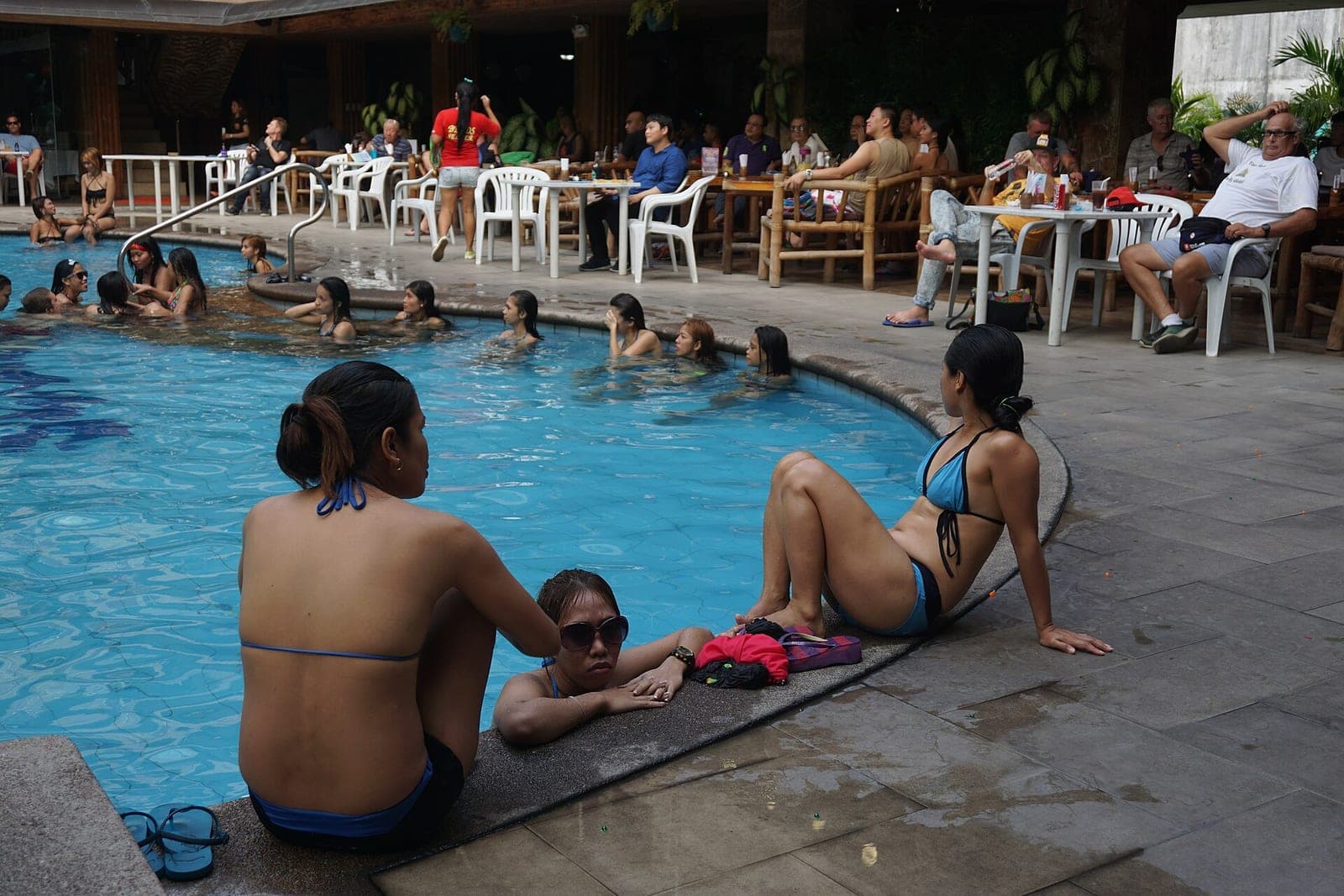
Freelancers and the clubs. The nightclubs on and around Fields Avenue and the weekend pool parties at hotels such as Score Birds draw women who are not attached to a bar — some working, some just out. Angeles has far less of a freelancer scene than Pattaya's Beach Road; the town is small and the bars absorb most of the trade. A club night here is a normal club night with a friendlier crowd.
The women who are not in the bars at all. This is where Angeles quietly beats the rest of the region. It is a university town (Holy Angel University and Angeles University Foundation are both here), a hospital town, a call-center town, and it sits beside a Freeport full of hotels, casinos and offices. Students, nurses, BPO agents, shop and mall staff, teachers and single mothers make up the great majority of the single women in Pampanga, and very few of them will ever set foot on Walking Street. You meet them where anyone meets anyone — SM City Clark and Marquee Mall, the coffee shops along Fields, church on Sunday if that is your thing — and, overwhelmingly now, online. Meeting women outside the bars covers the ground rules.
The age gap and the economics, stated plainly. Most of our readers are 40 to 70; most of the women they will meet are 22 to 40. Filipino culture is far more relaxed about that than American culture is, and a kind, steady man of sixty with a modest pension does fine here if he is honest about being sixty with a modest pension. The economics are real and nobody pretends otherwise: an American income is a life-changing thing in a province where a nurse earns a few hundred dollars a month, and you will at some point be asked to help with load, a fare, a medical bill, tuition. Decide early what you can comfortably give, say so plainly, give rather than lend, and never send money to anyone you have not met in person. The red flags and romance scams guide is required reading and we mean that.
What the relationship prospects honestly are. Better than anywhere else in this guide. The Philippines is Catholic, family-first and English-speaking; a large share of the women you meet — in bars and out of them — are thinking about a relationship, not just tonight, and the pipeline from an Angeles trip to a long-distance relationship to a K-1 or CR-1 visa is well worn and well understood on both sides. That cuts both ways. You are joining a family, not just dating a woman; there is no divorce in the Philippines; and the same warmth that makes it easy to fall for someone makes it easy to be played by the wrong one. Bringing her home and long-distance relationships are where to go when it gets serious.
Start before you land. Most of the men we know who came back to Angeles a second time had been chatting with two or three women in Pampanga for a few weeks before their flight, had done at least one video call, and had coffee at the mall lined up for their second afternoon. It is the single biggest difference between a trip that feels like tourism and one that feels like visiting friends. It is also much easier to do in English than anywhere else in Asia. Read online dating before you fly before you book the ticket.
Where to stay
Stay within a ten-minute walk of the Walking Street arch. The strip itself is loud until three; two blocks off — Vian Street, A. Santos Street, the streets behind Fields — is quiet by one and has most of the pool hotels; the Malabañas towers on the far side of Fields are quiet, cool and a $1–2 trike from the arch. Perimeter Road is cheaper again and suits the older or longer-staying visitor who likes an afternoon beer. The Clark Freeport resorts (Hann, Swissôtel, Hilton, Widus) are for a night or two of pool and buffet at either end of a trip, not a base — trikes cannot enter the zone and every night out becomes a Grab. Almost every hotel in Balibago registers a visitor with photo ID and charges nothing; the Clark resorts are stricter, so ask. Our picks, with policies and walk times, are on the Angeles City hotels page.
Getting there from the US
From the States there are two sensible routings. The first is a nonstop to Manila — Philippine Airlines flies from Los Angeles, San Francisco, New York JFK, Seattle and Honolulu, and United from San Francisco, 13–17 hours — followed by 2–3 hours north by road: a pre-booked car or van is $55–105 (₱3,000–6,000), the Genesis P2P bus from NAIA Terminal 3 to Clark airport or SM City Clark about $8 (₱450), and Friday-afternoon traffic can add an hour. The second is to connect through a hub that flies straight into Clark — Seoul Incheon, Tokyo Narita, Hong Kong, Taipei, Singapore, Doha or Dubai as of August 2026 — and skip Manila altogether; it is often a longer day in the air and a much shorter one on the ground. There are no US nonstops to Clark. From CRK, a Grab to Fields Avenue is $6–9 (₱350–500) and the fixed-rate airport taxis $9–12 (₱500–700), 20–30 minutes; most hotels will send a car if you ask. US passports get 30 days visa-free on arrival, extendable at the Bureau of Immigration for about $53 (₱3,030) for the first 29 days — see visas and flights from the US.