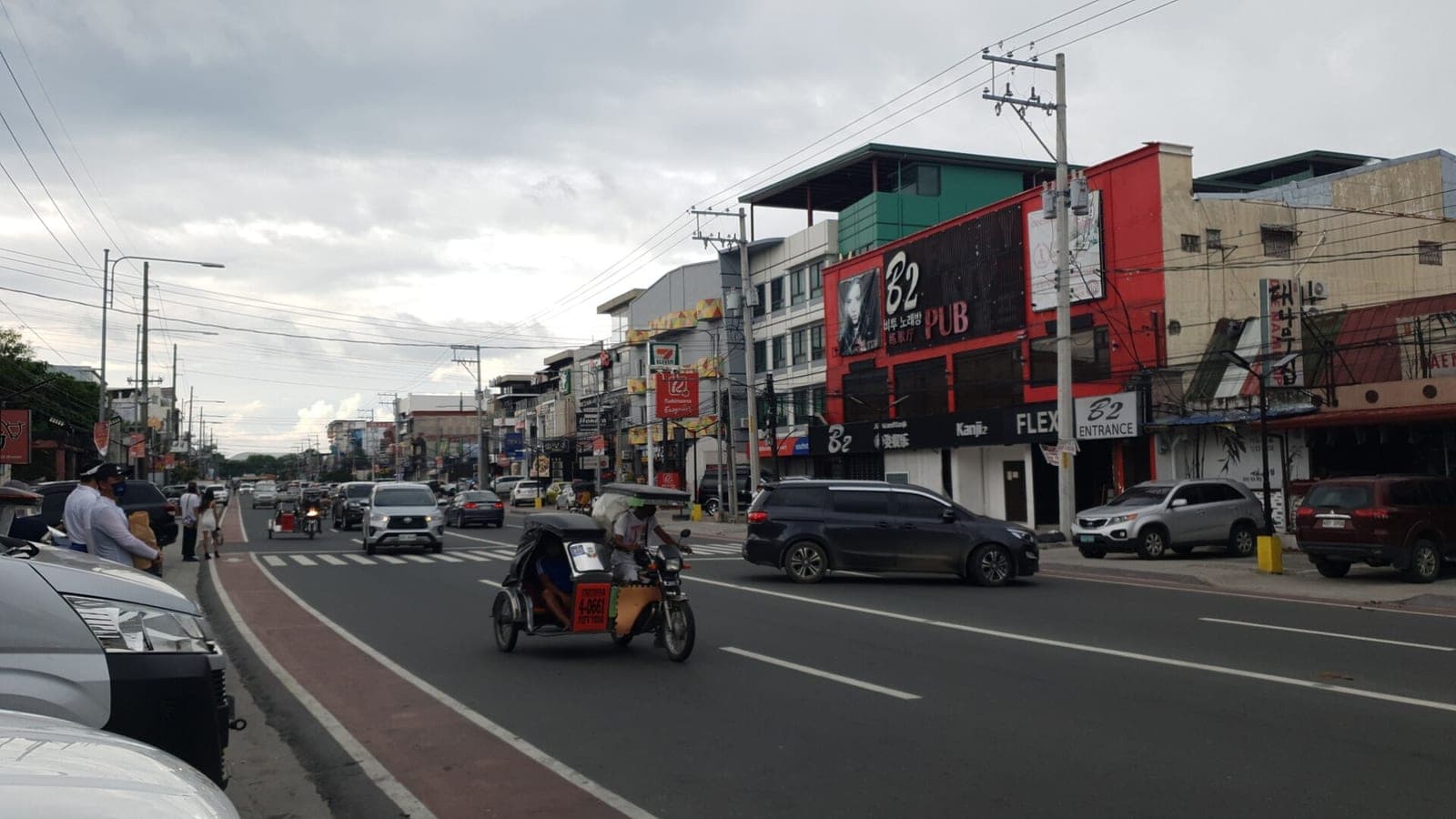

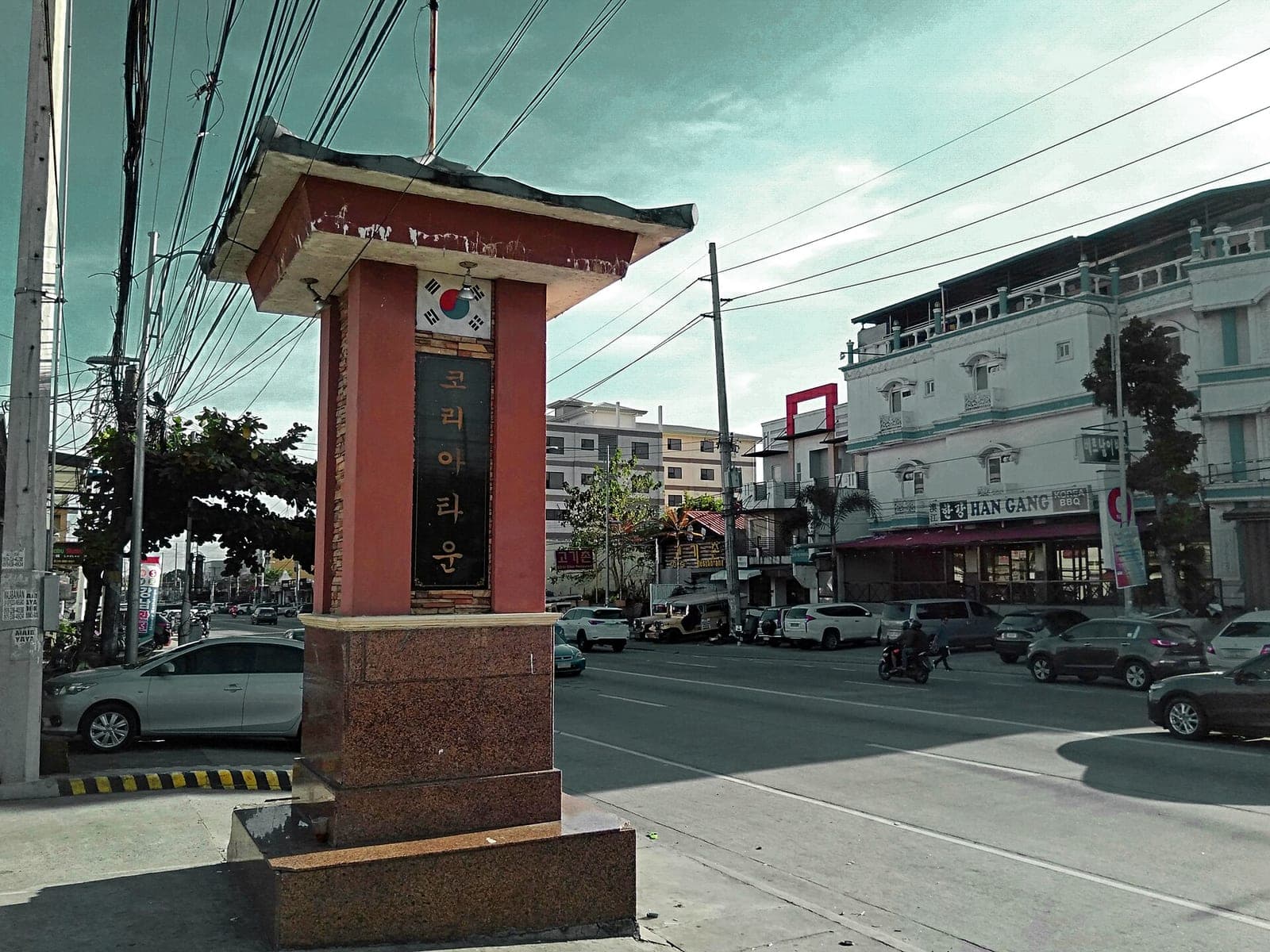










Friendship Highway — Fil-Am Friendship Highway on the signs — is the road that runs west from Clark's Friendship Gate through Barangay Anunas in Angeles City, and its first mile or so is Korea Town: the largest Korean neighborhood in the Philippines outside Metro Manila, and by a long way the best place in Angeles to eat after midnight. It is also the town's KTV and hostess-bar district, which is why it has a page here — but go in understanding that it is a different animal from Walking Street.
The road was built to link the American air base to its off-base housing, and for decades it was shops and family restaurants serving base families. After Pinatubo buried the base in 1991 and the Americans left, the strip went quiet — and then, from the late 1990s, Korean investors, retirees, students and golfers started arriving at Clark, and Friendship Highway is where they settled. Local press counts more than two hundred restaurants along the highway, before you get to the bakeries, groceries, meat shops, saunas, gyms, salons and hotels. Signs are in Hangul first and English second, the barbecue smoke starts at lunchtime, and the KTV neon takes over after dark.
Nightlife — what it is and is not. Korea Town's night trade is KTV. Some rooms are the family kind: you rent a booth, order fried chicken and beer, and sing badly. Others are the hostess kind, where women join the room for a fee on top of the drinks — the same drinks-and-company economy as the bars on Fields, dressed in a Korean suit and tie and conducted behind a closed door rather than around a stage. KTV Diba, Woori Garden and Go! Gigib are the names most often recommended to visitors. Expect a room to run from about $10 (₱600) an hour upward as of August 2026, with beers and ladies' drinks on top in the hostess places, and a bill that climbs fast if you let it — agree the room rate and the drink prices before the door closes. Two honest cautions. Some Korean-only bars and KTVs are not set up for Western walk-ins — no English menu, no interest, occasionally a polite "members only" — and there is no point taking offense; walk fifty yards and try the next one. And go-go bars in the Fields Avenue sense do not exist here; if that is your night, this is where you eat before or after it, not instead of it. For most of our readers Korea Town is a dinner and a change of scene, and the KTV rooms are a curiosity rather than a plan.
What else is here (as of August 2026). Food, mostly, and it is the best in town. Samgyeopsal and galbi joints where you grill at the table — Guyiga, Sariwon, Songdo and Woori Garden are long-standing, and new ones open every month — sulungtang and noodle houses, Korean fried chicken, 24-hour groceries, cafés and bakeries with proper coffee, and enough restaurants open past midnight that Korea Town has become the default hangover-prevention stop for the whole town. Korean barbecue is $8–12 (₱450–700) a head for as much meat as you can grill; a bowl of noodles or a rice dish $3.50–6 (₱200–350); beer in a restaurant $1.50–2.50 (₱90–150); soju is cheap and sneaks up on you. Hotels along the road (King's, Halla, Valentine, Koa and others) tend to be Korean-run, spotless, cheaper than Fields Avenue and quiet — worth knowing if you are the sort who wants a silent room and a trike to the bars.
Getting there and around. From Walking Street it is about two miles (3 km): ten minutes and $2–3 (₱100–150) by trike, or a short Grab. The easiest route is west along Fields Avenue, right onto Perimeter Road, and Korea Town starts where Don Juico Avenue meets the highway near the Friendship Gate. From the Clark side, the Friendship Gate is the back door — cars and Grabs can use it, trikes cannot enter the Freeport, so if you are coming from a Clark casino you will come out this way. Jeepneys run the highway for about $0.30 (₱15–20), but the district is small enough to walk once you are on it. Between here and Fields you want a trike after dark; the road is fast, busy and not made for pedestrians.
Safety. Fine — it is a residential and dining district with families about until late. Watch the traffic (the highway is wide and drivers treat it as such), keep an eye on your bill in the KTVs, and do not drink soju like it is beer. The over-friendly greeter outside a hostess KTV is doing a job, same as the greeters on Fields; a smile and a "next time" is all it takes.
Korea Town is the answer to "where can I get a proper meal at one in the morning?" — the 24-hour barbecue places do a roaring trade in ex-Walking Street customers. Many menus are Korean with photos rather than English; point, smile, and say "samgyeopsal" and you will be fine. If you are in town for more than a week, the first-timer's guide and itineraries both slot a Korea Town night in around day three.
Highlights
- + The best food in Angeles, much of it open all night
- + A genuine change of scene ten minutes from the strip
- + Quiet, clean, cheaper hotels
Good for
- Korean barbecue
- late-night eating
- KTV nights
- quiet clean hotels
- a night off the bars
Drawbacks
- − No go-go bars — the hostess trade is in closed KTV rooms
- − Some venues are not set up for Western walk-ins
- − KTV bills climb fast if you do not agree prices first
How to get there
About 2 miles (3 km) from Walking Street: $2–3 (₱100–150) by trike, ten minutes, via Fields Avenue and Perimeter Road, or a short Grab. From Clark, exit via the Friendship Gate by car or Grab (trikes cannot enter the Freeport). Jeepneys run the highway for about $0.30 (₱15–20).
Safety note
A residential dining district — safe, with families out late. Mind the fast traffic on the highway, agree KTV room and drink prices before the door closes, and treat hostess-KTV greeters like the greeters on Fields: a smile and a no is enough.