

















Jakarta is Indonesia's capital and the largest city in Southeast Asia — around eleven million people inside the city limits and thirty-odd million in the wider Jabodetabek metro area — and it is an expat's city rather than a visitor's. There is a real nightlife scene here, several of them in fact, but none of it is arranged for a stranger. Nobody stands outside a bar and waves you in. There is no strip you can walk. Everything is a twenty-minute Grab ride from everything else, and the ride takes fifty minutes. We rank it honestly on the rankings page: a 3 for the scene, a 1 for daytime, and a 4 for value. Read that the right way and Jakarta can be a very good week; read it wrong and it is the most frustrating city on this site.
The lay of the land. Three districts matter to a reader of this guide, and they are twenty minutes and thirty years apart.
Blok M, in Kebayoran Baru in South Jakarta, is the old expat quarter — Jalan Falatehan and Jalan Melawai, a bus terminal, three malls and the "Little Tokyo" of Japanese izakaya and karaoke rooms that grew up around the Japanese business community in the 1980s. It was, for about twenty-five years, the place a foreign man went out in Jakarta. Most of the bars that made that reputation are gone; what has replaced them is a mix of survivors, Japanese-style bars and a young, creative Indonesian scene around the M Bloc Space complex. It is the cheapest and most walkable nightlife in the city and it has an MRT station.
SCBD and Senopati, two miles north-east, are where Jakarta's money goes out: the Sudirman Central Business District towers and the restaurant-and-bar streets of Senopati and Gunawarman behind them. Cocktail bars, rooftops, restaurants that would not embarrass Singapore, and nightclubs with dress codes, guest lists and covers of $6–19 (Rp100,000–300,000). The crowd is Indonesian professionals, Singaporean and Korean expats and a thin scattering of Westerners. This is the best-looking nightlife in Indonesia and the least accessible to a man on his own.
Mangga Besar is in West Jakarta near Glodok, the old Chinatown, and it is the district with the reputation. It has been an entertainment quarter since the Dutch era, it is dense with karaoke and KTV rooms, massage houses and late-night restaurants, its clientele is overwhelmingly local Chinese-Indonesian, very little English is spoken, and the same street is also one of the best late-night food runs in the city. We describe it because you will read about it elsewhere and because it is a real part of Jakarta; we do not send readers there. The reasons are on its page and they are practical ones — language, opaque pricing and a much higher chance of an unpleasant surprise on a bill — rather than moral.
Two more worth knowing: Kemang, a leafy South Jakarta neighbourhood with the longest-running Western expat pubs in the city, fifteen minutes east of Blok M; and Kota Tua, the Dutch old town, which is a daytime thing.
How a night actually works. You pick one district and you stay in it. That is the whole trick. Dinner at eight — Jakarta eats late and eats well, from a $2 street-food plate to a $40 Senopati tasting menu — then bars from ten, clubs from midnight, and everything closes between two and four depending on the venue and the week. Grab and Gojek are the only sane transport after dark and cost $2–4 (Rp30,000–65,000) for most trips within South Jakarta. The MRT north–south line runs from Lebak Bulus through Blok M and up Sudirman past SCBD to Bundaran HI, costs Rp3,000–14,000, and stops around midnight, which means it is useful going out and useless coming home.
What a week costs. Jakarta is the best value destination in Indonesia and roughly a third cheaper than Bali for the same evening.
| Item | Typical (Aug 2026) |
|---|---|
| Bintang in a Blok M bar | $3–5.50 (Rp50,000–90,000) |
| Beer or cocktail in an SCBD lounge | $6–13 (Rp100,000–200,000) |
| Club cover, SCBD | $6–19 (Rp100,000–300,000) |
| Street-food meal | $1.50–3 (Rp25,000–50,000) |
| Dinner for two in Senopati | $30–70 |
| Grab car across South Jakarta | $2–4 (Rp30,000–65,000) |
| MRT fare | $0.20–0.90 (Rp3,000–14,000) |
| Airport train to the city | about $4 (Rp70,000) |
| Airport car to South Jakarta | $12–20 (Rp200,000–320,000) |
| Mid-range hotel with pool | $45–90 a night |
| A full week, not counting flights | $900–1,800 |
For the wider comparison see what a trip costs and the prices page.
Ramadan, and why it matters more here than anywhere else on this site. Indonesia is the largest Muslim-majority country in the world and the Jakarta provincial government closes the city's night entertainment — nightclubs, discotheques, bars, karaoke, spas and massage houses — for the whole of Ramadan and for two days after Eid al-Fitr. It is not a suggestion: the 2026 order ran from the day before Ramadan until two days after Eid, enforced by joint patrols, with a carve-out for venues inside four- and five-star hotels and some designated commercial zones. In 2026 Ramadan ran 19 February to 20 March, with Eid on 21 March. The Islamic calendar moves about eleven days earlier each year, so expect roughly 8 February to 9 March in 2027 and late January in 2028. Do not book a Jakarta nightlife trip into that window. Check the dates in best time to visit before you buy a ticket.
The law, plainly. Indonesia's new criminal code took effect on 2 January 2026 and two of its articles get quoted at travellers: sex outside marriage and unmarried cohabitation are now offences. Both are complaint-based — only a spouse, parent or child of one of the people involved can bring the complaint — the government has repeatedly said tourists are not the target, and hotels are not required to ask about anyone's marital status. As of August 2026 we know of no foreign visitor prosecuted under either article, and Jakarta's hotels check couples in as they always did. The exposure is not the front desk; it is a disapproving family with a new lever. Behave like a guest and it will never touch you. Drugs are the opposite story: Indonesia jails users and executes traffickers, and Jakarta's clubs get raided with drug tests administered on the spot. Do not carry anything, and do not accept anything.
Who Jakarta suits. A man whose girlfriend, fiancée or online match lives in Java — which, given that well over half of Indonesia's population lives on this island, is most of them. A businessman with a week and an expense account. An expat scouting a posting. Anyone who wants to see what a genuine, non-touristed Southeast Asian megacity feels like, eat extremely well and pay very little for it.
Who it does not suit. Anyone comparing it to Pattaya or Angeles City. There is no walkable strip, no introduction system, no English-by-default, and no daytime tourism to fall back on when a plan collapses. A first-timer with seven days and no contacts will spend three of them in traffic and go home disappointed. Read how to choose a destination before you book.
Safety. Jakarta is safer than its reputation and duller in its dangers. Violent crime against foreigners is rare. What is common: phone snatching from the back of a motorbike, pickpockets on crowded TransJakarta buses, occasional shakedowns by people in uniform (carry a passport copy, be polite, ask to go to the station), flooding in the November–March wet season that can close roads for a day, and air quality that is genuinely bad in the dry season. Use Grab, Gojek or Blue Bird taxis rather than street cabs, keep your phone in a front pocket, and avoid political demonstrations entirely — they happen, they can turn, and a foreigner in one is a headline. More on the safety page.
How it has changed. Jakarta has spent a decade cleaning up its nightlife: the megaclubs of the 2000s were closed one by one after drug raids, the surviving venues moved upmarket into SCBD, and the old expat bar strip in Blok M shrank to a handful of rooms. Two newer changes matter. The MRT opened in 2019 and made South Jakarta navigable for the first time. And the government has been slowly relocating the capital to Nusantara in East Kalimantan since 2024, a move that has been repeatedly pushed back; as of August 2026 the ministries, the money and the nightlife are all still here, and nobody we know expects that to change this decade.
Scorecard
How Jakarta rates
Our 1–5 scores, the same ones that drive the rankings page. Opinion, consistently applied.
- Scene
- 3out of 5
- Ease of meeting
- 2out of 5
- Value
- 4out of 5
- English
- 3out of 5
- Safety
- 3out of 5
- Hotels
- 3out of 5
- Daytime
- 1out of 5
- Access from US
- 2out of 5
- Relationship odds
- 3out of 5
The vibe
Enormous, humid, unbothered and better than it looks from the taxi. Malls the size of airports, satay smoke on the pavement outside a cocktail bar, and everything forty minutes away.
Best for
- meeting someone you already know here
- food
- value
- business trips
- seeing a real Southeast Asian megacity
Not for
- first-timers
- walkable bar strips
- daytime sightseeing
- anyone in a hurry
When to go & how to get around
May to September is the dry season and the best window — hot, humid, but far less rain. Avoid the November-to-March wet season if you can, when afternoon downpours flood roads and January and February can shut parts of the city for a day. Above all, avoid Ramadan and the week after Eid al-Fitr, when Jakarta closes its clubs, bars and karaoke venues by order: 19 February to 23 March in 2026, roughly eleven days earlier each following year.
Grab and Gojek — cars and motorbike taxis — do everything: $2–4 (Rp30,000–65,000) for most South Jakarta trips, half that on a bike. Blue Bird is the honest metered taxi. The MRT north–south line (Lebak Bulus to Bundaran HI, via Blok M and Sudirman) is fast, cheap at Rp3,000–14,000 and stops around midnight. TransJakarta buses are cheaper still and slower. Do not rent a car and do not walk far: pavements are an occasional courtesy and the traffic is the worst in this guide.
Low violent crime against foreigners; high nuisance crime. Phone snatching from motorbikes, pickpockets on crowded buses, occasional uniformed shakedowns (carry a passport copy, ask to go to the station), wet-season flooding and poor dry-season air quality. Use Grab, Gojek or Blue Bird after dark, keep valuables out of sight, stay away from demonstrations, and treat drugs as the capital offence they are.
The point of the trip
Meeting women in Jakarta
The honest position: Jakarta has more single women than any other city in this guide and fewer ways for a visiting stranger to meet them. Both halves of that sentence matter.
Who you will meet, and where. Office workers, nurses, teachers, retail and hospitality staff, and the enormous middle class that has grown up in South Jakarta over the last twenty years. In the bars, three groups: Indonesian professionals in Senopati and SCBD, out in groups of four and not remotely interested in being approached by a stranger; the Japanese-and-Indonesian karaoke world of Little Tokyo in Blok M, which runs on hostess-style hourly rooms and is expensive; and the small expat circuit in Kemang and Blok M, where the women are a mix of local staff, regulars and other expats. Nobody in any of those settings will introduce you to anybody. There is no mamasan, no bar system, no equivalent of a Pattaya beer bar.
Which is why online comes first here, more than anywhere. Java holds well over half of Indonesia's 280 million people, and Indonesian women are one of the largest national groups on the Asian dating sites. Almost every man we know who has had a good time in Jakarta arrived with two or three conversations already a month old, a video call behind him and a coffee arranged in a Senopati café for his second afternoon. That is not a sales pitch, it is the shape of the city: an eleven-million-person metropolis where the introductions have to happen before you land. AsianDating's video verification matters more here than in Bangkok, because you cannot walk down a street and see for yourself. Read online dating before you fly and meeting women outside the bars, then book.
How the approach differs from home. Slower, more formal, more religious and much more family-shaped. Indonesia is roughly 87% Muslim and Jakarta more so; most women you meet will be Muslim, many will wear a hijab, and the assumption behind dating here is marriage rather than a season of seeing each other. Public affection is minimal — hand-holding in a mall is fine, anything more is not. Expect a lot of messaging before a first meeting, a first meeting in a café or a mall rather than a bar, and, if it goes anywhere at all, an early introduction to a mother, a brother or a whole family lunch. That is not a warning sign. That is the process working.
The age gap and the economics, stated plainly. A Jakarta office worker earns roughly $250–450 a month; a nurse or a teacher less. A retired American on a pension is, to a woman of thirty-five in that job, a serious proposition and also a serious risk — the city is full of stories of foreign boyfriends who stopped answering. Money will come into it, because money comes into everything here, and the question is only whether it arrives as a plane ticket and a family you have actually sat down with, or as transfers to somebody you have never met. Our red flags and romance scams guide is written for precisely this situation, and Jakarta is the city where you should read it twice.
Religion and marriage, because it decides things. Indonesia does not recognise a civil marriage between a Muslim and a non-Muslim performed in the country; couples either marry abroad, or one partner converts. That is not a technicality you can leave until later — it shapes what her family will and will not accept from the first conversation. Plenty of Western men have done it, converted or not, and are happily married in Bekasi and Bandung. Plenty of others discovered the problem in month eight. Ask early, kindly, and directly.
Relationship prospects. Better than Bali, better than Kuala Lumpur, and honestly better than the bar cities if what you want is a marriage rather than a season. Indonesian women who take a foreign partner seriously tend to take him very seriously indeed, and the family structure that makes the courtship slow is the same structure that makes it stick. It is also why we score Jakarta a 3 for relationship prospects against a 2 for ease: the door is narrow and what is behind it is real. If you want to bring her home afterwards, start with bringing her home on a K-1 or CR-1 — and note that Indonesian passport holders face a long, document-heavy US process. Begin it earlier than you think you need to.
Where to stay
Pick your district first, because you will not be crossing town twice a day. Blok M / Kebayoran Baru is our default: cheap, walkable, on the MRT, and the only part of Jakarta where you can leave a bar and be in your room in five minutes — see Hotel Gran Mahakam. SCBD, Senopati and Sudirman if your evenings are the smart bars and your days are meetings; the Ritz-Carlton at Pacific Place sits on top of a mall in the middle of it. Kemang suits a longer stay and the expat pubs. Avoid Central Jakarta around Thamrin unless you have business there, and avoid anywhere that requires a toll road to reach a restaurant. Full list on the Jakarta hotels page.
Getting there from the US
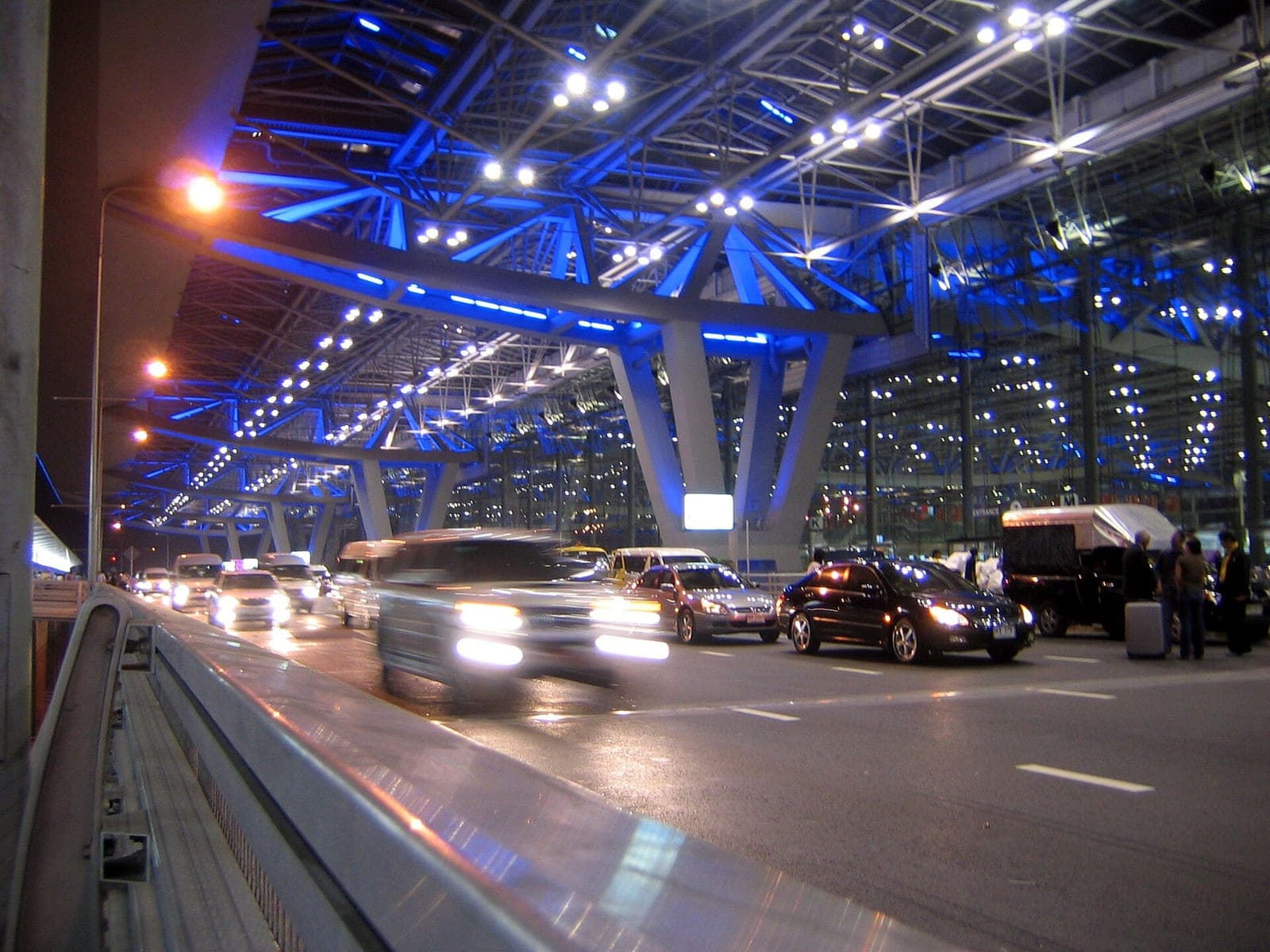
There is no nonstop from the US to Jakarta (CGK). From the West Coast the usual routings are via Tokyo (JAL, ANA), Seoul (Korean Air), Taipei (EVA, China Airlines), Singapore (Singapore Airlines) or Doha (Qatar Airways), 22–26 hours door to door; from the East Coast add three or four hours or go west via Doha or Istanbul. Garuda Indonesia, Singapore Airlines and Qatar are the comfortable options; the cheapest is usually Taipei or Guangzhou. Americans need a visa on arrival: apply for the electronic version (e-VoA) before you fly, about $32 (Rp500,000) for 30 days, extendable once, and it lets you use the autogates. Passport validity six months. From Soekarno-Hatta airport, the Airport Rail Link runs to BNI City and Sudirman in about 50 minutes for around $4 (Rp70,000) and then you take the MRT or a Grab; a Grab or Blue Bird car to South Jakarta is $12–20 (Rp200,000–320,000) and takes 45 to 90 minutes depending entirely on the traffic. Land in the morning if you can. See flights from the US and visas.