


















Kuala Lumpur is the capital of Malaysia, a Muslim-majority country of thirty-five million on the Malay peninsula, and it is simultaneously the easiest Southeast Asian city for an American to function in and one of the weakest destinations in this guide for the purpose most of you are reading it for. Both of those are worth understanding before you book, because the first one persuades a lot of men to spend a week here and the second one is why they come home disappointed. We rank it honestly on the rankings page: a 5 for English, a 4 for safety and hotels, and a 2 for the scene.
Why it is so easy. Almost everybody speaks English, and speaks it well — Malaysia's education system runs on it and the country's Malay, Chinese and Indian communities use it as the common language. Americans get ninety days visa-free. The airport is modern, the trains work, Grab is everywhere, the hotels are excellent and cheap, the tap water is chlorinated, the hospitals are good, and the food — Malay, Chinese, Indian, Nyonya, all of it, all day, from a stall or a white tablecloth — is arguably the best in Asia. Nothing about being here is hard.
Why the scene is thin. Malaysia is roughly two-thirds Muslim and alcohol is taxed at close to the highest rate in the world; only Norway and Singapore are worse. Non-Muslims buy and drink freely — beer sits in a separate "non-halal" fridge in every supermarket, and Kuala Lumpur has a genuinely good bar culture — but the whole thing is compressed into a few streets and priced accordingly. A bottle of Tiger in a bar costs $5–7 (RM20–30), which is more than double Bangkok and three times Phnom Penh. There are no go-go bars, no beer-bar streets and no bar-fine system of the sort Thailand and the Philippines run. What there is is a Western-style drinking district and a set of nightclubs, and if you want to talk to somebody you do it yourself.
The lay of the land. Two areas matter here.
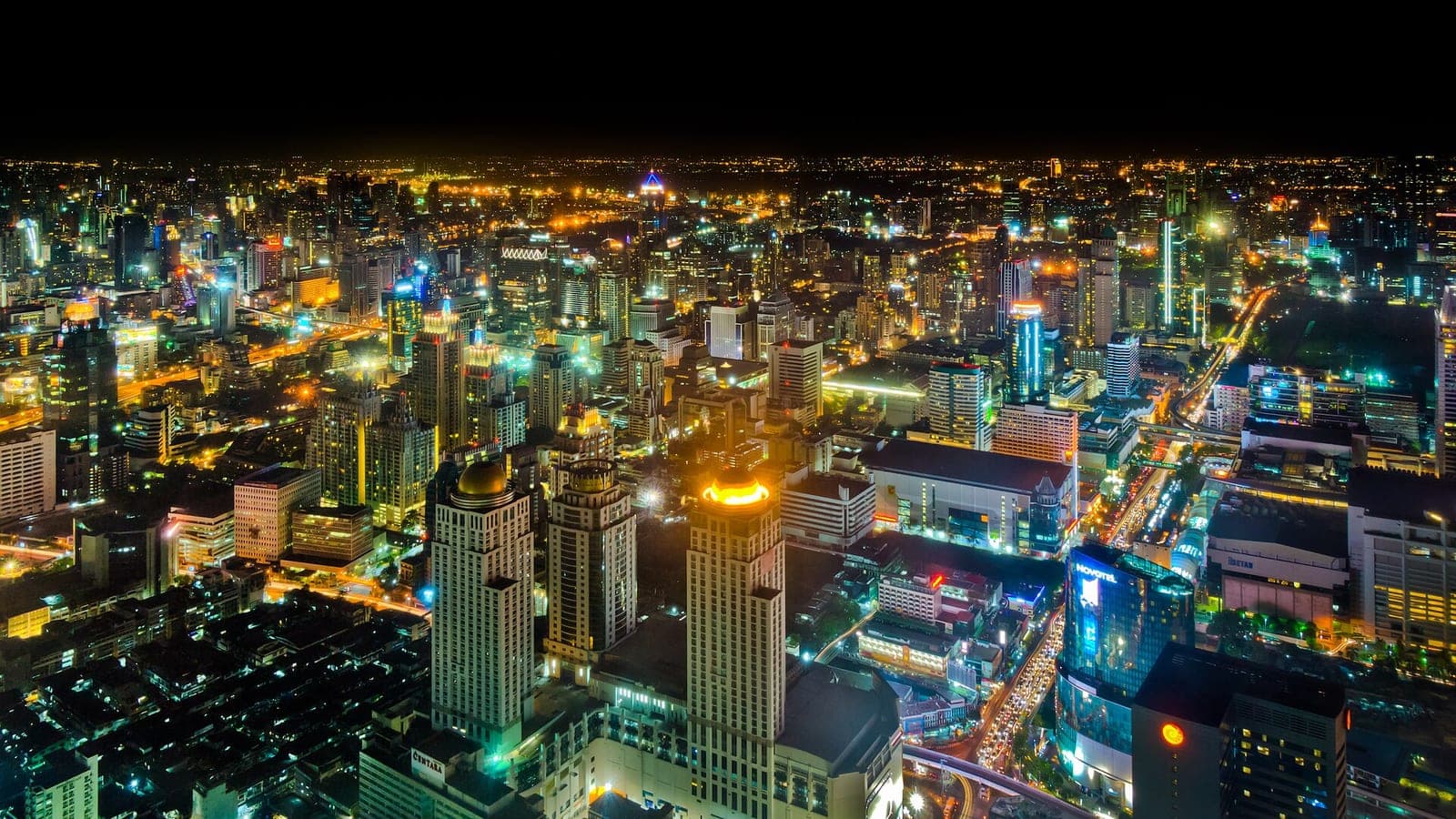
Changkat Bukit Bintang is the bar street: a few hundred metres of restored pre-war shophouses running uphill off Jalan Bukit Bintang, packed end to end with bars, gastropubs, tapas rooms and a couple of clubs. Healy Mac's, the whisky and cocktail rooms, the Latin bars — all on this one hill, with the Jalan Alor food street a block downhill and Tengkat Tong Shin running parallel. It is the most walkable nightlife in Malaysia and it is also, plainly, the place foreign men come to drink; late at night freelancers work the lower end of the street and one or two of the smaller bars, which is a fact rather than a recommendation and is covered on the hotspot page.
Jalan P. Ramlee is the club street: a short road behind the Petronas Towers, named for Malaysia's great actor-director and lined with pubs and nightclubs since the 1990s. Louder, later, more local and more mixed than Changkat.
Beyond those two, the drinking is scattered: the TREC complex on Jalan Tun Razak, which is where the big clubs went; Bangsar's Jalan Telawi for a neighbourhood-bar evening; and the rooftop bars — the Heli Lounge Bar on a working helipad, SkyBar at Traders overlooking the Petronas Towers, Marini's on 57 — which are the single best thing to do with an evening in this city and cost about what a rooftop costs anywhere.
What a week costs.
| Item | Typical (Aug 2026) |
|---|---|
| Tiger or Carlsberg in a Changkat bar | $5–7 (RM20–30) |
| Cocktail | $9–15 (RM35–60) |
| Can of beer from a supermarket | $2.50–3.50 (RM10–14) |
| Club cover | $0–12 (RM0–50), often with a drink |
| Hawker meal | $2–4 (RM8–15) |
| Restaurant dinner for two | $25–50 (RM100–200) |
| Grab across the city | $3–6 (RM12–25) |
| Train fare | $0.50–1.25 (RM2–5) |
| KLIA Ekspres to KL Sentral | about $13.50 (RM55), 28 minutes |
| Good four-star hotel in Bukit Bintang | $45–90 a night |
| A full week, not counting flights | $900–1,700 |
For the wider picture see what a trip costs and the prices page.
How a night works. Dinner first, because the food is why you are here — Jalan Alor from about six, or a hawker centre, or one of the Bukit Bintang restaurants. Then a rooftop for sunset if you have booked. Changkat fills from about nine and peaks between eleven and one; most bars run to 1am with the later ones to 2 or 3 on Friday and Saturday, and City Hall periodically tightens the hours, so treat any closing time you read as provisional. If you want a club after that, it is a $4 Grab to Jalan P. Ramlee or TREC. Nobody will approach you anywhere; the crowd is a mix of Malaysian Chinese, expats, Middle Eastern and Indian visitors, backpackers and business travellers, and it behaves like a bar crowd in any Western city.
Religion, law and what actually applies to you. This is where most of the internet gets it wrong, so here is the precise version. Malaysia runs two parallel legal systems: civil law for everybody, and Syariah law for Malaysian Muslims only. The Syariah offences people worry about — khalwat, or "close proximity" between an unmarried Muslim man and woman, and the prohibition on Muslims drinking — apply to Malaysian Muslims. They do not apply to you, and they do not apply to a non-Muslim Malaysian. What that means in practice: a foreign non-Muslim couple checking into a KL hotel is unremarkable and nobody will ask, and hotels do not operate joiner fees, which are a Thai and Filipino institution. What it also means: a relationship with a Malay Muslim woman is a serious matter with real legal weight behind it, because for her the rules are different and marriage to a non-Muslim is not recognised without conversion. Be an adult about that, and read culture and respect.
Ramadan. Unlike Jakarta, which shuts its nightlife by government order for the whole month, Kuala Lumpur's bars serve non-Muslims through Ramadan and stay open. The city is quieter, some Muslim-owned venues close or restrict hours, and eating in public during daylight is bad manners rather than illegal. It is also the best month of the year for food, because the Ramadan bazaars are extraordinary. Check the dates in best time to visit.
Who Kuala Lumpur suits. A man breaking a long trip: KL is two hours from Bangkok, three from Bali, one from Singapore, and the AirAsia hub at KLIA means the onward fares are the cheapest in Asia. A man who wants two or three genuinely good days of food, rooftops and comfort between two harder-working cities. A man visiting somebody who lives here. A man over sixty who wants a soft landing in Asia with good hospitals and no language barrier.
Who it does not suit. Anyone whose trip is about meeting women. There is no scene to speak of, the drinks are the most expensive on this site, the culture is conservative in public, and the introductions have to come entirely from you. If that is the trip, read how to choose a destination and fly to Pattaya or Angeles City — both are cheap, direct-ish and vastly more productive.
Safety. Kuala Lumpur is one of the safest big cities in Asia and its crime is opportunistic. Bag-snatching by motorbike riders is the classic; walk on the inside of the pavement and let go of the bag rather than be dragged. Pickpockets work crowded markets and stations. There is a long-running fake-police scam — anyone in plain clothes demanding to see your wallet is not a police officer, and you are entitled to insist on going to a station. Carry your passport or a copy. Haze from regional fires can be genuinely unpleasant between May and October. And drug penalties in Malaysia include a mandatory death sentence for trafficking; there is no version of this where you touch anything. More on the safety page.
How it has changed. KL has been growing up fast. The MRT opened through Bukit Bintang in 2017 and made the centre navigable; the big clubs consolidated into the purpose-built TREC complex on Jalan Tun Razak; Asian Heritage Row, the nightlife district of the 2000s, has faded almost to nothing; and Bukit Bintang itself has gone steadily more upmarket — malls, hotels and restaurants where there used to be something rougher. The result is a city that is a much better place to visit than it was in 2010 and a much thinner one to go looking for a night out in.
Scorecard
How Kuala Lumpur rates
Our 1–5 scores, the same ones that drive the rankings page. Opinion, consistently applied.
- Scene
- 2out of 5
- Ease of meeting
- 2out of 5
- Value
- 3out of 5
- English
- 5out of 5
- Safety
- 4out of 5
- Hotels
- 4out of 5
- Daytime
- 3out of 5
- Access from US
- 3out of 5
- Relationship odds
- 3out of 5
The vibe
Air-conditioned, orderly and multilingual. Petronas Towers out of the taxi window, satay smoke on Jalan Alor, and a $6 beer in a shophouse bar with a Chelsea game on.
Best for
- a two- or three-day stopover
- food
- rooftop bars
- comfortable hotels at low prices
- cheap onward flights
- men who want easy English
Not for
- anyone whose trip is about meeting women
- cheap drinking
- walkable bar districts
- a two-week stay
When to go & how to get around
It is hot and humid all year, 32–35°C every day, so the question is rain rather than temperature. June to August is the driest stretch and the best window. October to March brings the north-east monsoon and heavy afternoon downpours, which mostly means an hour indoors rather than a ruined day. Regional haze from land-clearing fires can be bad between May and October. Bars stay open through Ramadan, unlike in Jakarta, and the Ramadan food bazaars are the best eating of the year.
Grab is the default and costs $3–6 (RM12–25) for most cross-city trips. The rail network — MRT, LRT, monorail and KTM — is clean, cheap at RM2–5 and covers the centre; get a Touch ’n Go card at any station. Bukit Bintang has both an MRT station and a monorail stop, and an air-conditioned elevated walkway runs from there to KLCC. Street taxis exist and the meter is RM3 plus about RM0.90 a kilometre with a 50% surcharge after midnight; use Grab instead. Walking is fine in the centre and unpleasant everywhere else — the pavements give out and it is 33°C.
One of the safest big cities in Asia. The crime is opportunistic: motorbike bag-snatching (walk on the inside, let go rather than be dragged), pickpockets in crowded markets and stations, and a persistent fake-police scam — insist on going to a station. Haze between May and October can be severe. Drug trafficking carries a death sentence; do not touch anything.
The point of the trip
Meeting women in Kuala Lumpur
We will not oversell this. Kuala Lumpur is the hardest city in this guide in which to meet a woman as a visiting stranger, and it is not close.
Why. The country is roughly two-thirds Malay Muslim, and for a Malay Muslim woman a relationship with a non-Muslim foreigner runs straight into Syariah law, family expectation and a marriage that Malaysia will not register unless he converts. That is not a rule you can charm your way around and it is not one we would encourage anybody to test; it is her life, not yours, that carries the consequences. The remaining third of the population — Malaysian Chinese and Malaysian Indian women, largely urban, largely professional, often the ones you will actually meet in a Changkat bar or a Bangsar restaurant — face none of those constraints and are, culturally, about as Westernised as anyone in Asia. They are also, on the whole, doing perfectly well without a foreign boyfriend. This is a middle-income country with a large professional class; the economic gap that shapes so much of the rest of this site barely exists here.
Who you will actually meet. In the bars: Malaysian Chinese women out with friends, expats working in the towers, tourists, and business travellers. In daylight: colleagues, gym staff, café staff. And a substantial migrant workforce from Indonesia, the Philippines and Vietnam working in hospitality and services across the Klang Valley, mostly on employer-tied visas, often supporting families at home, and frequently a long way from any position to make free choices. We would ask you to be especially careful and especially decent there. Nothing about a woman's work visa should be part of anyone's calculation.
How the approach differs from home. It mostly does not, which is the point. Cold approaching in a KL bar works exactly as well as it does in Chicago — that is, occasionally, if you are good at it and she is in the mood. Public affection is kept modest, particularly around Malay Malaysians. Dress properly. Do not buy anyone a drink before you have had a conversation. And accept that a "no" here means what it means at home.
The realistic route. Online, before you fly, as everywhere on this site — and with the honest caveat that Malaysia has a much smaller pool on the Asian dating sites than Indonesia, the Philippines or Thailand, because there is less reason for Malaysian women to be on them. Where KL does work is as the meeting point: it is one hour from Jakarta, two from Bangkok, four from Manila, and it is by a wide margin the easiest, safest and most comfortable city in the region for a woman to travel to for a first in-person meeting. Several readers have used exactly that: chat for a month or two, meet in Kuala Lumpur for a long weekend at a good hotel, because it is neutral ground and neither of you has to explain anything to anybody. That is a genuinely good use of this city. Read online dating before you fly and red flags and romance scams first.
The age gap and the economics. Different from the rest of the guide. In Kuala Lumpur, a Western man in his fifties with a pension is not economically extraordinary — Malaysian graduate salaries are real, the middle class is large, and a professional woman here is not looking for a rescue. That cuts both ways: what you offer has to be you, which is harder, and what you get is a relationship without the ambiguity that hangs over the bar cities. Our score of 3 for relationship prospects reflects that. The door is narrow. What is behind it is straightforward.
And the freelancer question, since Changkat's reputation will reach you before you land: yes, late at night, women work the lower end of the street and a couple of the smaller bars, as in most Asian capitals. Prostitution is illegal in Malaysia, enforcement is periodic and unpredictable, immigration raids on nightlife venues happen, and a foreigner caught up in one has a genuinely serious problem in a country with an unforgiving criminal justice system. We are not going to price it, describe it or recommend it. If that is the trip you want, Thailand and the Philippines are cheaper, safer and honest about themselves.
Where to stay
Stay in Bukit Bintang, and specifically at the Changkat end of it. That puts the bars, Jalan Alor, three malls, the MRT and the monorail inside a ten-minute walk, and everything else in the city inside a $4 Grab. The best-value hotels in this guide are here: four-star rooms with pools for $45–90 a night, including the institutional Federal Kuala Lumpur and the newer MOV Hotel with its rooftop pool. KLCC is smarter and quieter but you will Grab to every meal. Bangsar suits a longer stay. Avoid Chow Kit and the area around Jalan Tuanku Abdul Rahman unless price is the only thing that matters. Full list on the Kuala Lumpur hotels page.
Getting there from the US
There is no nonstop from the US to Kuala Lumpur (KUL). From the West Coast the standard routings are via Tokyo, Seoul, Taipei or Hong Kong on the Asian carriers, 20–24 hours door to door; from the East Coast, west via Doha on Qatar Airways or Istanbul on Turkish is usually the shortest. Malaysia Airlines, Singapore Airlines via Changi and Cathay via Hong Kong are the comfortable options. Americans get ninety days visa-free on arrival — no fee, no application — but almost all visitors must submit the free Malaysia Digital Arrival Card (MDAC) online within three days before arrival; the exemption list has changed more than once, so check the immigration department's site the week you fly. From KUL, the KLIA Ekspres train runs to KL Sentral in 28 minutes for about $13.50 (RM55) and then it is a short train or Grab to Bukit Bintang; a Grab or airport taxi door to door is $12–20 (RM50–80) and 45–60 minutes without traffic. KLIA is also the AirAsia hub, which makes onward hops the cheapest in Asia: Bangkok two hours, Bali three, Singapore one, Phuket under two. See flights from the US and visas.