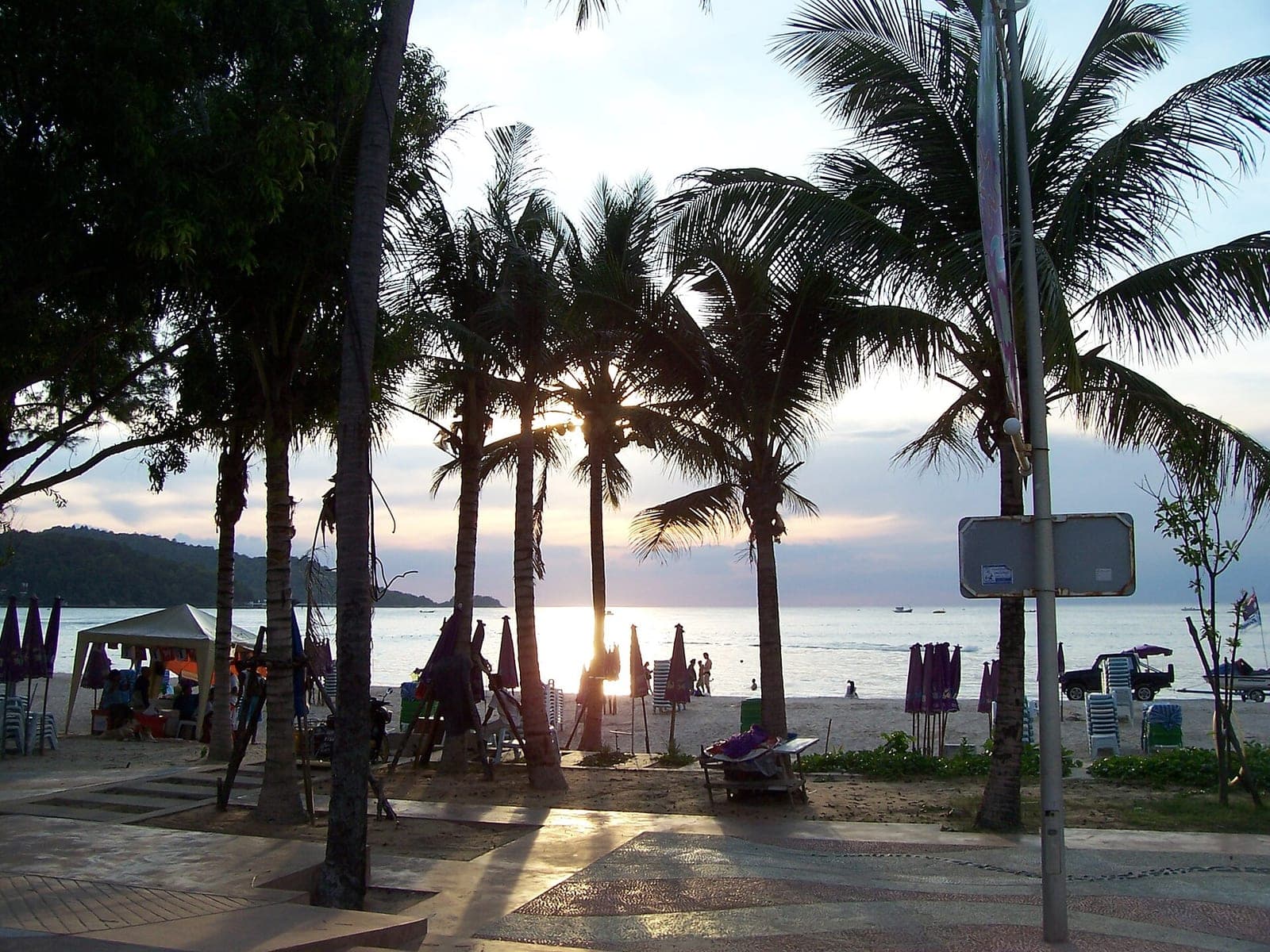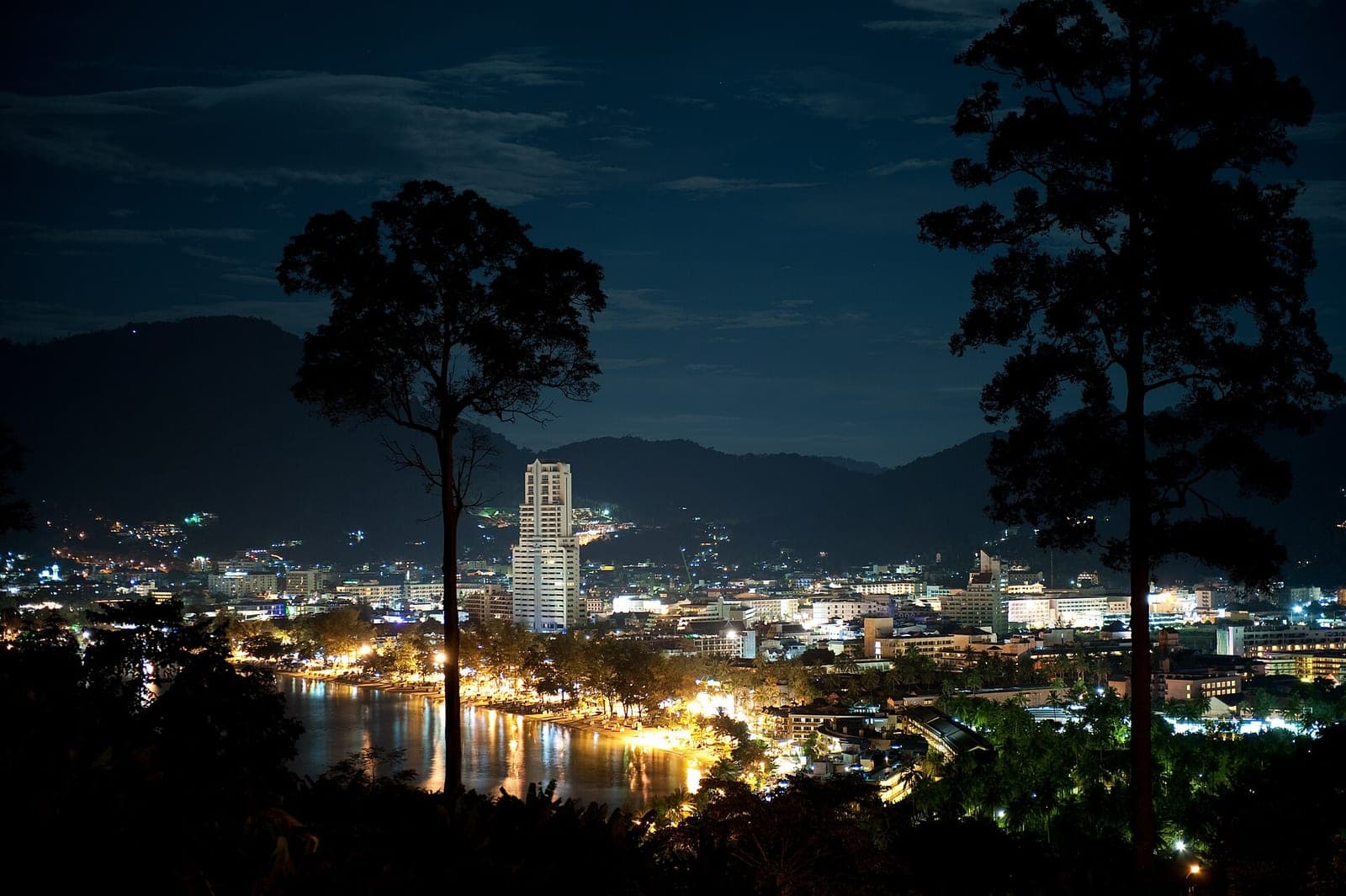


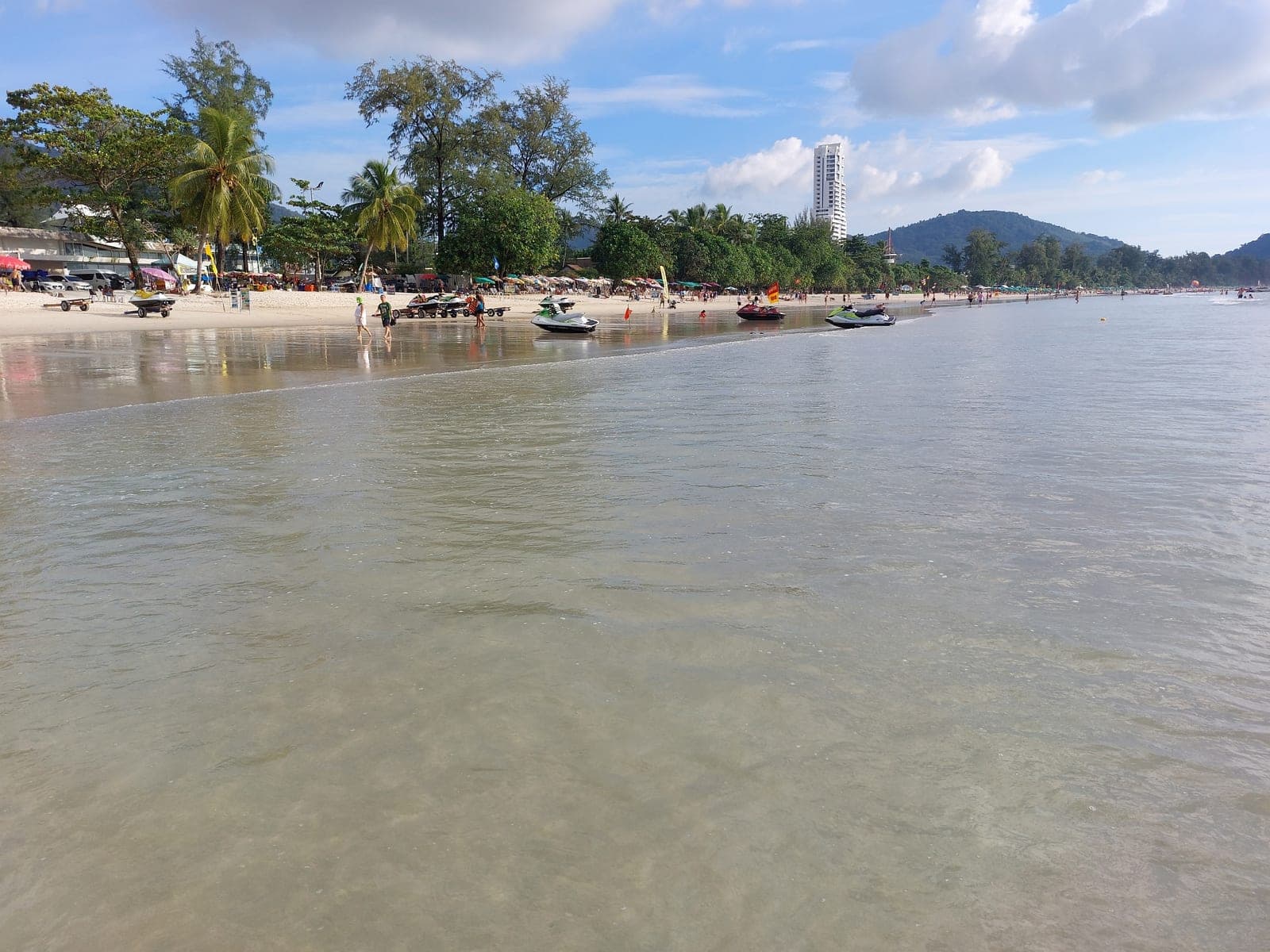









Patong Beach is the 1.8-mile (2,850 m) west-facing crescent on Phuket's Andaman coast that gave the island its tourist trade, and it is the reason anyone puts up with Patong the town. The sand is soft and pale, the bay is sheltered by headlands at both ends, the sun sets straight into the sea, and it is one block from Bangla Road — which is the entire argument for staying here rather than somewhere prettier.
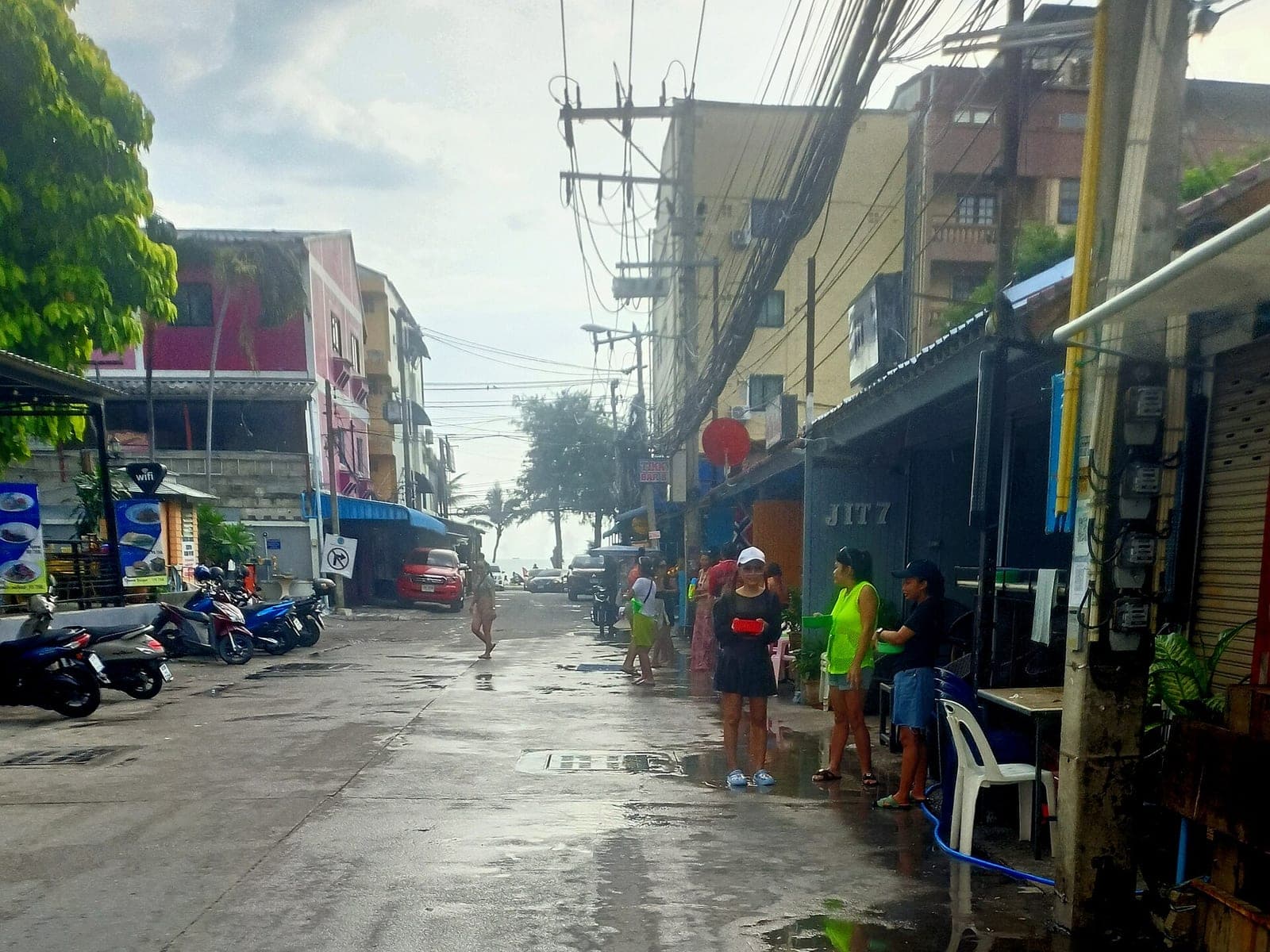
The lay of it. Thaweewong Road (the beach road) runs the length of the sand, one-way for most of it, lined with restaurants, massage shops, convenience stores, tailors, dive shops, beach bars and hotels. Behind that sits Rat-U-Thit 200 Pee Road with the bigger hotels and the Jungceylon mall, and behind that the hills. The northern end, toward Kalim, is where the water sports operate and where the beach is busiest; the southern end, toward Tri Trang, is quieter, narrower and better for a walk.
Loungers, and the rules. The military cleared the beach of chairs, umbrellas and vendors in 2014, and what exists now is a compromise: rented loungers and umbrellas are allowed in designated zones covering part of the sand, at roughly $6–9 (฿200–300) for a bed and umbrella for the day as of August 2026, with the rest kept clear. Free space is genuinely free — bring a towel and use it. Vendors are limited and licensed, and the beach is cleaner than it was ten years ago.
Water sports, and the one you should skip. Parasailing, banana boats, sea kayaks and jet-skis all operate off the northern half. The jet-ski damage claim — you return the machine, an operator finds a scratch, and the repair estimate is enormous — has been a Phuket institution for two decades and has produced repeated police crackdowns and repeated returns. Our advice is simple: do not rent one. If you must, photograph and video every panel from every angle, in front of the operator, before you touch it, and do not hand over your passport as a deposit.
Swimming and the flags. From November to April the bay is usually calm and swimming is fine. From May to October the southwest monsoon pushes hard onto this coast and Patong develops serious rip currents; red flags go up and people drown here every year, most of them foreigners who swam past a red flag or after a drink. Take the flags literally, swim between the lifeguard posts, and if you are pulled out, swim parallel to the beach rather than against the current.
The day, hour by hour. Early morning is the best of it — cool, quiet, joggers and a flat sea. Midday is very hot and very crowded. Late afternoon fills up again, and the sunset from anywhere on this beach, drink in hand, is the single best free thing in Phuket. After dark the beach itself closes down and the crowd moves inland: the beach road restaurants fill, the beer bars at the mouth of Bangla open up, and by 21:00 nothing is happening on the sand at all. Sleeping or drinking on the beach at night is prohibited and enforced.
Beach bars and the beach road. The bars along Thaweewong are a gentler version of Bangla — open-fronted, sea-facing, a beer at $3–4.50 (฿100–150), and a mixed holiday crowd rather than a scene. They are a good place to watch the sun go down before the street inland gets going. Several of the beachfront hotels run their own sunset bars, which cost more and are worth it once.
Who it suits. Anyone who wants a real beach attached to a real night out — which, honestly, is Patong's whole pitch and it delivers on it. Compared with Jomtien or Pattaya Beach this is a much better piece of coast. Compared with Kata, Karon, Kamala or the beaches further north it is the busiest and least peaceful on the island, and people who want quiet stay elsewhere and take a taxi in for the evening.
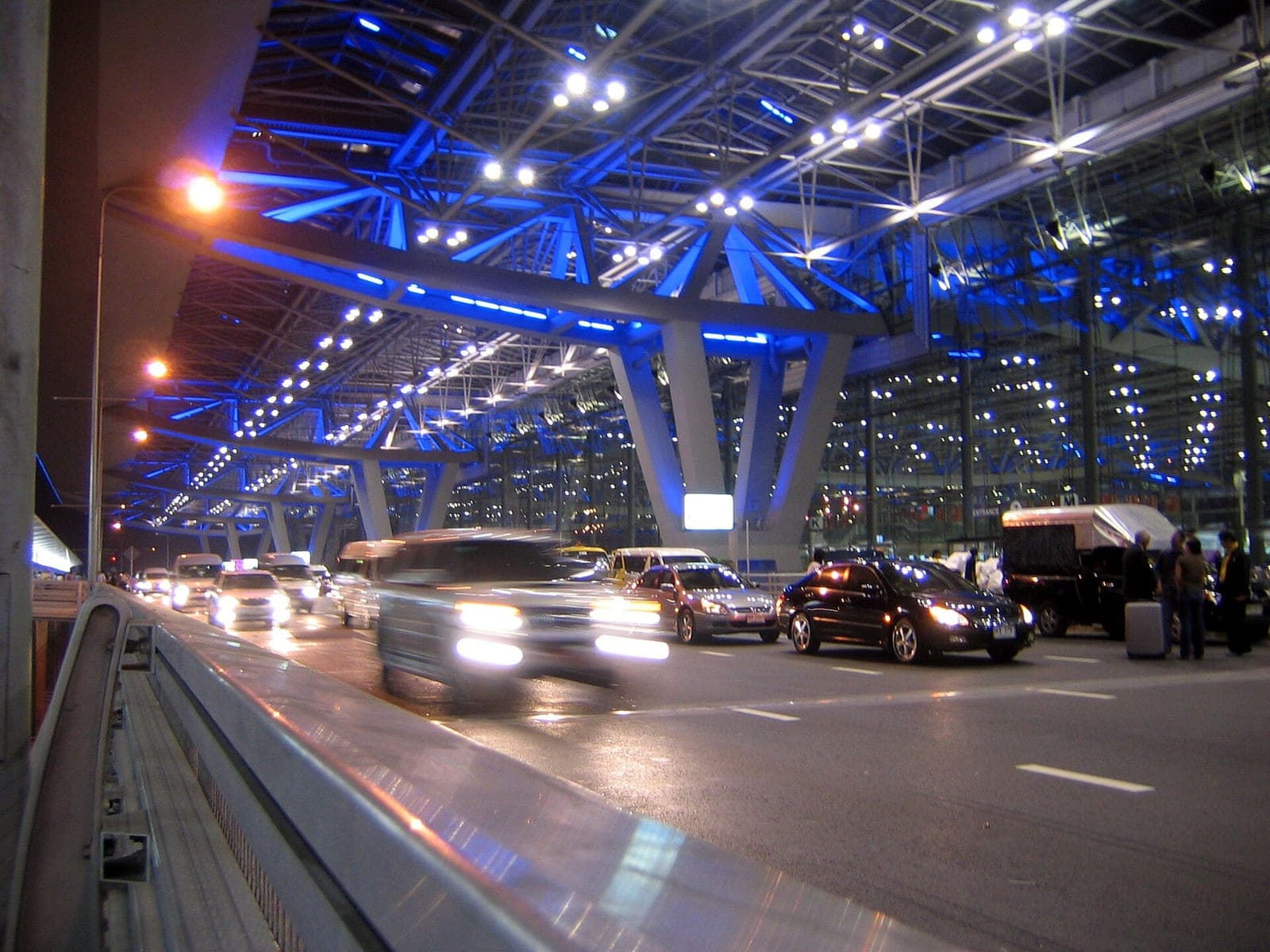
Getting there and around. Phuket International Airport (HKT) is 45–60 minutes north by road. Within Patong, walk — the town is small and the beach is at the bottom of everything. Taxis and tuk-tuks are expensive and largely fixed-price by local convention rather than meter, so agree the fare first; Grab and Bolt work but driver availability at the beach is patchy. A songthaew runs between Patong and Phuket Town for a couple of dollars in daylight hours.
Safety. Sun, currents in the monsoon months, jet-skis, and the roads. Patong's hill roads are steep and the accident rate among tourists on scooters is the worst in Thailand. Leave valuables in the hotel safe rather than under a towel, and treat any beach-side offer of a tour, a timeshare presentation or a "special price" with the caution you would at home.
Highlights
- + A genuinely good beach one block from the nightlife
- + Sunsets straight into the Andaman Sea
- + Everything walkable in Patong
- + Cleaner and better regulated than a decade ago
Good for
- sunsets
- a beach and a bar street in the same block
- swimming in high season
- families and couples
Drawbacks
- − The busiest, least peaceful beach on the island
- − Dangerous currents in the monsoon months
- − Jet-ski damage claims are a Phuket institution
- − Nothing happens on the sand after dark
How to get there
45–60 minutes south of Phuket airport (HKT) by taxi, minibus or Grab; 15–25 minutes over the hill from Karon and Kata; a songthaew runs from Phuket Town in daylight hours. In Patong itself, everything is walkable.
Safety note
Swim between the flags and never in a red-flag monsoon sea — rip currents drown people here every year. Do not rent a jet-ski. Do not ride a scooter on the hill roads. Keep valuables off the sand.