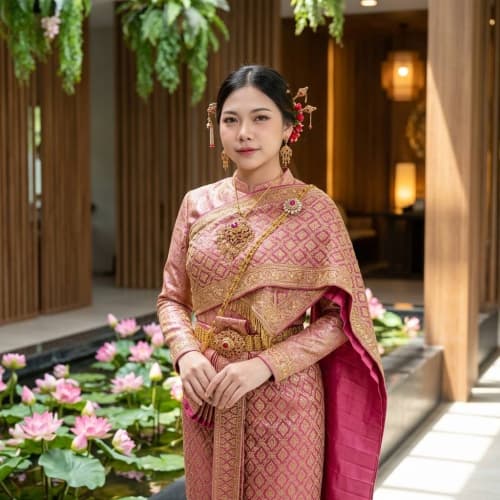


Dating culture in Southeast Asia differs more between countries than most visitors expect: Thailand runs on face and a bride price, the Philippines on Catholic family obligation, Vietnam on parental pressure, Cambodia on conservatism and marriage law, and Indonesia and Malaysia on religion and the criminal code. What they share is that you are never dating one woman. You are being assessed by a household, and the sooner you understand the household's rules the better you will do.
This is the practical version, written for a man who wants to behave well and not be surprised. For etiquette in general — shoes, temples, the royal family, the head and the feet — see Culture and respect: the small things that make a trip to Southeast Asia go well.
What is the same everywhere?
Four things, and they explain most of what follows.
Family comes first, before you, before her, before any plan you make together. Her mother's opinion matters more than her friends'. Her siblings' school fees are her problem. A man who is good to her family is a serious man; a man who resents them is temporary.
Face matters. Never scold, correct or argue with her in front of anyone. Never make her say no to you in front of her friends. Loud anger loses you the argument even when you are right.
The economics are real. There is no welfare state in any of these countries. Families are the safety net, and the person who has is expected to help the people who do not. You will be seen as someone who has. Decide early what you are comfortable with and say it plainly; see Long-distance after the trip: video habits, the money conversation, visits, family, and when it's real.
Public modesty, private warmth. Kissing on the street is a no almost everywhere, and in Vietnam, Cambodia and Muslim Southeast Asia it is a real no. Affection is for indoors.
| Thailand | Philippines | Vietnam | Cambodia | Indonesia / Malaysia | |
|---|---|---|---|---|---|
| Religion | Buddhist | Catholic (most), some Protestant and Muslim | Mixed; ancestor worship, Buddhist, Catholic | Buddhist | Muslim majority; Bali Hindu |
| Key concepts | Face, kreng jai, sin sod, sanuk | Hiya, utang na loob, tampo, pakikisama | Family duty, filial piety, "ế" (left on the shelf) | Chbab srey, modesty, family | Religious law, halal, community |
| English | Variable | Excellent | Variable | Variable | Good (Malaysia), variable (Indonesia) |
| Pace | Easy-going, commitment slow | Fast and warm, serious quickly | Slow, family-gated | Slow, family-gated | Slow, constrained |
| Divorce | Legal, common | None (Aug 2026) | Legal | Legal | Legal (religious courts for Muslims) |
| Marriage hurdles for foreigners | Sin sod; embassy affidavit | Legal-capacity affidavit, CENOMAR, CFO seminar | Paperwork heavy, parents | Income rule (~$2,550/month) | Conversion required to marry a Muslim |
| Sex outside marriage | Tolerated, discreet | Conservative in public, common in private | Conservative; discreet | Conservative | Criminal offence in Indonesia (complaint-based); religious offence for Muslims in Malaysia |
Thailand: what are sin sod, face and the Isaan family?
Thai dating looks relaxed and mostly is. Thais value sanuk (fun), smile through awkwardness, and avoid confrontation with a skill that can look like evasion to an American. The two things that trip foreigners up are money and face.
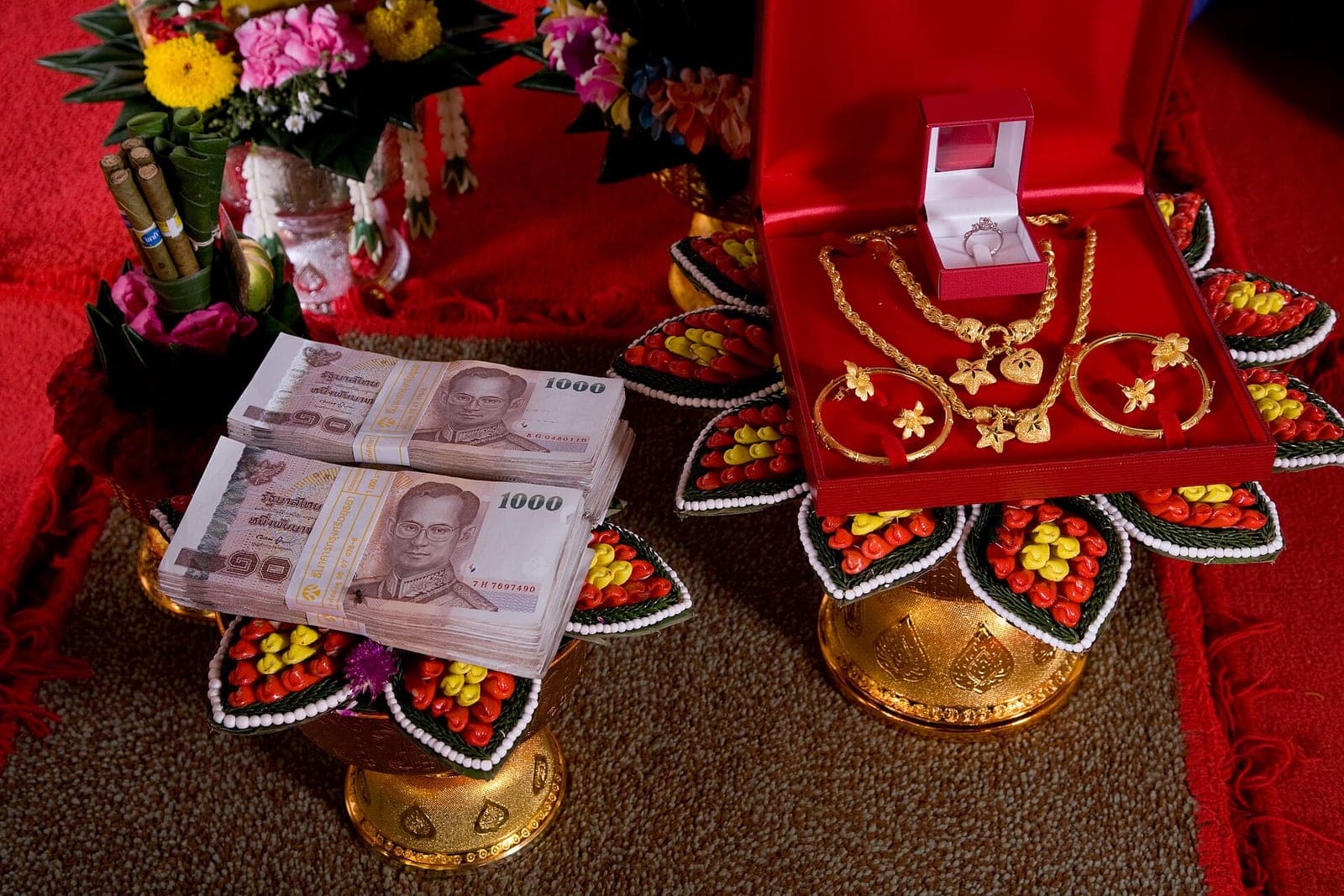
Sin sod is the bride price: a sum, traditionally in cash and gold, displayed at the wedding and given to the bride's parents to thank them for raising her and to show the groom can provide. Reported figures for a middle-class Thai bride run around ฿100,000–300,000 as of 2025 (roughly $3,000–9,000), higher for university-educated or wealthy families, and foreigners are frequently asked for more on the assumption that they have it. Much of it is often quietly returned to the couple after the ceremony, especially in Bangkok families; in the countryside it may genuinely go to the parents. It is negotiable, it is discussed openly between the families, and a woman who has been married before or has children is expected to command less. The honest guidance: talk about it early, ask what her family expects, and do not let pride or a forum thread decide a number for you.
Face and kreng jai. Kreng jai is the reluctance to impose on or embarrass another person, and it runs deep. A Thai woman may say yes to a plan she has no intention of keeping rather than refuse you to your face; she may not tell you something is wrong until it is very wrong. Read silences. Never raise your voice in public. A complaint delivered quietly over dinner lands; a complaint delivered loudly in a restaurant ends things.
Isaan. A large share of the women working in tourism and nightlife in Pattaya and Bangkok come from the north-east, the rice-growing, Lao-speaking, poorest region of the country. Isaan women are warm, direct by Thai standards, and carry heavy family obligations: parents, often a child being raised by grandparents, sometimes siblings' school fees. If you date one seriously, the family and the village are part of the deal, and a trip up-country to meet them is the moment it becomes real. The bar-scene version of Thailand is covered in How the bar scenes work, country by country: go-go bars, beer bars, ladies' drinks, mamasans and the bill; the women there and the women you meet in Thonglor live by the same cultural rules, whatever else differs.
Sex and relationships. Thailand is tolerant and private. Couples live together before marriage in the cities, nobody asks, and your hotel will not care. A respectable Thai family will still expect discretion, and a woman may not want her parents to know you share a room.
Philippines: faith, family, utang na loob and the balikbayan box
Filipino dating is the easiest for an American to read because so much of it looks familiar — the language, the Catholicism, the malls, the directness — and that familiarity hides a different operating system underneath.
Family and faith. The Philippines is roughly four-fifths Catholic, there is no divorce (a bill passed the House in 2024, lapsed when that Congress ended in 2025, and new bills were pending in the Senate as of early 2026), and the family is an extended clan of parents, siblings, cousins, aunties and godparents who are all, in some sense, in the relationship with you. Her mother will have an opinion within a week. Sunday may mean mass, and if it is serious you will be sitting in a church whether you believe or not.
The vocabulary. Hiya is shame or face: never embarrass her or let her embarrass herself. Utang na loob is the debt of gratitude that kindness creates, lifelong and reciprocal; it is why she sends money home and why generosity to her family binds her to you. Pakikisama is getting along, going with the group, saying yes to keep the peace. Tampo is the sulk — silence and "I'm fine" as a signal that you have hurt her and should coax her out of it gently, not "give her space". Ligaw is courtship, the old formal pursuit, still alive in spirit: effort and visits to the house count.
Chaperones. A first date in the provinces, and sometimes in the city, may involve a sister, cousin or friend. This is normal. It is partly safety, partly propriety, and partly so the family gets a report. Treat the chaperone as a guest, pay for her coffee, and do not try to get rid of her.
The balikbayan box. The cardboard box of gifts — chocolate, shoes, canned goods, perfume, clothes — that overseas Filipinos ship home is a national institution and, once you are part of a family, a small expectation. It is not a scam; it is how affection is shown across distance. A box from the States costs a couple of hundred dollars to fill and ship and buys more goodwill than anything else you can do for the price.
Sex and relationships. Publicly conservative, privately less so. Young Filipinas are expected to be modest, motels exist precisely because people are not, and the large number of single mothers — many still legally married to men who left — tells its own story. A Filipina who sleeps with you is likely to consider it the start of something, and "we're just having fun" is a concept that translates badly. Be honest about what you want before, not after.
Everything above applies in Angeles City, Manila and Cebu alike; Cebuanos will tell you they are warmer and Manileños will tell you they are more modern, and they are both right.
Cambodia: how conservative is it, and what are the marriage rules?
Very, by the standards of its neighbors, and the gap between the bars on Street 136 and the rest of Khmer society is wider than the equivalent gap in Thailand.
Traditional Khmer culture, shaped by the chbab srey (the old code of conduct for women) and by a generation that survived the Khmer Rouge, prizes female modesty, virginity before marriage and family honor. A respectable Cambodian woman does not date casually, will not be seen alone with a foreign man in her own neighborhood without talk, and will expect a relationship to head toward marriage quickly or not at all. Public affection is out. The family meets you early and decides.
Cambodia is also the one country here with explicit rules on foreign men marrying local women. Regulations introduced in 2011, aimed at sham marriages and trafficking, require a foreign man to show monthly income of at least about $2,550 to register a marriage in Cambodia; the same rules originally barred men over fifty, and that age bar is widely reported to have been lifted in 2018, though we have not seen a primary document and you should confirm with the Ministry of Foreign Affairs or an attorney in Phnom Penh. The rules apply only to marriages registered inside Cambodia; couples who marry abroad are unaffected.
For the visitor, the practical picture is a small, conservative pool of women in BKK1 and the riverside cafés, a separate and quite commercial bar world, and little overlap between the two. Treat a Cambodian woman's reputation as a thing you can damage by carelessness, because you can.
Vietnam: family pressure, the economy and the new middle class
Vietnamese dating is Confucian at its roots and fast-changing on top. The roots: filial piety, respect for elders, a family's right to weigh in on a marriage, and heavy pressure on women to marry by their late twenties. The word ế — "unsold", left on the shelf — is used, half-jokingly, about unmarried women in their thirties, and it is not really a joke to their mothers. Tet, the lunar new year, is when the whole country goes home and single adults are interrogated about their prospects.
On top of that sits a young, urban, ambitious middle class in Ho Chi Minh City and Hanoi that travels, speaks English, works for international firms and dates more freely than its parents did. A Vietnamese woman in her late twenties with a good job in District 1 may be choosing you over local men who expect her to give up the job. Her parents will still meet you within the first month if it is serious, you will still be expected to bring a gift, and showing that you can provide for a family matters more than your charm.
Practicalities: she may bring a friend on a first date; you pay; public affection is muted; she will text constantly and expect the same; money is discussed frankly and early; and a serious relationship moves toward marriage on a timetable that can startle an American. Living together before marriage is common in the cities and disapproved of in the countryside. Vietnam has legal divorce, and the paperwork for a foreigner to marry there is heavy but routine.
The language is tonal and hard; even ten words of it buy you enormous goodwill with her parents. Start with Thirty words that change the trip: Thai, Tagalog, Khmer and Vietnamese for men who are dating.
Indonesia and Malaysia: where do religion and law come in?
Here the rules change from cultural to legal, and we say plainly that neither country is where we send a man whose purpose is meeting women.
Indonesia is the largest Muslim-majority country in the world, with Hindu Bali as the famous exception. Its new criminal code, passed in 2022 and in force since January 2026, makes sex outside marriage an offence punishable by up to a year in prison and unmarried cohabitation by up to six months. The saving clause is that prosecution requires a formal complaint from the spouse, parent or child of a person involved; hotel staff and neighbors cannot report you, and the government has repeatedly said tourists are not the target. The practical risk to a visitor in Bali or Jakarta is low; the practical risk to an Indonesian Muslim woman's reputation and family relationships from being seen with you is real, and you should let her set the terms. To marry a Muslim Indonesian, a foreign man must convert; interfaith marriage is not recognized domestically.
Malaysia runs a dual legal system. Civil law governs non-Muslims, and dating a Chinese-Malaysian or Indian-Malaysian woman in Kuala Lumpur is much like dating anywhere. Muslim Malays are subject to Sharia courts, and khalwat — close proximity between an unmarried man and woman — is an offence for the Muslim party, enforced by religious authorities with periodic raids on hotels and parks. A non-Muslim foreigner is not charged under Sharia, but his Malay girlfriend can be, and marrying her requires his conversion. Alcohol is legal, Changkat Bukit Bintang is a real bar street, and none of that changes the law for a Malay woman.
How does this change what you do on a trip?
Less than you fear and more than you think. In Thailand and the Philippines, a polite, honest, reasonably generous man who keeps his voice down and asks about her family is already doing better than most. In Vietnam and Cambodia, slow down, dress a notch better, expect a friend on the first date and her parents on the fifth. In Indonesia and Malaysia, let her set the pace and assume the law is on her family's side, because it is.
And everywhere: the woman you are talking to online before you fly will tell you most of this herself if you ask. Ask. Then read Online dating before you fly: how the smart guys land with a date already booked for how to get the conversation started a few weeks out, and  look for video-verified profiles in the country you have chosen rather than swiping blind.