





















Vietnam is a country of about 100 million people strung 1,000 miles down the east coast of mainland Southeast Asia, and it is the fastest-changing place in this guide. For a man on this trip it is a paradox: the best country here to live in for a month, and the hardest of the six to arrive in cold and meet somebody. Ho Chi Minh City — Saigon to everyone who lives there — is a tier-two destination and the only one we would send you to for the evenings; Hanoi is tier three, colder, older and more conservative.
What Vietnam is for a man on this trip. Saigon is a city of nine million with a scene that does not concentrate the way Pattaya's does. Bui Vien Street in Pham Ngu Lao is the loud backpacker strip, pedestrianized on weekend evenings, cheap, chaotic and young. Little Tokyo around Le Thanh Ton is the Japanese quarter, where the hostess-bar and KTV trade lives behind discreet doors and where the etiquette is closer to Tokyo than to Bangkok. The District 1 rooftops and clubs are where young, well-dressed Saigon actually goes — real nightclubs with real crowds, expensive by Vietnamese standards and cheap by yours. In Hanoi, Ta Hien "Beer Street" is a plastic-stool institution and Tay Ho is the lakeside expat district. Nothing in Vietnam works like a go-go strip, and men who expect one leave disappointed.
The women and the culture. Vietnam is Confucian in its bones — family hierarchy, obligation to parents, education as a moral duty — with a thin Buddhist layer and a Catholic minority of around seven percent. It is also a one-party state, and while nobody will bother a tourist, political conversation is best left alone and photography around anything official is best avoided. Vietnamese women have a reputation among long-term expats for being direct, hard-working, financially shrewd and unsentimental in a way that men used to Thailand find bracing; family approval matters enormously, and a woman introducing you to her parents is making a formal statement, not a casual one. The bar scene is smaller and more discreet than Thailand's, partly because the authorities police it, and the freelance scene that does exist is not something we would send a first-timer to navigate. What Vietnam does have is an enormous population of educated young women in the cities who meet men online and who will happily spend an evening practicing English over coffee. That is the realistic route here, and it takes weeks of groundwork rather than a taxi ride — see online dating before you fly and meeting women outside the bars.
Money. The currency is the dong (₫), around ₫26,000 to the dollar as of August 2026, which means everyone is a millionaire and the notes are a nuisance: ₫500,000 and ₫20,000 are similar colors and get confused constantly. Cards work in hotels, malls and mid-range restaurants; the street is cash. ATM fees are low — often ₫22,000–66,000, sometimes nothing — but withdrawal limits are low too, typically ₫2–5 million, so you will make several trips. Vietnam is cheap: a local beer is $1.20–2.50, a bowl of pho $2–3, a good central hotel room $35–70, a Grab across District 1 a couple of dollars. A comfortable week runs $900–1,600 excluding flights.
Getting there and around. Vietnam Airlines flies San Francisco to Saigon nonstop in about 15 hours 40 minutes, which is the only US nonstop to mainland Southeast Asia outside the Philippines; everything else connects in Seoul, Taipei, Tokyo or Hong Kong for 19–24 hours. Fares run $800–1,400 round trip in economy. Tan Son Nhat (SGN) sits unusually close to the middle of Saigon — 30–45 minutes and $6–10 by Grab to District 1 — and Noi Bai (HAN) is 45 minutes from Hanoi's Old Quarter. Domestically, Vietnam Airlines, VietJet and Bamboo fly the length of the country for $40–100, the trains are slow and scenic, and Grab bikes and cars are ubiquitous and absurdly cheap. Saigon's first metro line opened at the end of 2024 and more are being dug. Do not rent a motorbike: the traffic is the densest you will ever see and your travel insurance almost certainly excludes it without a Vietnamese license.
Safety and the law. Vietnam is one of the safest countries in the region for violent crime and one of the worst for the drive-by bag snatch — District 1 in particular, where phones are taken out of hands by passing motorbikes several times a day. Keep the phone away, carry bags on the wall side, and do not use a laptop at a pavement café. Padded tabs and the "let's go to my friend's bar" walk-up are the standard bar scams, and drink-spiking has been reported around Bui Vien; buy your own drinks and watch them. The law is the serious part: Vietnam imposes the death penalty for drug trafficking and long sentences for possession, prostitution is illegal and periodically raided, and the police have wide discretion with foreigners. Behave like a guest in someone's country, which is what you are. Registration matters too — your hotel will take your passport to register you, which is normal and required. See safety and scams.
When to go. Vietnam is really three climates. The south (Saigon, the Mekong) is dry and hot from December to April and wet from May to November, with rain that arrives at four o'clock and leaves by six. Central Vietnam floods from September to November. The north (Hanoi) has an actual winter — cold, gray and damp from December to March — and its best months are October, November and April. If you are combining the two cities, late autumn is the compromise. The one week to avoid nationwide is Tết, the Lunar New Year, when the country closes for the best part of a fortnight; in 2027 it falls on 6 February. The events calendar has the detail.
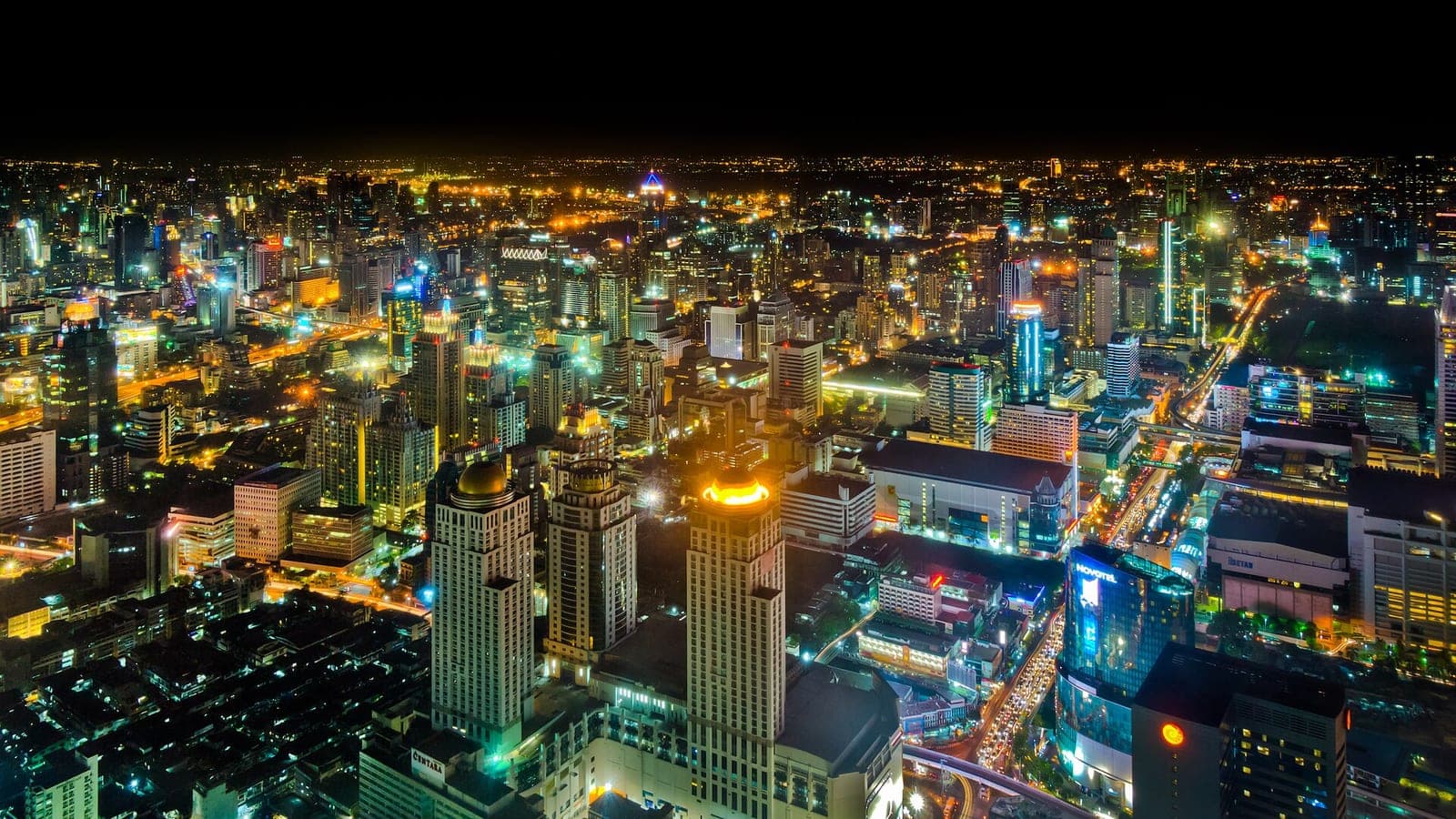
How it has changed, and where it is now. Vietnam has been growing at five to seven percent a year for a generation and it shows: Saigon's skyline, the metro, the motorbike-to-car transition, the malls, the coffee chains, the way twenty-somethings dress. The tourist infrastructure has improved out of recognition since 2015 and the 90-day e-visa introduced in 2023 — the most generous terms in this guide, $25 single entry or $50 multiple — has made long stays trivially easy. What has not changed is that the nightlife is regulated, discreet and small relative to the size of the cities, and that English outside the tourist and business classes remains weak. As of August 2026 our honest ranking stands: Vietnam is a wonderful country and a mediocre destination for the specific purpose of this site. Come for a month with someone you already know, or come for the food. Read Cambodia vs Vietnam if you are choosing.
Best for
- long stays and the 90-day visa
- food and coffee
- visiting a woman you already know
- value
- a modern city rather than a bar strip
Best months
December to April in the south; October, November and April in the north. Avoid Tết — the Lunar New Year, 6 February in 2027 — when the country shuts for a fortnight, and central Vietnam from September to November.