

Expat living costs in Southeast Asia come down to one number and one habit: what you pay for a furnished apartment, and how many nights a week you spend in a bar. Everything else — food, transport, utilities, laundry, a gym — is small enough that it barely moves the total. Below are honest monthly budgets for the seven cities most American men on this site end up living in, as of August 2026, with the lines that trip people up spelled out.
What does a month actually cost?
Three columns, because "cost of living" means nothing without a lifestyle attached. Lean is a modest apartment away from the tourist streets, local food, public transport and a quiet week. Comfortable is a one-bedroom in a building with a pool and a gym, eating out most days, insurance, and going out two or three nights a week. Good life is a nice building in a nice street, Western food when you want it, a car habit, and a social life you do not budget for.
| City | Lean | Comfortable | Good life |
|---|---|---|---|
| Phnom Penh | $900 | $1,400 | $2,200 |
| Cebu | $900 | $1,400 | $2,200 |
| Ho Chi Minh City | $950 | $1,500 | $2,400 |
| Angeles City | $1,000 | $1,600 | $2,500 |
| Pattaya | $1,100 | $1,800 | $2,800 |
| Manila | $1,200 | $1,900 | $3,000 |
| Bangkok | $1,400 | $2,200 | $3,500 |
Those figures include rent, utilities, food, transport, phone, laundry, a gym, health insurance and a normal social life. They do not include flights home, visa costs, big-ticket medical work or anything you send to anyone. We add those back at the end.
What is rent, city by city?
Rent is between 35% and 50% of every budget above, and it is the one line where a week of looking saves you a thousand dollars a year. Everything below assumes a furnished one-bedroom or a good studio on a six- or twelve-month lease. Monthly and short leases cost 30–50% more, which is why the first month out here always feels expensive.
| City | Furnished one-bed, long lease | Where the money goes |
|---|---|---|
| Pattaya | $300–600 (฿10,000–20,000) | Jomtien and Pratumnak are cheapest; central Pattaya and sea views cost double |
| Angeles City | $300–550 (₱17,000–32,000) | Malabañas and the Clark side; Balibago is noisier and no cheaper |
| Bangkok | $450–900 (฿15,000–30,000) | On Nut and Phra Khanong at the low end, Asok to Thonglor at the top |
| Phnom Penh | $400–800 (US$400–800) | BKK1 and Tonle Bassac; serviced apartments with a pool run higher |
| Saigon | $450–900 (₫12–23 million) | District 1 and Binh Thanh; Thao Dien is the expat premium |
| Cebu | About $300–550 | Lahug, Banilad and around the IT Park; Mactan for the water |
| Manila | About $450–900 | Makati and the fringes of BGC; the most expensive housing in the Philippines |
The Cebu and Manila figures are our reading of the market as of August 2026 rather than a fixed quote — Philippine condo rents move with the peso and with what the building includes, and the same unit can be listed 30% apart on two sites in the same week. Look at three buildings in person before you sign anything.
Two rules that apply everywhere. First, deposits: two months plus one in advance is standard across the region, so budget three months' rent to move in. Second, never pay a year up front for a discount in a building you have not lived in through a hot month and a wet one.
What do utilities and internet cost?
Small numbers, with one big exception.
- Electricity is the exception. A one-bedroom with the air conditioning running most of the day is $60–150 a month in the hot season across all seven cities, and the Philippines has some of the highest tariffs in Asia — men in Angeles and Cebu routinely report bills that would embarrass a house in Texas. Thailand and Cambodia sit lower; Vietnam lower again. Ceiling fans and a landlord who has bothered with an inverter unit are worth real money.
- Water is $3–10 a month almost everywhere, and often included.
- Internet is the region's quiet triumph: fiber at 100–500 Mbps runs $10–25 a month in Vietnam, Thailand and Cambodia, and $25–45 in the Philippines, where it is also the least reliable of the four. A mobile SIM as backup is $9–20 (₱500–1,100) in the Philippines and $10–20 (฿300–700) in Thailand; see SIM cards, eSIMs and wifi: getting connected in Southeast Asia.
- Building fees — pool, gym, security, garbage — are usually folded into the rent on a furnished lease. Ask.
Budget $120–220 a month for the whole utilities block in a hot month, and half that in December.
What does food cost?
This is where Southeast Asia stops feeling like a compromise.
| Typical price (Aug 2026) | |
|---|---|
| Local meal at a stall or carinderia | $1.5–3 (฿50–80 / ₱80–150 / ₫40,000–70,000) |
| Bowl of pho in Saigon | $1.8–3 (₫45,000–80,000) |
| Full expat breakfast | $4–8 (฿130–260 / ₱250–450 / US$4–7) |
| Western main in Pattaya | $8–15 (฿250–500) |
| Western main in Angeles City | $8–13 (₱450–700) |
| Dinner for two, mid-range, Bangkok | $40–80 (฿1,300–2,600) |
| Bottled water | $0.25–0.50 (฿7–15 / ₱15–25 / ₫5,000–10,000) |
A man who eats local food twice a day and cooks breakfast spends $200–300 a month. A man who eats Western food twice a day spends $600–800. Most expats end up somewhere in the middle, around $350–500, because the local food is genuinely good and the Western food out here is genuinely mediocre relative to what it costs.
Groceries are the one place the arithmetic reverses: imported cheese, beef, cereal and wine are expensive everywhere in the region, sometimes more than at home. Shop the wet market for produce and the supermarket for the rest, and stop buying imported bacon.
What does getting around cost?
Almost nothing, in every city on the list.
- Pattaya: the baht bus at $0.45–0.60 (฿15–20) a hop, Grab or Bolt for anything else. $40–80 a month covers it. A rented scooter is about $100–150 a month; we would rather you did not.
- Angeles City: tricycles at $1–1.8 (₱60–100) and Grab for longer runs. Cheapest transport of the seven.
- Bangkok: the BTS and MRT at $0.50–2 (฿17–65) a ride, motorbike taxis at $0.60–2 (฿20–60), Grab in the rain. $80–150 a month if you live on the line and more if you do not.
- Phnom Penh: PassApp and Grab tuk-tuks at $1–3 (US$1–3) across the center. $50–90 a month.
- Saigon: Grab and Xanh SM bikes and cars, $2–4 (฿70–130 / ₱120–250 / ₫50,000–100,000) for a short hop. $60–120 a month.
- Cebu and Manila: Grab for everything, jeepneys if you are brave. Cebu $60–100; Manila $120–200, because every trip is longer than it looks.
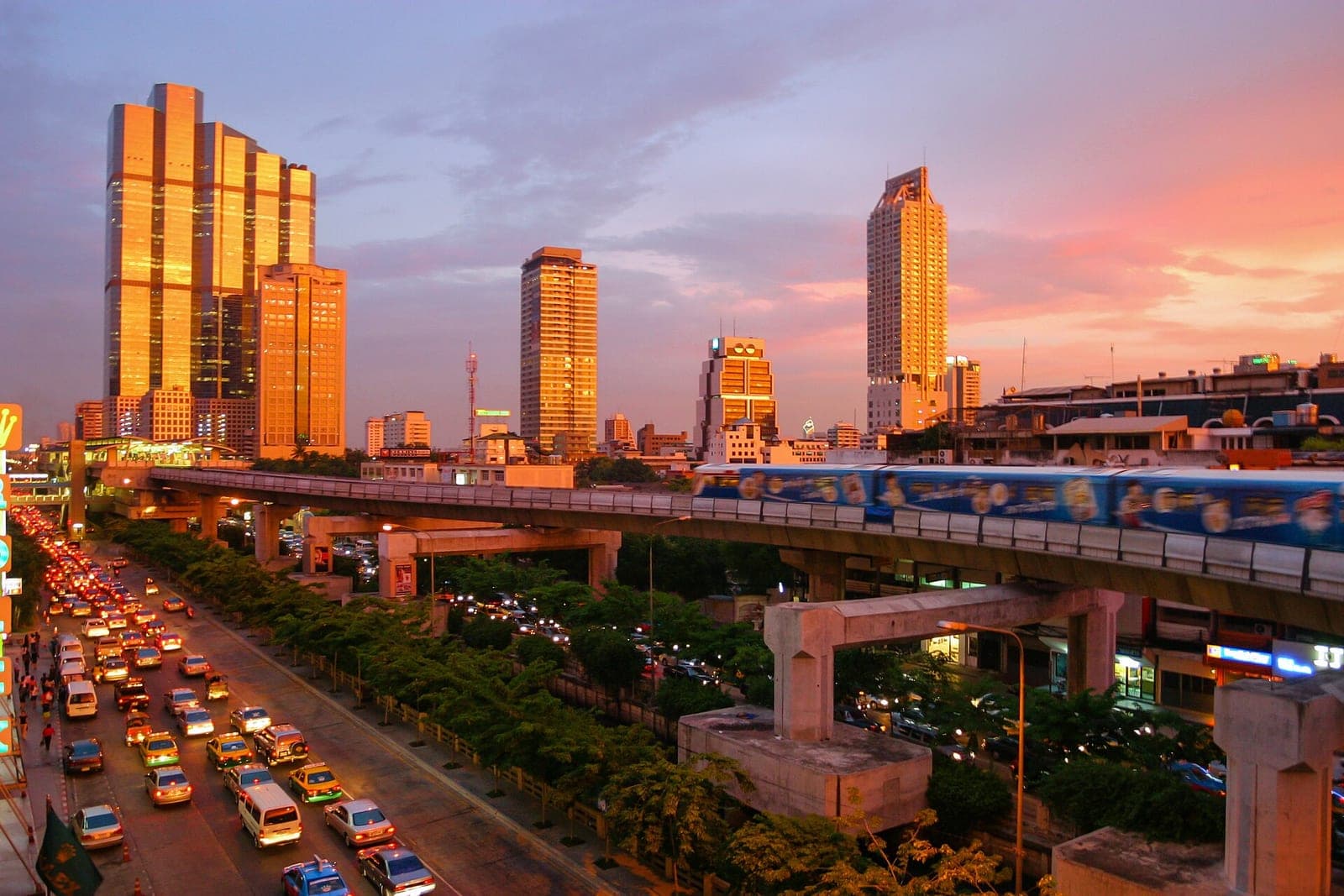
Owning a car is a different order of expense and, in Manila and Bangkok, close to a punishment. Almost nobody needs one.
What about health insurance and healthcare?
The line most likely to wreck a retirement budget, and the one most often left out of the forum numbers.
A basic travel-medical policy costs $50–150 (US$50–150) and is right for a visitor and wrong for a resident. Real international cover for a man in his sixties runs into the low hundreds of dollars a month and climbs with every birthday; local Thai and Philippine policies are cheaper with lower ceilings and more exclusions; and past 70 or 75 some insurers will not write a new comprehensive policy at all. Medicare does not follow you abroad.
Care itself is cheap by American standards and generally good. A private GP consultation is $20–50 across the region, a dental cleaning $25–60, a crown $200–450, and Bangkok's big private hospitals do serious work for a fraction of a US price. Cambodia is the weak link — for anything major, expats fly to Bangkok — and that flight belongs in your plan and your budget. The detail is in Health and insurance: what to arrange before you fly, and where to go if it goes wrong, and the visa consequences of insurance rules are in Retiring in Southeast Asia: the visas, the money and the reality.
Budget $150–400 a month for insurance plus routine care, depending on your age. If that number ruins the plan, the plan needed ruining.
What does a social life cost?
The honest answer, and the one nobody publishes: as much as you let it.
| Habit | Monthly cost |
|---|---|
| Two or three bar nights a week, buying rounds, Pattaya or Angeles | $300–700 |
| The same nights out in Bangkok or Manila | $500–1,000 |
| Dinner and a coffee date twice a week | $150–350 |
| Gym membership | $30–60 (฿1,000–2,000 / ₱1,500–3,500) |
| Massage once a week | About $40–60 in Thailand, $25–45 in the Philippines |
| Laundry, wash and fold | $0.90–1.8 (฿30–60 / ₱50–100 / US$1–2), so $15–30 a month |
| Haircut, twice | $3–10 (฿100–300 / ₱150–500) a time |
A beer costs $2.5–3.5 (฿80–110) in Pattaya, $1.8–2.8 (₱100–160) in Angeles, $1.5–3 (US$1.50–3) in Phnom Penh and $1.2–2.5 (₫30,000–60,000) in Saigon; buying drinks for the woman talking to you costs several times that, every time, and it is the line that turns a $1,600 month into a $2,600 month without a single big purchase. This is not a moral point. It is arithmetic, and every man who has lived out here has done it at least once.
The cheapest social lives out here belong to the men who found something to do that is not a bar — a gym, a diving club, a language class, a motorcycle group, a church, a woman with a job and a family. They also, without exception, seem to be the happiest. Meeting women outside the bars: malls, cafés, gyms, meetups and the rest of the town is about exactly that, and most of the men who ended up in a settled relationship out here started talking to her weeks before they moved, not in a bar afterwards — see Online dating before you fly: how the smart guys land with a date already booked.
What are the costs everyone forgets?
Add these to any monthly figure before you call it real. Annualized, they are worth $250–600 a month on their own.
- Flights home. One trip a year to the States is $900–1,600 from these cities, plus the days.
- Visas and immigration. $58 (฿1,900) a time in Thailand, $53–56 (₱3,030–3,150) for the first Philippine extension and more after 59 days, $36 (US$36) for a Cambodian e-visa, $25–50 (US$25 single / US$50 multiple entry) for Vietnam's. Add border runs and agent fees where you use them; the mechanics are in Visas for US passport holders: country by country (2026).
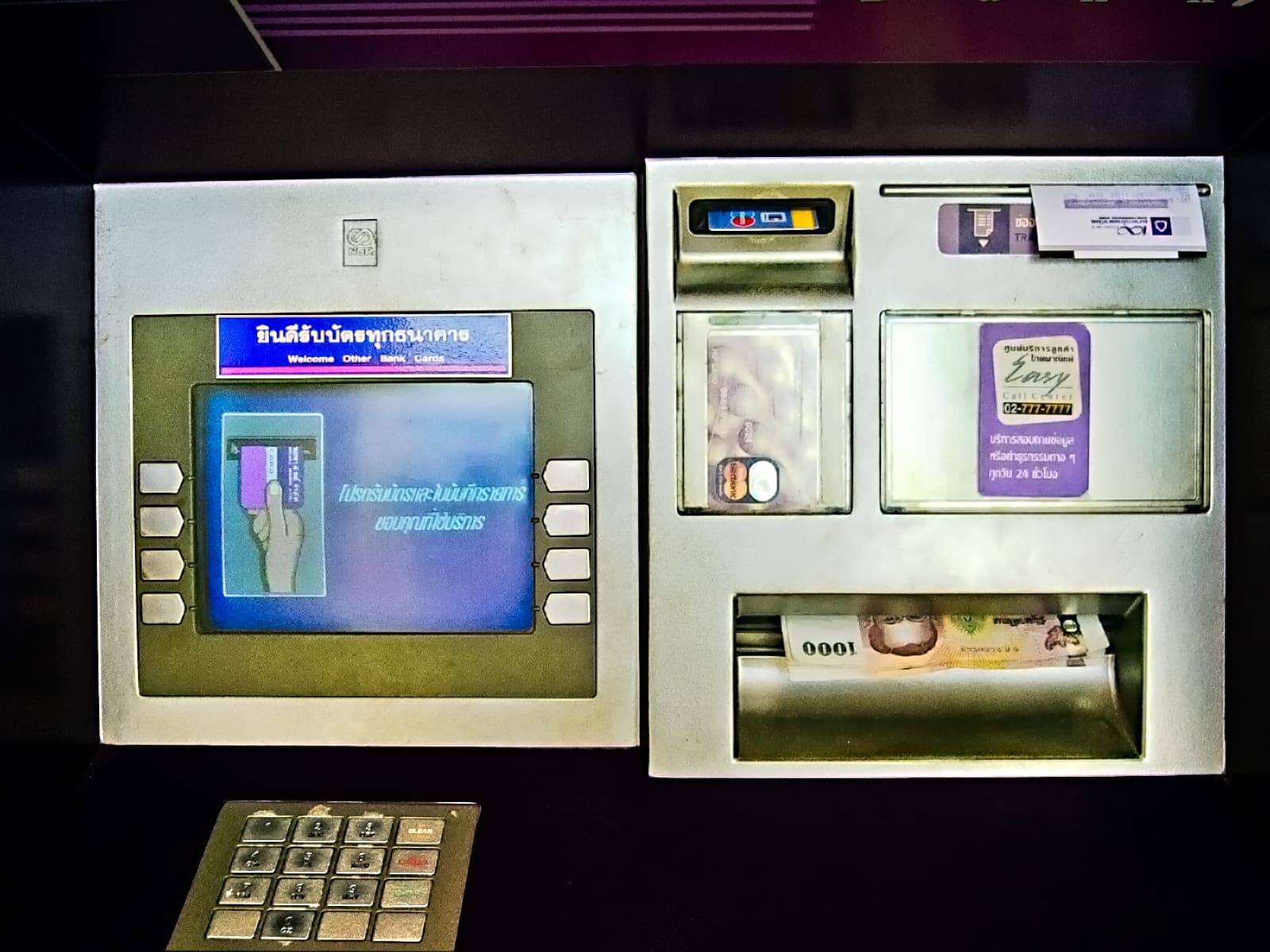
- ATM and transfer fees. $6.8–7.8 (฿220–250) per withdrawal in Thailand, $3.5–4.5 (₱200–250) in the Philippines. Use a transfer service and a bank that refunds fees rather than pulling cash five times a month — see Money, ATMs and cards in Southeast Asia: the practical page.
- Dental and eyes. Cheap here, and men who have been putting them off for years finally do them, which is a first-year cost of $500–2,000.
- Furnishing and setup. Even a furnished place needs a kettle, a decent pillow, a fan, a rice cooker and a router. Call it $300–600 once.
- Money you send. Whatever you decide is right — and decide it deliberately, in advance, as an amount, not as a series of emergencies.
- A bad month. A hospital deposit, a stolen phone, a landlord selling the building. Keep three months' costs in cash you can reach.
Three worked budgets
The $1,000 month, Phnom Penh or Cebu. A $350 apartment away from the center, $60 utilities, $250 food eaten mostly local, $70 transport, $25 phone and internet, $40 laundry and a haircut, $150 insurance, $55 left for going out. It works. It does not survive a plane ticket or a bad tooth, so it needs a reserve behind it.
The $1,800 month, Pattaya or Angeles City. A $500 one-bedroom in a building with a pool, $130 utilities, $400 food with Western meals a few times a week, $70 transport, $30 phone and internet, $60 gym and laundry, $250 insurance, $360 for a social life. This is the number most men we know actually live on, and it is a good life by any measure.
The $3,000 month, Bangkok or Manila. An $900 condo on the BTS line or in Makati, $180 utilities, $650 food, $180 transport, $50 phone and internet, $120 gym and laundry, $350 insurance, $570 for going out, and enough slack that nothing has to be cancelled. Comparable to living modestly in a small American city, in a place where the sun shines.
How do these cities rank on value?
Cheapest first, on a comfortable life rather than a lean one: Phnom Penh and Cebu, then Saigon, then Angeles City, then Pattaya, then Manila, then Bangkok. But value is not price. Pattaya and Angeles cost a little more and give you the biggest scene, the best guest-friendly hotel stock and the easiest logistics; Bangkok costs the most and gives you the best hospitals, the best airport and the best restaurants; Cebu costs the least and gives you a beach and the best relationship odds in the region.
If you are weighing two specific cities, we have the head-to-heads: Pattaya vs Angeles City: which one first?, Bangkok vs Pattaya: the city or the beach town?, Manila vs Cebu: which one, and how do they compare with Angeles City? and Cambodia vs Vietnam: Phnom Penh or Saigon?. And if this is turning from a holiday into a plan, Retiring in Southeast Asia: the visas, the money and the reality covers the visas that let you stay.