

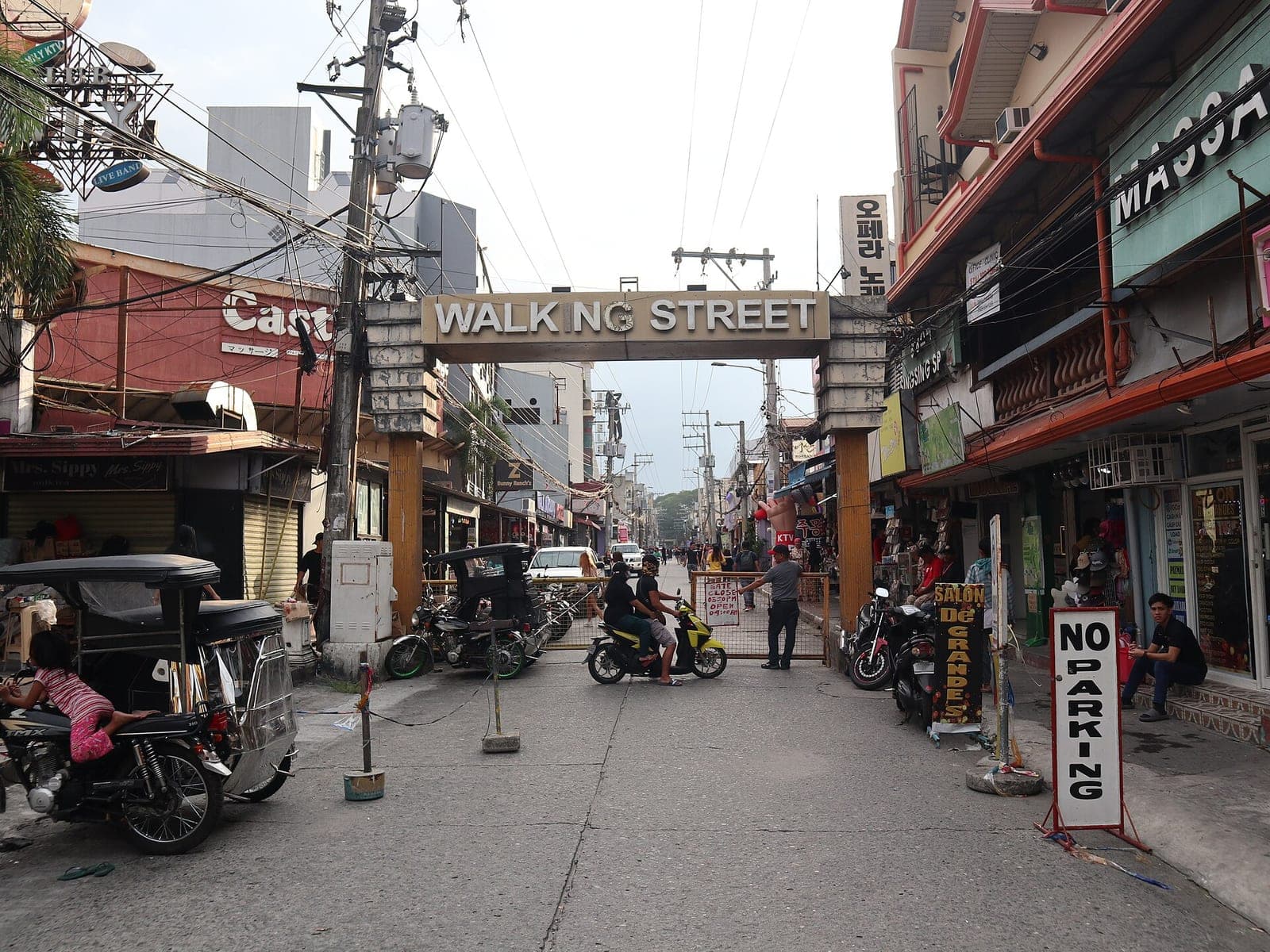
Manila and Cebu are the two biggest cities in the Philippines and they solve different problems for a single Western man: Manila is a fourteen-million-person capital with the country's main airport, the largest bar and freelancer scene outside Angeles, and traffic that will take a year off your life, while Cebu is a manageable three-million metro with beaches half an hour away, a modest club district and the best long-term prospects in Asia. Neither of them is Angeles City, and we will say so more than once below, because that is the honest comparison most men actually need.
What is the difference, in one paragraph?
Manila is a city you go to for a reason — a flight, a visa run, a woman you have been talking to, a second or third trip when you want a real capital instead of a bar street. Cebu is a city you go to and then stay in. Manila has more of everything and costs you two hours a day in a car; Cebu has less of everything and gives those two hours back. Both speak better English than anywhere else in Asia, which is the single biggest reason American men choose the Philippines at all.
| Manila | Cebu | |
|---|---|---|
| Metro population | About 14 million | About 3 million |
| Nightlife district | P. Burgos Street and Poblacion in Makati | Mango Square and Mango Avenue |
| Style of scene | Go-go and hostess bars plus 70-odd ordinary bars next door | A club district with a handful of expat and hostess bars |
| Beer in a bar | $2.6–4.4 (₱150–250) | $1.6–2.6 (₱90–150) |
| Ladies' drink | $4.4–7 (₱250–400) | $3.5–6 (₱200–350) |
| Mid-range hotel | $55–110 (₱3,100–6,300) | $40–85 (₱2,300–4,800) |
| Beach | Hours away | Mactan, 30–60 minutes |
| Getting around | Grab, and patience | Grab, and less of it |
| US flights | Nonstop from LAX, SFO, SEA and JFK | One stop, via Manila or Tokyo |
| Relationship odds | Very good | The best in the region |
Which city has the better nightlife?
Manila, comfortably — but understand what you are getting.
The Makati scene is really two things sharing a postcode. P. Burgos Street is a few hundred meters of go-go and hostess bars with stages, greeters and ladies' drinks at $4.4–7 (₱250–400): the Philippine bar system in its most concentrated Manila form, smaller and pricier than Fields Avenue, and thinner than it was a decade ago. Poblacion is the barangay wrapped around it, and over ten years it has become the densest walkable bar district in the country — rooftops, speakeasies, craft beer, dive bars and small clubs, full of young professionals and Filipinas out with friends. For meeting women, Poblacion is arguably the more useful half of the neighborhood. Malate is the faded old tourist district, worth one curious evening, and the EDSA Entertainment Complex near the airport is a question mark: several of its best-known venues were listed as closed in 2025 and we could not confirm what is trading in August 2026.
Cebu's nightlife is a normal city's nightlife. Mango Square is a compound of clubs — the long-running dance club inside it still packs out at weekends with a young Cebuano crowd — and Mango Avenue outside it has a run of expat, sports and hostess bars whose names change every few years. It is smaller and quieter than it was before the pandemic, and it is not a strip in the Angeles sense. What Cebu does have is a huge, young, English-speaking workforce out on Friday nights in ordinary bars, plus the resort bars on Mactan at weekends.
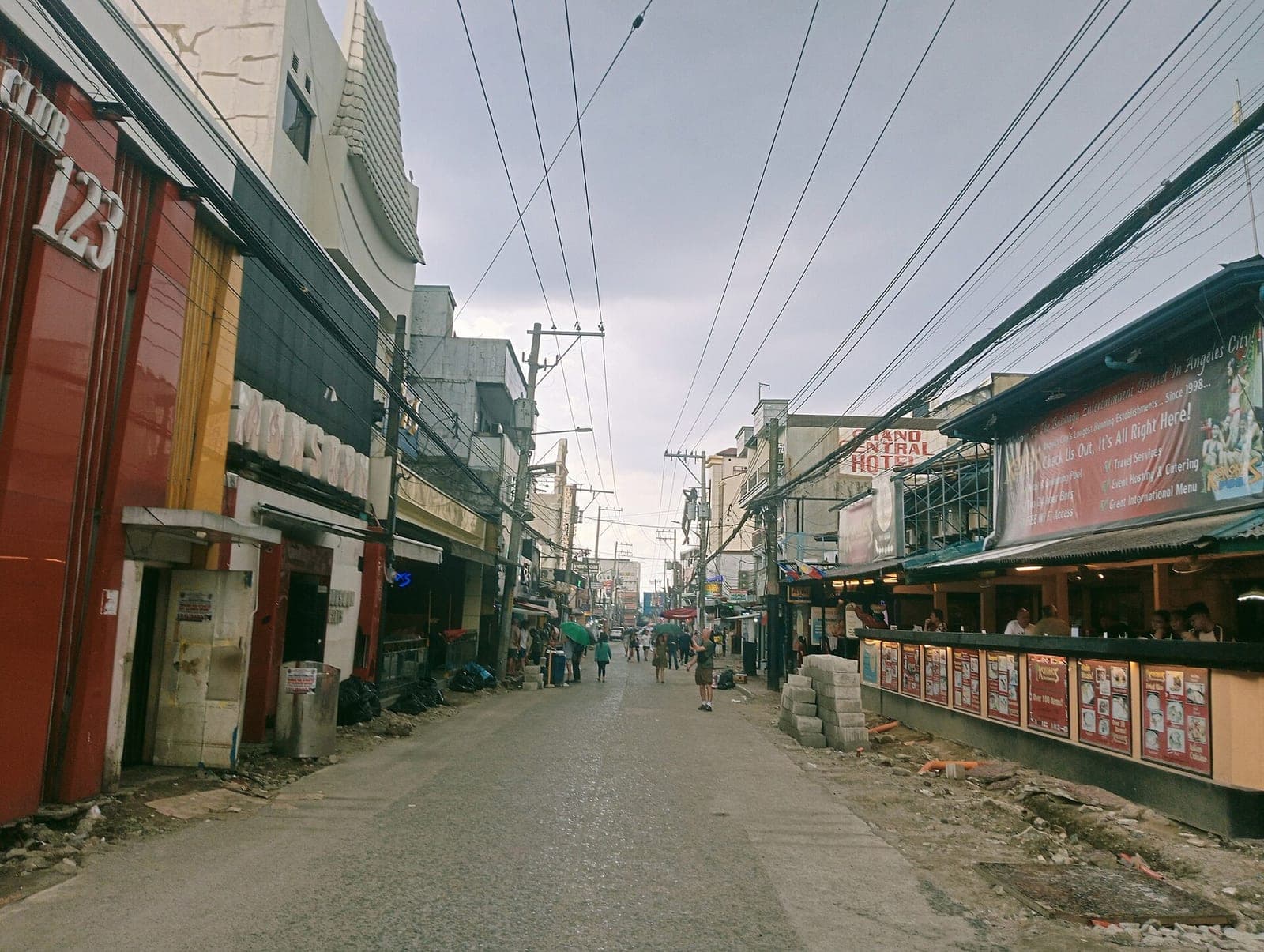
If nightlife is the reason for the trip, neither city is the answer. Angeles has more bars along Walking Street (Angeles City) and Fields Avenue than Manila and Cebu put together, at $1.8–2.8 (₱100–160) a beer, with guest-friendly hotels on every corner and Clark airport twenty minutes away. That is not a close call and we are not going to pretend otherwise. Read How the bar scenes work, country by country: go-go bars, beer bars, ladies' drinks, mamasans and the bill for how the whole Philippine system operates, then The first-timer's guide: Pattaya, Angeles City and how the whole thing works for where to start.
Where is it easier to meet women who are not working?
Cebu, by a nose, and both are excellent.
Manila has the raw numbers: millions of English-fluent working women — nurses, call-center staff, teachers, accountants — and the most active dating-app market in Asia. It also has the traffic, which quietly ruins spontaneity. A date across town is a ninety-minute commitment on each side, and it is why so much of Manila dating happens within a mile or so of Makati.
Cebu is small enough to be a village. The city's business-process outsourcing industry has put tens of thousands of young, English-speaking women on night shifts around Cebu IT Park, which means the coffee shops there are busy at strange hours with exactly the people you want to meet. Ayala Center Cebu and SM City Cebu are the mall dates, Mactan is the Sunday, and by your fifth morning in the same café you are a familiar face rather than a tourist. Our Meeting women outside the bars: malls, cafés, gyms, meetups and the rest of the town guide is built around precisely this.
Both cities reward men who did the groundwork. Most guys who come back to either place a second time had been chatting with two or three women for a few weeks before they landed and had coffee booked for day two — see Online dating before you fly: how the smart guys land with a date already booked for how to do that without getting played, and Red flags and romance scams: the sick buffalo, the hospital bill and how to say no kindly for the ones who are playing.
Which is safer?
Cebu, in feel and mostly in fact — though neither is dangerous for a sensible adult.
Makati is one of the safer parts of a big, unequal city and Poblacion is busy and lit until late, but Manila needs more care than anywhere else in the Philippines: phone snatching from motorbikes, padded tabs on Burgos, and the long-running drugging-and-robbery routine run on foreigners by an over-friendly new acquaintance. Malate and Ermita after midnight are emptier and rougher.
Cebu City is calmer, the distances are shorter and the same rules cover it: keep the phone in a front pocket, use Grab after dark, never leave a drink unattended, count your bar tab. The area to give a miss late at night is around Colon Street in the old downtown. Mactan is a resort island and behaves like one.
Two things apply to both. Drugs are a prison sentence in the Philippines, full stop. And typhoon season runs roughly June to November, with Cebu the more exposed of the two — the city took a direct hit in December 2021 and lost power for weeks. The Safety in Southeast Asia: what actually goes wrong, and what to do about it and Scams: the ones that are still running, and how to handle each pages have the long version.
What about the beaches and the daytime?
This is Cebu's knockout punch.
Mactan is thirty to sixty minutes from the city — resorts, dive shops, island-hopping boats to Hilutungan and Nalusuan — and the island beyond it is one of the best day-trip provinces in the country: whale sharks at Oslob, canyoneering at Kawasan, the sardine run and turtles at Moalboal, waterfalls, Bantayan and Malapascua on a longer weekend. Cebu also throws the biggest festival in the Philippines: Sinulog, on the third Sunday of January, which fills the city and books out every hotel months ahead.
Manila's daytime is a city's daytime — Intramuros, the National Museum, Binondo for food, the Ayala malls, the casinos at Entertainment City — and the nearest decent beach is a long, unpleasant drive. If your ideal trip has sand in it, that settles the question.
What does a week cost in each?
Both are cheap by American standards; Cebu is meaningfully cheaper on the two things you buy every day.
| Item, per man (Aug 2026) | Manila | Cebu |
|---|---|---|
| Hotel, 7 nights, mid-range | $385–770 | $280–595 |
| Beer in a bar | $2.6–4.4 (₱150–250) | $1.6–2.6 (₱90–150) |
| Beer from a 7-Eleven | $1.1–1.5 (₱60–85) | $1.1–1.5 (₱60–85) |
| Local meal | $1.5–3 (฿50–80 / ₱80–150 / ₫40,000–70,000) | $1.5–3 (฿50–80 / ₱80–150 / ₫40,000–70,000) |
| Grab, short ride | $2–4 (฿70–130 / ₱120–250 / ₫50,000–100,000) | $2–4 (฿70–130 / ₱120–250 / ₫50,000–100,000) |
| Hour-long massage | $6–10 (₱350–600) | $6–10 (₱350–600) |
| Airport transfer | $6–12 (₱350–700) | About $5–9 to the city, 20–45 min |
| Tourist SIM | $9–20 (₱500–1,100) | $9–20 (₱500–1,100) |
| Comfortable week, excluding flights | $1,000–1,600 | $800–1,300 |
The gap widens on a month. Makati rents are the highest in the country; Cebu City and the Mactan side are a third cheaper for the same standard of condo, which is why so many long-stayers end up there. The full monthly picture, city by city, is in What a month really costs: Pattaya, Angeles, Bangkok, Phnom Penh, Saigon, Cebu and Manila, and if you are thinking beyond a visit, Retiring in Southeast Asia: the visas, the money and the reality covers the visas.
How do you get there?
Manila wins on paper and loses in the terminal.
Ninoy Aquino (MNL) has nonstops from Los Angeles, San Francisco, Seattle and New York on Philippine Airlines and from San Francisco on United, at $850–1,400 (US$850–1,400) round trip in a normal month, and one-stop routings via Tokyo, Taipei, Seoul or Hong Kong are often a few hundred dollars cheaper. It is also one of the more tiring airports in Asia, the terminal assignments were reshuffled in the spring of 2026, and the ride to Makati is 30 to 90 minutes depending entirely on the hour.
Mactan-Cebu (CEB) has no US nonstop and, as of August 2026, is not close to getting one. You either fly to Manila and take the 75-minute hop — hourly, on Philippine Airlines, Cebu Pacific or AirAsia, at $60–120 (₱3,400–6,800) round trip — or connect once in Asia: United flies Tokyo Narita to Cebu, and Cebu Pacific, Philippine Airlines and Air Busan link it to Seoul, Osaka and Busan. More routes were announced for late 2026. Mactan itself is a small, modern, pleasant airport twenty minutes from the city, which is the opposite of the Manila experience.
Which is better for a relationship?
Cebu, and we score it the highest in the region for exactly this.
The reasoning is not romantic, it is structural. Cebu is big enough to have an educated, English-speaking, professional population and small enough that you can actually see someone three times in a week without spending your life in a car. It is Catholic, family-centered and conservative in the way the whole country is — you will meet the family early, and you should — and it is far enough from the visitor economy that a foreign man taking a woman to dinner is not automatically read as a transaction.
Manila is a close second and has one practical advantage that matters if the goal is serious: the US Embassy is there, and every K-1 and CR-1 case in the country routes through it. If you are already thinking that far ahead, read Bringing her home: the K-1 and CR-1 visas, explained before you fly and Dating culture by country: sin sod, utang na loob, face, family and the law for how Filipino family life actually works.
Bear one thing in mind in both cities. There is still no divorce law in the Philippines as of August 2026 — bills have been filed in the current Congress and none has passed — so a woman who is separated from a Filipino husband is not free to remarry, and annulment is slow and expensive. Ask early, kindly, and believe the answer.
Who should pick which?
Pick Manila if you want the biggest bar and freelancer scene outside Angeles; you are combining the trip with business; you want a genuine capital city with museums, restaurants and casinos; you are already talking to someone who lives there; or you simply want the shortest flight from the US.
Pick Cebu if you want a beach and a city in the same trip; you are staying a month rather than a week; you are over fifty and the traffic and noise of Manila sound like hard work; you are looking for a relationship rather than a holiday; or you want your money to go 25% further.
Pick Angeles City if this is your first trip, the bars are the point, or you want everything within a ten-minute walk and the airport twenty minutes away. The Five itineraries that work: a week in Pattaya, a week in Angeles, and three two-city trips guide strings all three into a fortnight, and Thailand vs the Philippines: which one is your trip? answers the bigger question of whether you should be in this country at all.