

Retiring in Southeast Asia means living, legally and full time, on a visa built for people who are not working — and as of 2026 only four countries in the region really have one: Thailand, the Philippines, Cambodia and, at a price, Malaysia and Indonesia. Vietnam has none. This guide is the honest version: what each program actually requires, what a month costs, what happens to your healthcare, where expats end up living, and how dating changes when you stop being a visitor.
Everything below is as of August 2026 and every one of these programs has been changed at short notice in the last three years. Treat the numbers as planning figures and confirm them with the issuing authority — the Thai immigration bureau, the Philippine Retirement Authority, the Cambodian immigration department — or with a lawyer, before you move money.
Which countries actually offer a retirement visa?
| Country | Program | Age | Money required | Term | Reality check |
|---|---|---|---|---|---|
| Thailand | Non-O + retirement extension | 50+ | ฿800,000 in a Thai bank, or ฿65,000/month income, or a ฿800,000/year combination | 1 year, renewed annually | The mainstream choice. Annual renewal, 90-day reporting, TM30 address filing |
| Thailand | Non-O-A (applied from the US) | 50+ | Same, plus mandatory Thai health insurance and a police check | 1 year, multiple entry | More paperwork up front; the insurance rule is the sting |
| Thailand | LTR "Wealthy Pensioner" | 50+ | $80,000/year passive income (or $40,000 plus an investment) | 10 years | Excellent if you qualify; most pensioners do not |
| Philippines | SRRV Classic (PRA) | 40+ since 2025 | $15,000–$50,000 time deposit depending on age and pension | Indefinite, renewable | Restructured in September 2025; confirm the current tiers |
| Philippines | Tourist visa, extended | Any | Nothing but fees | Up to 36 months per entry | What most Americans in Angeles and Cebu actually do |
| Cambodia | ER retirement extension | 55+ | Proof of pension and insurance; roughly $275 a year through an agent | 1 year, renewable | Cheapest and loosest. Rules on paper are stricter than practice |
| Vietnam | None | — | — | — | 90-day e-visas, marriage, investment or a job |
| Malaysia | MM2H (Silver/Gold/Platinum) | 30+ | Fixed deposit from about $150,000, plus a property purchase from RM600,000 | 5, 15 or 20 years | Rebuilt as a wealth program. No longer a modest-pension option |
| Indonesia | Retirement KITAS (E33F) / Silver Hair (E33E) | 55+ / 60+ | About $3,000/month pension, a year's lease, insurance | 1 year, renewable | Bali's route. The second-home visa wants roughly $130,000 parked instead |
Two entries in that table deserve underlining. The Philippine "tourist visa, extended" line is not a loophole — it is the ordinary, legal, widely used way Americans live in Angeles City and Cebu, extending at a Bureau of Immigration office for $53–56 (₱3,030–3,150) at a time up to three years, then leaving for a weekend and starting again. And Thailand's $58 (฿1,900) tourist extension is not a retirement route; if you want to stay, get the proper visa. The mechanics of both are on the Visas for US passport holders: country by country (2026) page.
What does Thailand really ask for?
The Thai retirement route is the most used in the region and the most bureaucratic.
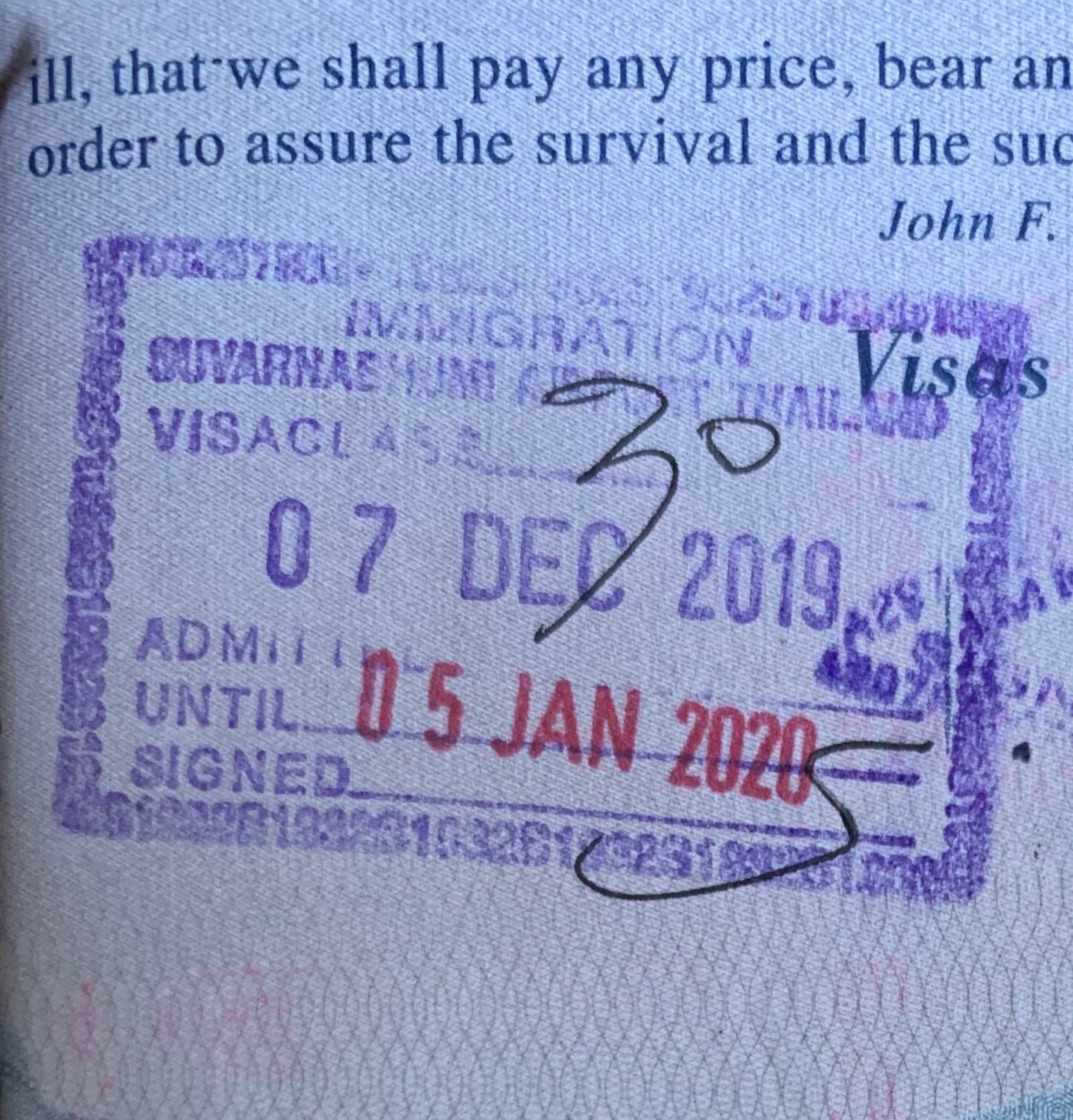
You need to be 50 or over. You then show either ฿800,000 (about $23,000 as of August 2026) sitting in a Thai bank account — seasoned for two months before the application and required to stay above thresholds afterwards — or ฿65,000 a month of provable income, or a combination adding to ฿800,000 across the year. Most men enter on a Non-O visa and convert to a one-year extension of stay at immigration; Pattaya residents use the Jomtien office, Bangkok residents Chaeng Watthana.
Then the maintenance: report your address every 90 days (in person, by post or through the app, which works most of the time), have your landlord or hotel file a TM30 whenever you move, and renew annually with a fresh set of bank letters.
Two recent developments matter. First, opening a Thai bank account as a tourist has become genuinely hard since the banks tightened anti-fraud checks; plan on doing it with an agent, a lease and a lot of patience, or use the income route. Second, Thailand's tax treatment of money you bring in from abroad changed in 2024 so that foreign income remitted into Thailand by a tax resident is assessable, and a draft exemption for money remitted in the year it is earned or the year after has been trailed since 2025 but, as of mid-2026, was still not law. If you plan to live off remittances from the States, talk to a Thai tax adviser rather than a bar stool.
What does the Philippines ask for?
Less money, more paperwork ambiguity, and a much easier life once you are there.
The Special Resident Retiree's Visa is run by the Philippine Retirement Authority and was restructured in September 2025. As reported through 2026, the Smile and Human Touch categories were retired, leaving SRRV Classic and the cheap SRRV Courtesy tier for former Filipino citizens, retired diplomats and retired foreign military. The age floor dropped to 40, and the Classic deposit runs from about $15,000 for an applicant over 50 with a pension of $800 a month or more, up to $50,000 for a younger applicant with no pension. The deposit is your money in a PRA-accredited bank, refundable if you cancel — not a fee — and can in some cases be converted into a qualifying condo purchase.
Set against that, the plain tourist route: 30 days on arrival, $53–56 (₱3,030–3,150) for the first extension, then rolling extensions with an ACR I-Card up to 36 months. It costs a few hundred dollars a year and an occasional morning in a queue, and it is what a large majority of the American men living in Angeles City, Cebu and Manila actually do. The SRRV is for the man who wants permanence, duty-free import of household goods and no more immigration queues.
If you marry a Filipina, ask at the immigration desk about the Balikbayan privilege when you enter the country together: it gives the foreign spouse a one-year visa-free stay on arrival, and it is the best deal in the region. See Bringing her home: the K-1 and CR-1 visas, explained for the other direction.
What about Cambodia, Vietnam, Malaysia and Indonesia?
Cambodia is the simplest place in Asia to live and the least documented. You enter on the $35 ordinary (E-class) visa rather than a tourist visa, then buy an extension of stay through an agent; the retirement (ER) version is for over-55s and runs somewhere around $275 a year, renewable indefinitely. On paper the immigration department wants proof of a pension, insurance and a clean record; in practice enforcement has historically been light, which cuts both ways — a rule that is not enforced is a rule that can be enforced next year. BKK1 is where most of the expats are.
Vietnam has no retirement visa and has had none for as long as anyone has been asking. What people do instead: repeat 90-day e-visas with a trip out in between, a temporary residence card of up to three years through a Vietnamese spouse, an investor visa requiring serious capital, or a job. A ten-year golden visa has been discussed by the government for years and remains under review. If Saigon is where you want to be, read Cambodia vs Vietnam: Phnom Penh or Saigon? and go in with your eyes open about the paperwork.
Malaysia rebuilt MM2H into a three-tier wealth program: Silver, Gold and Platinum, with fixed deposits reported from roughly $150,000, $500,000 and $1 million, a mandatory residential property purchase from RM600,000 up to RM2 million, a minimum age of 30 and a requirement to spend at least 60 days a year in the country. It is a fine deal for a wealthy man and no longer an option for a modest pension. Sarawak runs its own, cheaper version on Borneo.
Indonesia offers the retirement KITAS (E33F) for over-55s at about $3,000 a month of pension income, with a year's lease, health insurance and — genuinely — a requirement to employ a local helper; the Silver Hair variant is aimed at over-60s, and the Second Home visa asks for roughly $130,000 in an Indonesian state bank or a qualifying property instead. It works, it is Bali, and the Culture and respect: the small things that make a trip to Southeast Asia go well guide explains why the social rules there are not Thailand's.
What does it actually cost to live?
Less than you think and more than the internet says. The forums are full of men claiming $700 a month, and they exist — they just do not live the way you are picturing.
| City | Lean | Comfortable | Good life |
|---|---|---|---|
| Phnom Penh | $900 | $1,400 | $2,200 |
| Cebu | $900 | $1,400 | $2,200 |
| Ho Chi Minh City | $950 | $1,500 | $2,400 |
| Angeles City | $1,000 | $1,600 | $2,500 |
| Pattaya | $1,100 | $1,800 | $2,800 |
| Manila | $1,200 | $1,900 | $3,000 |
| Bangkok | $1,400 | $2,200 | $3,500 |
"Comfortable" means a decent one-bedroom in a building with a pool and a gym, eating out most days, a bar or restaurant tab several nights a week, insurance, a scooter or a Grab habit, and money for a flight home once a year. Rents anchor the whole thing: $300–600 (฿10,000–20,000) in Pattaya, $300–550 (₱17,000–32,000) in Angeles, $400–800 (US$400–800) in Phnom Penh, $450–900 (฿15,000–30,000) in Bangkok. The line-by-line breakdown, including utilities, insurance and a social life, is in What a month really costs: Pattaya, Angeles, Bangkok, Phnom Penh, Saigon, Cebu and Manila.
The two costs men underestimate are electricity — air conditioning in a tropical apartment is not cheap anywhere, and the Philippines has some of the highest power tariffs in Asia — and the trip home. Budget for both.
What happens to your healthcare?
This is the part that decides whether the plan survives your seventies.
Medicare does not follow you abroad, apart from a few narrow exceptions. You are paying cash or paying an insurer, and the good news is that the care available is genuinely good in the right cities: Bumrungrad and the big Bangkok hospital groups are world-class and used by hundreds of thousands of foreign patients a year; Bangkok Hospital Pattaya, Makati Medical Center and St. Luke's in Manila, Chong Hua and Cebu Doctors' in Cebu, FV Hospital in Saigon and Royal Phnom Penh handle most of what a retiree needs. Cambodia is the weak link: for anything serious, expats fly to Bangkok, and that is a plan you should have written down.
On insurance: a basic travel-medical policy runs $50–150 (US$50–150), which is fine for a visitor and not for a resident. Real international cover for a man in his sixties is a different animal — quotes commonly land in the low hundreds of dollars a month and climb steeply with age and history — and some insurers will not write a new comprehensive policy at all past 70 or 75. Local Thai and Philippine policies are cheaper with lower limits and more exclusions.
Three practical rules. Buy cover before you go, while you are still insurable. Read the pre-existing-condition clauses twice. And keep a cash reserve for the deductible and for the deposit a private hospital in this region will ask for at admission. The Health and insurance: what to arrange before you fly, and where to go if it goes wrong page has the detail.
Where do expats actually live?
Not where the bars are. Almost nobody who stays lives on the strip after the first six months.
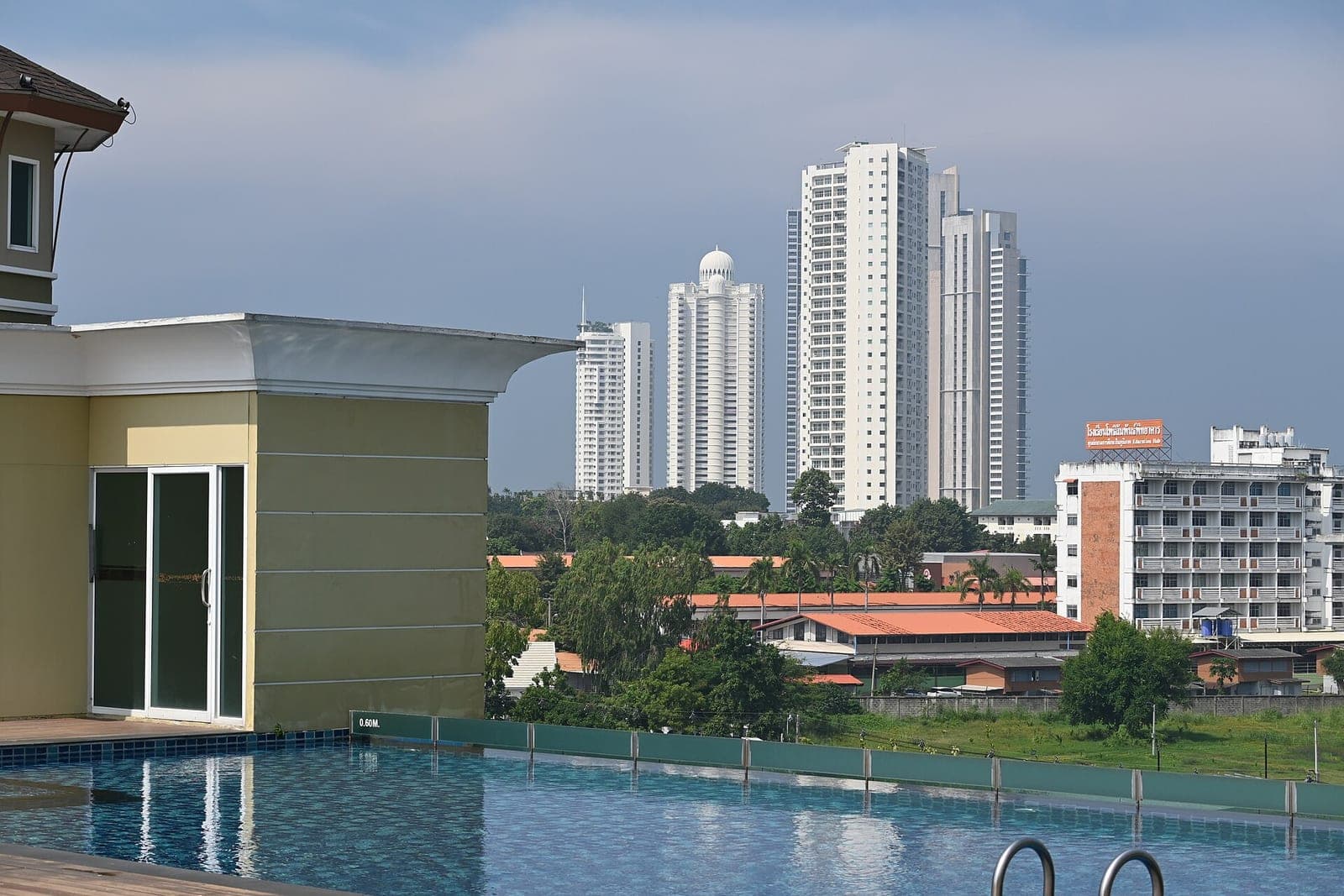
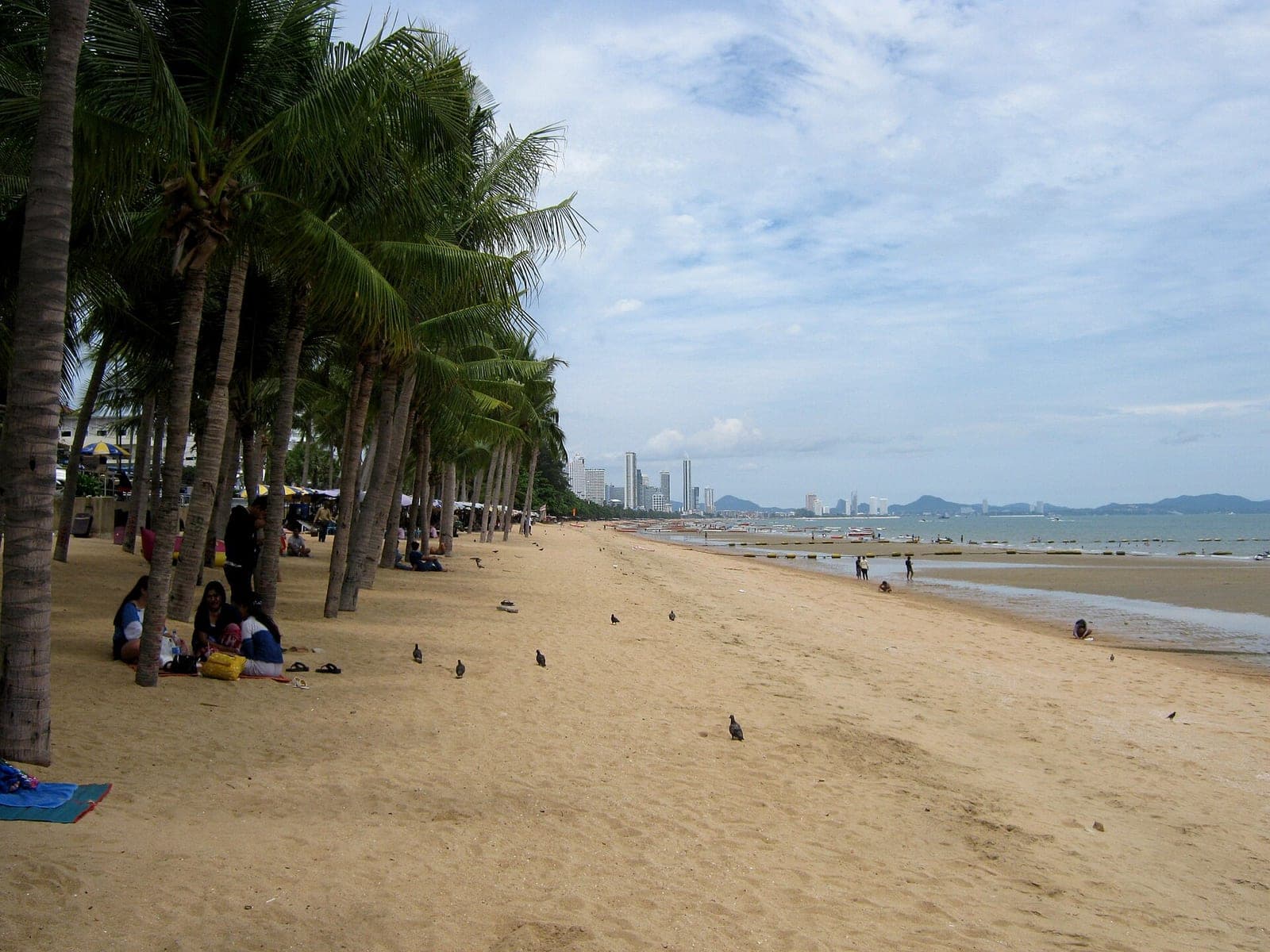
- Pattaya: Jomtien and Pratumnak. Quieter, cheaper, walkable to a beach, a fifteen-minute ride from Jomtien to the noise if you want it.
- Angeles City: Malabañas, Hensonville and the Clark side, rather than the middle of Balibago. Ten minutes from Perimeter Road (Don Juico Avenue), and much easier to sleep in.
- Bangkok: the Sukhumvit line out past On Nut and Phra Khanong, where the rent halves and the BTS still runs.
- Phnom Penh: BKK1 and Tonle Bassac, the embassy-and-café quarter.
- Saigon: Thao Dien in District 2 for the expat village, Binh Thanh or District 3 for value and a local street.
- Cebu: Lahug, Banilad and around the IT Park; Mactan if you want the water and can live with the bridge traffic.
- Manila: Makati or the fringes of BGC, and you will still spend your life in a car.
What changes about dating when you live there?
Everything, and it is the reason a lot of men move.
As a visitor you have ten days and every conversation carries that pressure. As a resident you have a Tuesday. You can meet a woman for coffee, not see her for a week, and see her again — which is how ordinary relationships are built everywhere on earth and is exactly what a two-week trip cannot do. The women available to you change accordingly: a nurse on rotating shifts, a teacher, an accountant, a woman with kids at school who is not going to build her life around a man who leaves on Saturday. Read Meeting women outside the bars: malls, cafés, gyms, meetups and the rest of the town for the mechanics; it is written for exactly this transition.
What also changes is your reputation. These are small worlds. The bar streets of Angeles and Pattaya are a few hundred meters long, the expat café scenes smaller still, and a man who lives there is known by his behavior within a couple of months. That works in your favour if you are decent and against you if you are not.
Three warnings from watching a lot of men do this. Do not marry in the first year — nothing about a good relationship requires speed, and Philippine law makes divorce essentially impossible for her if it goes wrong. Do not fund a family before you understand the family, and read Red flags and romance scams: the sick buffalo, the hospital bill and how to say no kindly before you fund anyone. And do not buy land, a house or a business in anyone else's name; foreigners cannot own land in Thailand or the Philippines, condos in your own name are the legal route, and the alternative has ruined more retirements out here than illness has.
Do you still have to file US taxes?
Yes. American citizens file with the IRS on worldwide income no matter where they live, and the foreign earned income exclusion does not apply to pensions, Social Security or investment income. You will probably owe roughly what you owe now.
The extra items are administrative: FBAR reporting if your foreign accounts total more than $10,000 at any point in the year, FATCA reporting above higher thresholds, and the question of which US state still considers you a resident — which is worth solving before you leave, not after. Social Security can be paid to you abroad in most of these countries by direct deposit. Keep a US bank, a US credit card and a US mailing address; you will need all three, and the Money, ATMs and cards in Southeast Asia: the practical page page explains why.